


You've arrived at a hotel after a long drive, and your dog is pacing instead of settling. The room smells unfamiliar, dinner was later than usual, and the first walk revealed a busy street rather than the quiet route you know at home. A cat may react differently, hiding in a carrier or refusing food, but the underlying problem is similar: travel removes familiar cues all at once.
The safest trips are built before departure. These tips for traveling with pets follow a practical system: verify documents and destination rules, secure your pet during movement, preserve familiar comfort and feeding routines, prepare for bathroom needs, and observe health and behavior at every stage. The same approach works for a short road trip, an international flight, or traveling with your pet on a private jet, though the requirements will differ.
Use this pre-departure check: confirm carrier and accommodation policies, prepare medical and identification records, test the car seat or carrier, pack familiar food and bedding, attach a secure collar or harness, identify veterinary care near the destination, and plan quiet time after arrival. Preparation won't eliminate every unsettled moment, but it gives you a clear response when your pet needs reassurance, water, a break, or a change of plan.
1. Invest in a Quality Pet Car Seat for Safety and Comfort
A loose pet can distract the driver, move into an unsafe position, or be thrown forward during sudden braking. The AVMA's travel guidance favors secured, size-appropriate, well-ventilated crates or safety harnesses, and warns against unrestrained pets in open cargo areas. The practical choice depends on your pet's size and temperament, but the principle is consistent: your pet needs a designated, secured place in the back seat.
A booster-style car seat can work well for a small dog that settles better when it can see out of the window. Look for a stable base, a seat-belt attachment, and an internal harness connection. Nandog car seats use quilted micro plush interiors, secure safety hooks, and installation features designed for rides. Their dog car seat guidance also emphasizes introducing the seat at home and starting with short drives.
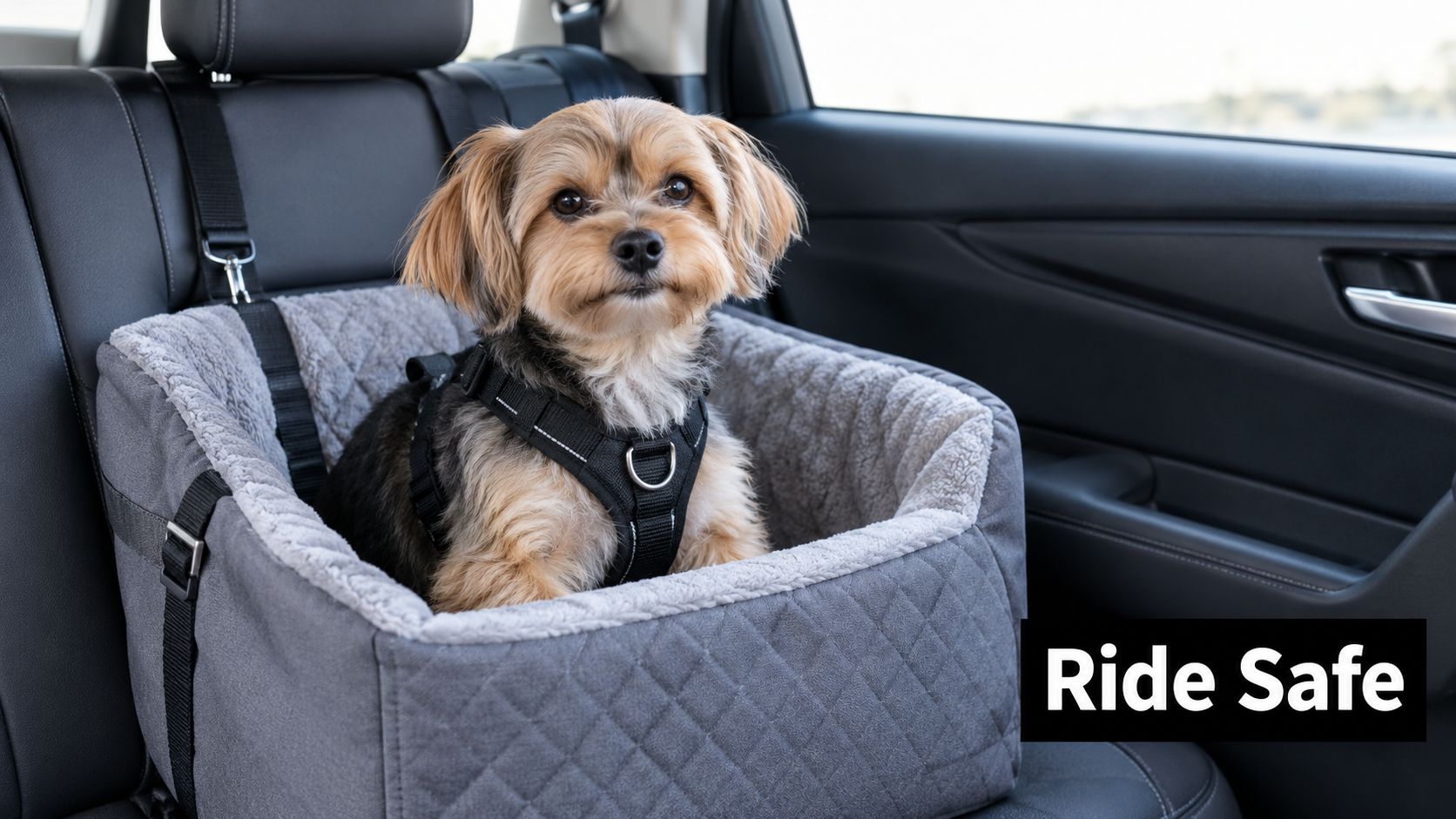
Practical rule: A comfortable seat is useful only when it's attached correctly and your pet is connected to the seat's restraint point.
Place the seat in the rear, connect the vehicle anchor, and attach the restraint to a properly fitted harness rather than relying on a collar alone. Introduce it indoors with treats, then take short trips before attempting a longer journey. Never leave your pet unattended in the vehicle, even if the seat itself is secure. For extra protection from hair and spills, pair the setup with a guide to dog car seat covers.
Here's a short demonstration of how a car seat can create a defined travel space:
2. Pack a Portable Travel Bed for Familiar Comfort Anywhere
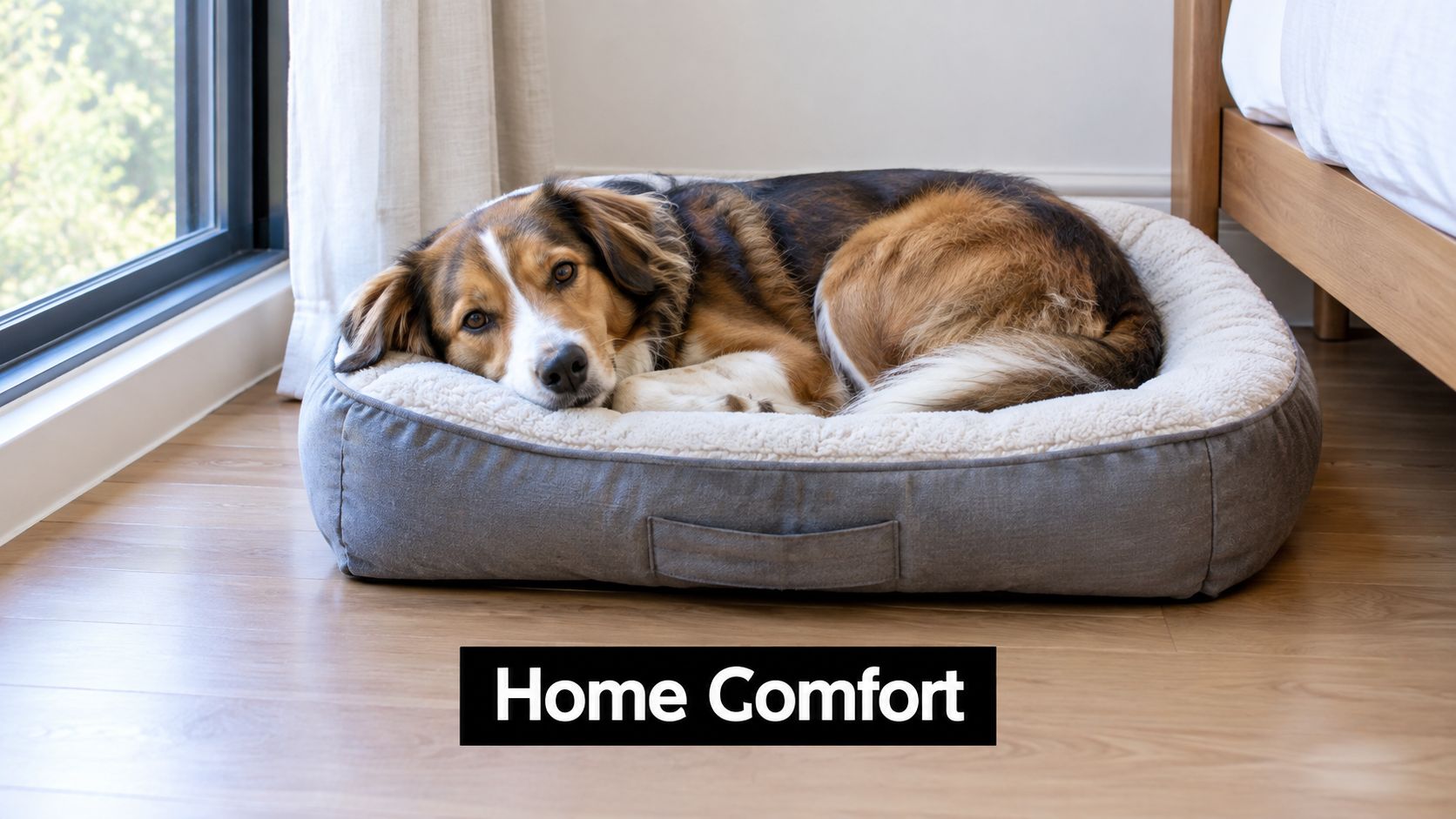
A familiar bed gives your pet one recognizable object in a room full of new smells, sounds, and surfaces. It won't make every hotel or rental feel like home, but it can create a reliable place to rest after transport, meals, and walks. This matters most during the first evening, when many pets are tired but too alert to sleep.
Choose a bed that fits the space where your pet will use it. A compact design may be easier for air travel or a small car, while a larger supportive bed may be more appropriate for a senior dog on a road trip. Nandog's Cloud and Orthopedic collections offer different comfort profiles, and the brand describes many of its beds as machine washable without requiring removable covers. Review machine-washable dog bed options before choosing a bed for a messy journey.
Make the bed part of the arrival routine
Set it up in the same quiet area each day, away from the door and heavy foot traffic. Place a familiar toy nearby, but don't force your pet onto the bed. Let the bed function as an available retreat, especially if visitors, children, or other animals are present.
Wash the bed before departure if it needs cleaning, but avoid replacing every familiar scent with strong detergent or fragrance. For a pet with joint or mobility concerns, prioritize cushioning and support over a thin mat that packs smaller. A reversible bed can be useful on an extended trip because you can turn it over after one side becomes damp or dirty.
Familiar equipment works best when your pet already associates it with resting, not when it appears for the first time at the destination.
3. Maintain a Consistent Feeding Schedule and Bring Travel-Friendly Bowls
Travel is a poor time to test a new food. Keep your pet's usual diet, measure meals in advance, and preserve feeding times as closely as the itinerary allows. Consistency can help you distinguish ordinary travel stress from a reaction to a sudden dietary change.
Pack more food than the exact itinerary requires so a delay doesn't force an emergency brand switch. Pre-portioned containers also make it easier for another caregiver, hotel sitter, or family member to serve the correct amount. Bring water from home or use bottled water when local water may be unfamiliar. The ASPCA's pet travel advice also recommends packing plenty of water and avoiding feeding a pet in a moving vehicle.
Use bowls that won't slide easily, are simple to wash, and can be stored without leaking. A collapsible bowl saves space, but check that your pet will eat and drink from it before the trip. Nandog's feeding range includes options such as its dishwasher-safe dog bowls, described in this guide to dishwasher-safe dog bowls.
- Before departure: Feed according to your normal schedule and avoid a large meal immediately before a journey if your pet is prone to nausea.
- During stops: Offer water in a secure location, not beside traffic or other unfamiliar animals.
- After meals: Wash the bowl promptly and keep food sealed to avoid attracting insects or wildlife.
Monitor appetite without pressuring your pet. A missed meal may reflect stress, but repeated refusal, vomiting, diarrhea, or unusual lethargy calls for veterinary advice.
4. Use Secure, High-Quality Collars and Leashes for Enhanced Safety
A new destination changes the risk of escape. Even a dog that reliably returns at home may bolt after a loud vehicle, unfamiliar animal, open hotel door, or sudden crowd. Use a leash in every unfamiliar outdoor area until you've assessed the environment and your pet has settled.
Check the collar, harness, and leash before packing. Inspect stitching, clips, buckles, and connection points, then fit the equipment while your pet is calm. A collar should carry current contact information, while a harness can provide a more secure walking option for dogs that slip collars or pull when anxious.
Nandog's Waterproof Poly-Flex Sport Collars and Leashes are designed for everyday use and wet conditions, and its neoprene harnesses offer another attachment option. Product style matters less than fit and condition. A fashionable collar with a worn buckle is not travel equipment.
Add a backup for unfamiliar places
Carry a spare leash and backup collar in your travel kit. In a busy urban destination, a second point of connection can provide additional control while you move through a lobby or cross a street. Don't attach two leashes in a way that tangles your pet or restricts movement.
Reflective or high-visibility equipment is sensible for evening walks, particularly near roads or poorly lit paths. Attach the leash before opening the car door, and keep it connected until your pet is inside the destination room or a fully enclosed area.
5. Build a Pet Travel Kit with Essential Documents
A missing document can delay an international trip or prevent entry. The CDC's current travel guidance for pets outlines conditions for dogs entering the United States, while the U.S. Department of Transportation's pet travel information notes that destinations may require health certificates, vaccinations, testing, or quarantine. Airlines can impose separate carrier, route, reservation, and timing rules.
Check destination entry requirements, home re-entry rules, and the airline's current policy directly. Confirm details when booking and again before departure because requirements can change. The American Kennel Club's airline travel guidance explains why route limits and document deadlines need early attention.
Keep these items together:
- Medical records: Pack vaccination history, prescriptions, health certificates, and your veterinarian's contact information.
- Identification records: Confirm microchip registration, photograph your pet, and use an ID tag with a reachable phone number.
- Digital backups: Scan documents into secure cloud storage and save offline copies on your phone.
- Emergency contacts: Record a destination veterinarian, emergency clinic, carrier, and accommodation.
Use a waterproof pouch for paper records and carry it in your personal bag rather than checked luggage. Ask your veterinarian about general fitness, motion sickness, and other travel-specific concerns. Never sedate your pet without veterinary direction.
Add a small equipment check before leaving: confirm the carrier, travel bed, food container, bowls, medications, and familiar toy are packed and easy to reach. Keep the kit available during transit, then review the documents and supplies again after arrival.
6. Choose Pet-Friendly Accommodations with Comfort Amenities
“Pet-friendly” doesn't always mean suitable for your animal. One hotel may allow dogs but require crating when you're away, while another may provide outdoor access but have a busy lobby, thin walls, or no practical place for a nervous pet to decompress. Read the current policy and call the property before booking.
Ask specific questions about pet fees, weight or breed restrictions, unattended-pet rules, elevators, nearby walking areas, and whether the room has direct outdoor access. A ground-floor room near an exit can simplify bathroom trips, but it may also expose your pet to more hallway noise. A quieter upper-floor room may be better for a reactive dog if elevator travel isn't difficult.
Platforms such as Airbnb and Vrbo offer pet-related search filters, and chains including Best Western and Kimpton have properties that welcome pets, but policies vary by location. Confirm the individual property rather than relying on a chain-wide assumption.
Set up the room before your pet explores
Inspect the space for exposed cords, small objects, open balconies, toxic plants, and doors that don't latch securely. Place the travel bed in a low-traffic corner, keep food and water away from cleaning products, and close the door before unclipping the leash.
Bring your own bedding when the property's pet amenities are unfamiliar. Ask about nearby parks, veterinary clinics, and local leash rules. Never leave a pet alone in a new room until you've tested how they respond, and follow the accommodation's supervision and crating requirements.
7. Pack Interactive Toys and Comfort Items for Mental Stimulation
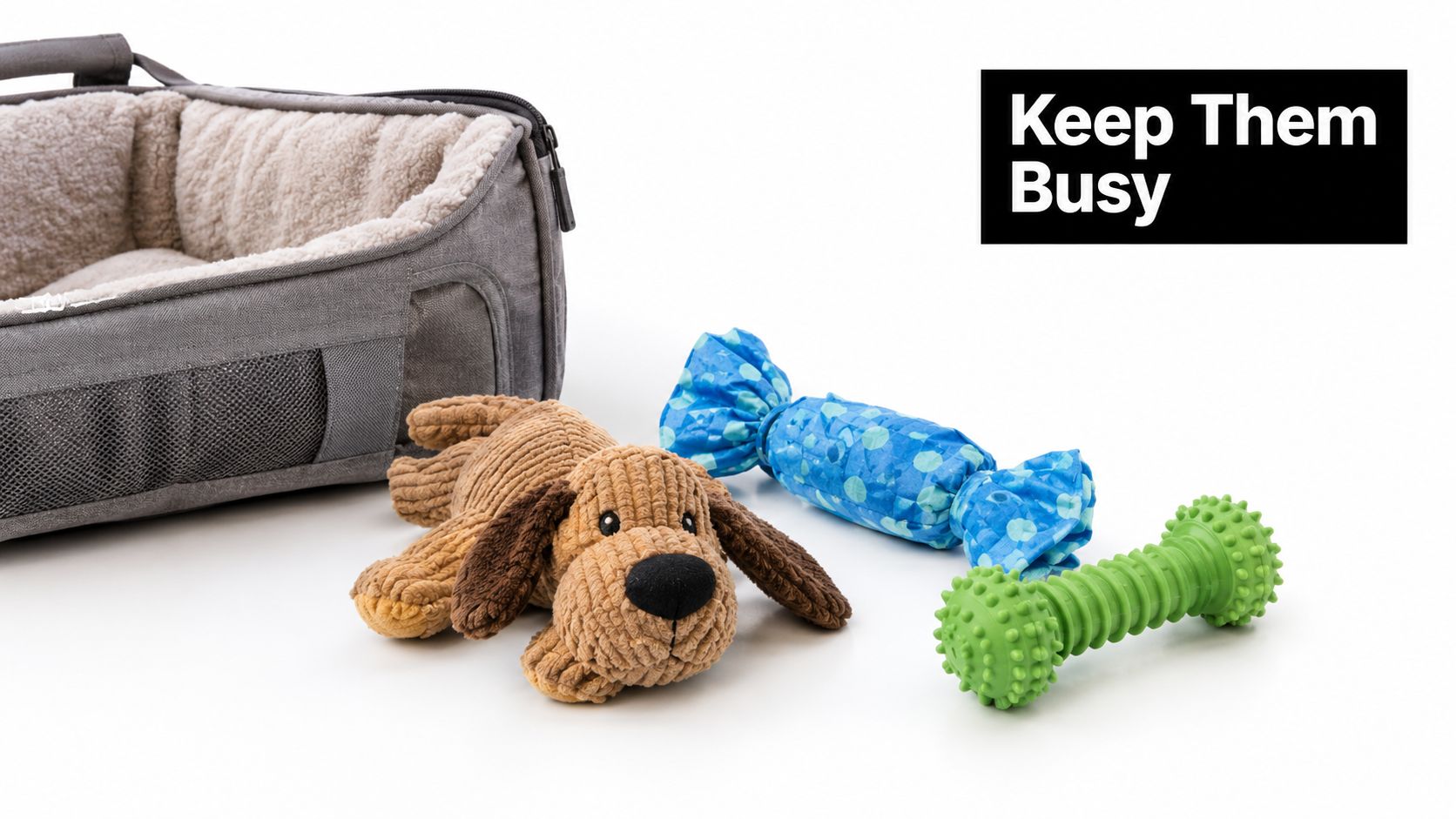
A travel toy has two jobs. It can occupy your pet during a quiet period, and it can provide a familiar sensory cue when the surroundings feel strange. Pack toys your pet already uses successfully, then add one suitable new option if novelty helps rather than frustrates them.
Nandog's My BFF™ collection includes plush characters with squeakers and crinkle textures. These features can make a toy engaging, but they aren't appropriate for every pet. A determined chewer may remove a squeaker or swallow stuffing, so inspect toys frequently and choose durable options suited to your individual animal.
Use toys at predictable times. Offer a familiar comfort toy after settling into the room, use a food-free interactive toy during a quiet rest period, and rotate options rather than leaving everything scattered across the floor. This keeps the environment manageable and makes it easier to notice whether play is calming or overstimulating.
- Pack familiar items: Include a toy that already signals relaxation, not only high-energy play.
- Match the setting: Use quieter toys in hotels with shared walls and reserve noisy play for appropriate spaces.
- Inspect often: Remove damaged toys immediately and keep a spare in case one is lost.
- Clean safely: Wash or wipe toys according to their materials, especially after outdoor use.
A toy shouldn't replace movement, sleep, or human supervision. If your pet ignores play and hides, pants, trembles, or becomes unusually irritable, reduce stimulation and offer the bed or carrier as a quiet retreat.
8. Establish Outdoor Bathroom Routines and Bring Waste Management Supplies
A bathroom plan should begin at the door, not after an accident. Take your pet outside soon after arriving, use a familiar cue, and reward the behavior calmly. Then identify the nearest suitable area before the next urgent need, especially if you're staying in a large hotel or unfamiliar neighborhood.
Keep the home schedule as a guide, but allow for travel conditions. Traffic, delays, heat, anxiety, and new smells can change how often your pet needs a break. During a road trip, choose safe stopping points away from moving vehicles, attach the leash before opening the car door, and don't allow greetings with unfamiliar animals without a reason.
Pack waste bags, hand sanitizer, paper towels, and an enzymatic cleaner. A portable pee pad can help during a delay or in a room where outdoor access is temporarily difficult, but it shouldn't replace outdoor breaks for a pet trained to go outside. Cats may need a familiar litter setup, a quiet location, and enough privacy to use it.
Make cleanup part of the kit
Store cleaning supplies in a sealed pouch that's easy to reach. If an accident happens, remove soiled bedding, clean the area thoroughly, and avoid punishment. Stress can cause temporary changes in bathroom behavior, and a calm response helps you focus on the underlying routine.
Check local rules for waste disposal and leash use. A prepared owner protects the accommodation, public spaces, and the pet's own comfort.
9. Monitor Health, Hydration, and Behavior Changes Throughout Travel
A pet that sleeps through a long drive may be resting, or may be showing the first sign that something is wrong. Check your pet several times daily and compare behavior with the usual baseline. Note water intake, appetite, breathing, movement, stool, energy, and willingness to interact.
Keep fresh water within reach and refresh it regularly. During stops, offer water before activity and watch whether your pet can settle afterward. Persistent vomiting, diarrhea, weakness, limping, breathing difficulty, collapse, or a marked change in responsiveness warrants prompt veterinary advice.
Heat exposure requires strict planning. Never leave a pet in a parked vehicle, even for a brief errand. Use shade and ventilation only as supporting measures, not as guarantees of safety. Check that any carrier or travel space allows the pet to stand, sit, lie down, and turn around comfortably.
Record small changes before they become a larger travel problem. A short note about food, water, bathroom use, and behavior gives a veterinarian a clearer starting point.
Use your phone's notes app to record meal and medication times, bathroom breaks, unusual symptoms, and the conditions around them. This helps when several people share care and provides a useful timeline if a clinic asks when a symptom began.
Contact a veterinarian when concerning changes persist or intensify. Before booking air travel, discuss heat, route length, cargo handling, and sedation. Direct flights, cooler cargo travel times, and fewer transfers may reduce stress, yet postponing the trip or choosing another transport method can be the safer decision.
10. Plan Rest Days and Gradual Activity Introduction for Safe Acclimatization
Arrival day should be lighter than the brochure suggests. Your pet has already managed transport, unfamiliar sounds, new handling, and a different sleep environment. A packed schedule can turn manageable alertness into exhaustion or defensive behavior.
Keep the first day quiet. Offer water, a familiar meal, a bathroom break, and access to the travel bed or carrier. Let your pet inspect one room before introducing the rest of the property. If guests, children, or other animals are present, add them gradually and give your pet the option to retreat.
Let behavior set the pace
A confident dog may be ready for a short walk after settling. A nervous dog may need more time indoors. Don't use a long hike to “tire out” a pet that is already stressed, and don't interpret hiding as stubbornness. Reduce noise, shorten outings, and protect sleep when your pet shows signs such as pacing, trembling, excessive panting, appetite loss, or irritability.
For senior pets, choose a supportive bed and limit slippery floors or unnecessary stairs. For cats, preserve a quiet litter and resting area before allowing more exploration. Keep feeding, bathroom, and sleep times close to home where practical.
A flexible itinerary is safer than forcing every planned activity. If your pet isn't recovering between outings, extend the rest period, contact a veterinarian when needed, and change the schedule rather than escalating the demands.
Pet Travel Tips: 10-Point Comparison
| Item | 🔄 Implementation Complexity | ⚡ Resource Requirements | ⭐ Expected Effectiveness/Outcomes | 📊 Ideal Use Cases / Impact | 💡 Key Advantages / Tips |
|---|---|---|---|---|---|
| Invest in a Quality Pet Car Seat for Safety and Comfort | Moderate, requires correct installation and acclimation | Medium–High, cost, vehicle anchoring, size limits | High ⭐⭐⭐⭐, improves safety and reduces travel anxiety | Car travel, frequent drivers, small–medium breeds; reduces driver distraction | Secure with vehicle anchors; introduce gradually; use familiar bedding |
| Pack a Portable Travel Bed for Familiar Comfort Anywhere | Low, pack and place | Medium, adds luggage weight; premium options costlier | High ⭐⭐⭐⭐, maintains sleep quality and reduces stress | Hotels, rentals, long stays, senior pets needing support | Wash before travel; choose correct size; reversible or orthopedic options |
| Maintain a Consistent Feeding Schedule and Bring Travel-Friendly Bowls | Low, planning and routine | Low, collapsible bowls, extra food, bottled water | High ⭐⭐⭐⭐, prevents digestive upset and preserves routine | All travel types; sensitive stomachs and routine-dependent pets | Pre-portion meals; pack extra food; clean bowls after use |
| Use Secure, High-Quality Collars and Leashes for Enhanced Safety | Low, select and test gear before travel | Low–Medium, durable collars/leashes, backups recommended | High ⭐⭐⭐⭐, prevents escapes and improves control | Walks in unfamiliar areas, crowded places, active excursions | Test fasteners; consider double-leashing; bring backups and reflective gear |
| Prepare a Comprehensive Pet Travel Kit with Essential Documents | Medium, gather, update, and organize records | Low, waterproof pouches, digital copies storage | High ⭐⭐⭐⭐, accelerates emergency care and compliance | Long trips, international/state travel, emergencies | Keep digital copies in cloud; use waterproof folders; update before each trip |
| Choose Pet-Friendly Accommodations with Comfort Amenities | Medium, research and confirm policies | Medium–High, possible higher fees and limited availability | High ⭐⭐⭐⭐, reduces anxiety and improves rest | Overnight stays, extended trips, pets needing amenities | Call ahead; request ground-floor rooms; verify pet policies and fees |
| Pack Interactive Toys and Comfort Items for Mental Stimulation | Low, select a mix of toys | Low, adds light luggage weight; may require replacements | Medium–High ⭐⭐⭐, reduces boredom and stress-related behaviors | Long drives, downtime at accommodations, anxious or active pets | Bring familiar and new toys; rotate items; pack durable extras |
| Establish Outdoor Bathroom Routines and Bring Waste Management Supplies | Medium, consistent scheduling and planning | Low, bags, dispensers, enzymatic cleaner, pads | High ⭐⭐⭐⭐, prevents accidents and maintains hygiene | Urban travel, rentals, long stays, pets reluctant in new areas | Establish routine early; pack cleanup supplies; research local relief areas |
| Monitor Health, Hydration, and Behavior Changes Throughout Travel | Medium–High, regular checks and documentation | Low–Medium, water access, first aid kit, apps | High ⭐⭐⭐⭐, early detection prevents escalation | Any travel, especially long trips, seniors, or medicated pets | Check multiple times daily; keep a travel health journal; know local vets |
| Plan Rest Days and Gradual Activity Introduction for Safe Acclimatization | Low–Medium, itinerary flexibility needed | Low, time and comfortable bedding | High ⭐⭐⭐⭐, reduces overstimulation and improves recovery | Multi-day trips, active itineraries, puppies/senior pets | Schedule quiet arrival days; use familiar beds; limit activity first 24–48 hrs |
Turn the Checklist Into a Calm Travel Routine
The most useful tips for traveling with pets become reliable only when they form a routine. Before departure, run three final checks.
First, secure transport and identification. Your pet should have an appropriate carrier, crate, car seat, or harness system for the transport method. Test every buckle, anchor, clip, and door before the travel day. Keep your pet in the rear seat when using a vehicle, never allow an unsecured animal to roam, and don't leave them unattended in a parked car. Attach a current ID tag, confirm the microchip record, and keep a recent photograph with your documents.
For flights or border crossings, verify requirements from the destination, carrier, and relevant public-health authorities. The U.S. Department of Transportation's guidance makes clear that health certificates and destination rules can apply, while CDC requirements can govern dogs entering the United States. Don't rely on an old checklist or a booking-page summary. Paperwork often has narrow timing windows, and a missing document can stop the journey.
Second, pack familiar comfort and practical supplies. Bring the food your pet already tolerates, extra portions for delays, a washable bowl, water, medication, waste supplies, cleaning materials, bedding, and safe toys. A Nandog car seat, portable bed, collar, leash, harness, or toy can support this setup when the product fits your pet and you've introduced it in advance. These items can improve comfort and organization, but they don't replace secure restraint, proper acclimatization, or veterinary advice.
Third, protect a flexible routine. Keep meals, bathroom breaks, sleep, and calm interaction close to the home pattern. Build in quieter arrival time and watch how your pet responds before adding people, places, or activities. If appetite, hydration, movement, breathing, or behavior changes in a concerning way, pause the itinerary and contact a veterinarian.
Run a practice trip before the actual one. Put the equipment in place, take a short drive, use the bed at a friend's home, and check whether your pet can eat, rest, and settle away from home. That rehearsal reveals problems while you still have time to adjust the fit, food, carrier, schedule, or destination.
Traveling with a pet isn't about making every moment perfectly comfortable. It's about reducing preventable risks, recognizing stress early, and giving your animal familiar choices throughout the journey. Pack accessibly, move deliberately, and let your pet's condition guide the pace.
Nandog Pet Gear offers car seats, beds, collars, leashes, harnesses, feeding essentials, and My BFF™ toys that can support a more organized and comfortable travel setup. Visit Nandog Pet Gear to explore travel and everyday gear, then test the products at home before your next trip.