


You've just found the plush toy under the sofa, and it's missing an ear, half its stuffing, and the squeaker your dog proudly carried into the kitchen. The toy looked soft, charming, and reasonably well made in the product photo. In real life, it became a pile of loose fibers and a potential veterinary problem before the afternoon was over.
That's the trap with shopping for the best plush dog toys. The cutest option isn't necessarily the safest, and the thickest toy isn't automatically the most enjoyable for your dog. The useful question is simpler: does the toy's construction match the way your dog plays?
A gentle carrier, a determined shredder, a tug enthusiast, and a dog that needs calming enrichment all need different plush designs. Once you understand the hidden categories, you can stop buying soft toys by appearance alone and start judging seams, components, fabrics, and failure points.
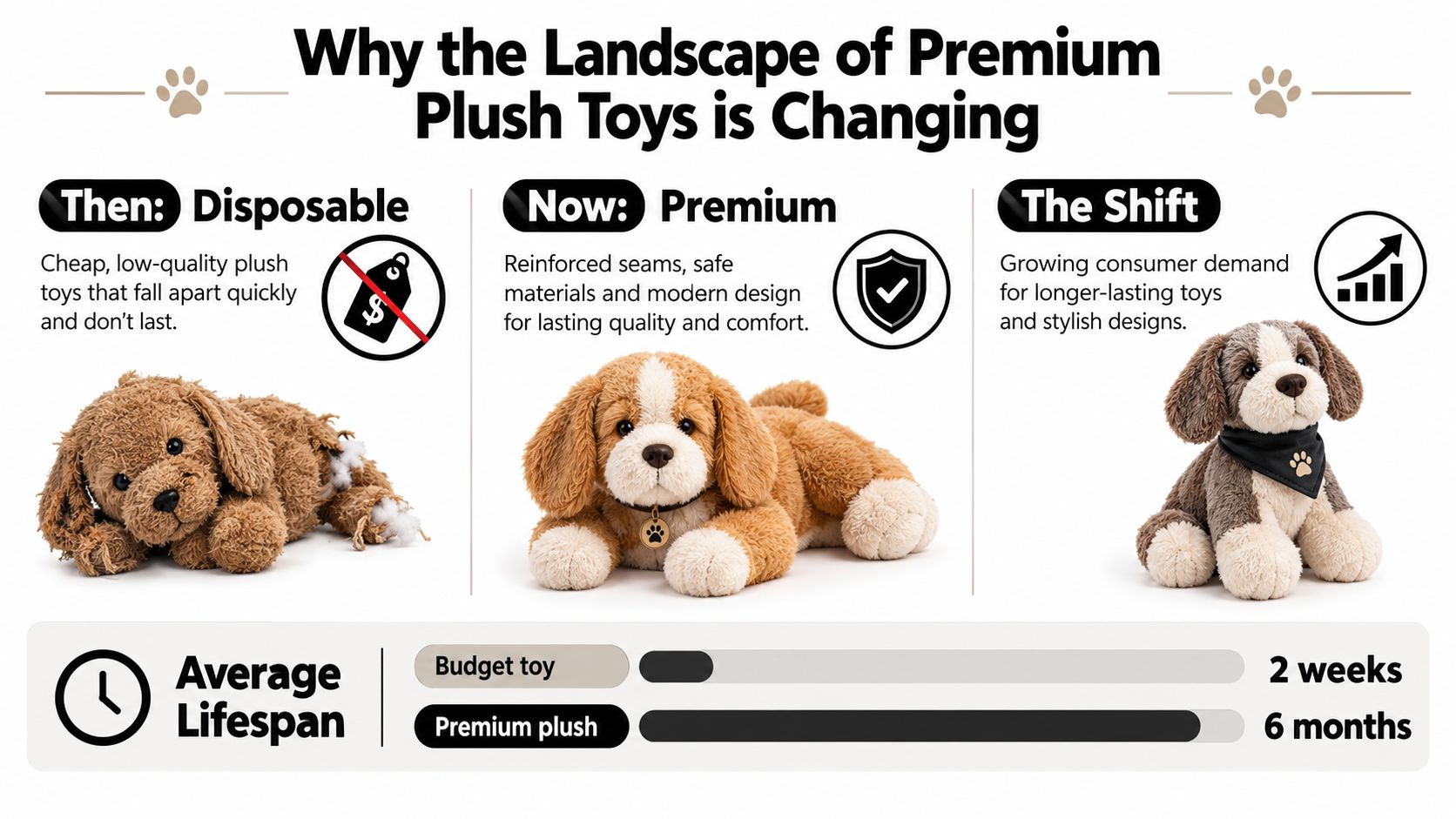
Why Premium Plush Toys Are Changing
The toy aisle has moved beyond soft shapes and cheerful colors. In the United States, department stores began selling dog toys in the 1920s, when leather balls were among the few widely available options. By 1955, synthetic products such as Nylabone demonstrated how quickly the category was adopting engineered materials and purpose-built designs, as documented in this FDA regulatory submission on the history and scale of dog toys.
That history matters because plush toys now compete in a much larger pet spending market. Dogs represented about 52.1% to 52.2% of the global pet-toys market in 2025. The overall market was estimated at approximately USD 10.0 billion in 2026 and is projected to reach USD 16.3 billion by 2033, according to Persistence Market Research's pet toys market analysis. The figures do not make every premium toy good value. They do explain why manufacturers are developing products for particular behaviors, indoor play, comfort, and repeated use.
Soft toys serve different jobs
Soft-toy demand is forecast to grow at about 10.7% CAGR from 2026 to 2033, with indoor play, comfort, and quieter enrichment identified as important drivers in the same market forecast. That change reflects how people use toys in apartments, busy households, and urban homes, where a dog may need occupation without constant noise.
A plush toy can now fill several roles. A comfort toy gives a dog a familiar object for settling. A crinkle toy adds sensory interest without requiring a full fetch session. A treat-dispensing plush toy creates a more active enrichment task. These are different design briefs, not interchangeable marketing labels.
The useful distinction is construction matched to play style. A gentle carrier may need softness and secure facial details. A determined shredder needs reinforced layers and close supervision. A tug enthusiast puts stress on seams that a comfort toy may never face. A dog seeking calming activity may benefit more from crinkle or treat features than from added resistance.
Premium still has limits
“Premium” describes a set of construction choices, not immunity from damage. A higher price may provide better fabric, stronger stitching, or a more considered internal layout. It does not make plush suitable as an unsupervised chew object, and it cannot prevent failure when a dog repeatedly attacks one seam.
Judge a toy by its lifecycle and failure behavior. A well-made toy that stays intact during supervised play can be a sensible purchase. A luxurious-looking toy that releases a squeaker after the shell tears is a poor fit for a dog that destroys fabric.
Practical rule: Buy plush for the job it can safely perform, not for a promise that it will survive every kind of chewing.
Waste adds another reason to choose carefully. An industry and policy estimate places the number of dog toys entering U.S. landfills at roughly 634 million annually, representing about 40,500 tons of waste, according to the FDA regulatory submission on the history and scale of dog toys. A longer-lasting toy is not automatically sustainable. Choosing a construction that suits your dog can reduce the cycle of replacing a cute toy whenever it loses an appendage.
Engineering for Safety and Durability
A plush toy usually doesn't become dangerous because its fabric looks worn. The serious risk begins when the dog can access and swallow a small component. Veterinary safety guidance identifies squeakers, ribbons, plastic eyes, string, and stuffing as potential choking or intestinal-obstruction hazards when a dog tears them loose, as explained by Humane World for Animals' safe dog toy guidance.
The three construction checks that matter
Seam strength comes first. Look for dense, even stitching around the neck, legs, tail, and any point where two fabric panels meet. Reinforced seams and an inner liner can delay the opening that exposes stuffing, but no seam is immune to a dog that methodically worries at one spot.
Component retention is the second check. Embroidered eyes and facial details remove hard plastic pieces that can be pried away. If a toy includes a squeaker, it should be enclosed and anchored rather than floating loosely inside the fill. Inspection guidance commonly treats the squeaker as its own failure point because it becomes a small plastic object once the outer shell tears.
Material quality completes the picture. Buyers should look for pet-safe textiles and dyes, with recognized toy-safety frameworks such as ASTM F963, EN71, and relevant REACH restrictions used as useful benchmarks. These references don't make a toy indestructible, but they help distinguish a considered material specification from a vague “non-toxic” label.
The feel of the fabric still matters. Owners comparing textile options for custom pet products may find this explanation of the softest fleece for custom blankets useful because it clarifies how plush and fleece differ in texture and construction. For a dog toy, however, softness should be considered alongside seam design, washability, and the likelihood that the dog will pull at the surface.
Match durability to the dog, not the packaging
A dog that carries a toy gently may get years of useful play from a construction that would last minutes with a shredder. A moderate chewer may need reinforced fabric and fewer projecting appendages. A powerful dog that locks onto seams needs a different plan, and owners can compare practical guidance in this guide to plush dog toys for strong chewers.
Use the toy under supervision when the dog has a history of opening plush. Remove it immediately if you see a torn seam, exposed stuffing, a loose thread, a detached feature, or an accessible squeaker. Don't wait for the dog to finish the job just because the toy was expensive.
A durable plush toy isn't one that never fails. It's one whose construction gives you enough warning before failure exposes something your dog can swallow.
Size is part of safety too. A toy should be large enough that the dog can't accidentally swallow the whole object or a detached part. That doesn't mean choosing the largest toy available. Oversized limbs and long ribbons can create their own targets for a determined chewer, so simple silhouettes often outperform elaborate ones.
Matching Plush Types to Your Dog's Play Style
The phrase plush dog toy covers several very different products. Treating them as one category is why a comfort toy often fails in the mouth of a shredder, or why a durable toy sits untouched because it doesn't feel pleasant enough to carry.
| Plush Sub-Type | Target Behavior | Key Feature | Durability Level |
|---|---|---|---|
| Comfort plush | Gentle cuddlers and carriers | Soft surface, simple shape, low stimulation | Low to moderate |
| Reinforced plush | Moderate chewers and tug players | Layered fabric, strengthened seams, limited appendages | Moderate to high |
| No-stuffing plush | Dogs that immediately open stuffed toys | Flat construction without loose fill | Moderate |
| Crinkle plush | Sensory seekers and indoor players | Crackling internal material | Low to moderate |
| Squeaky plush | Fetch enthusiasts and interactive play | Enclosed squeaker with secure construction | Low to moderate |
| Puzzle or interactive plush | Dogs that need mental work | Treat pockets, flaps, or dispensing features | Varies by mechanism |
Comfort plush for gentle mouths
A comfort plush works best for a dog that carries, naps with, or lightly mouths a toy. Choose a compact design with embroidered details, short or securely finished fabric, and few protruding parts. This is the category where softness and emotional familiarity matter most, but it still requires inspection because a cuddler can become a chewer when bored or left alone.
Don't buy a comfort toy for a dog that immediately seeks the seam. That dog isn't “bad” at using the toy. The toy is being assigned a job it wasn't built to do.
Reinforced plush for moderate chewers
Reinforced plush fills the middle ground. It may use multiple fabric layers, an inner liner, stronger edge binding, or a simplified one-piece body. These features slow access to stuffing and can make interactive games more practical, but they don't eliminate the need for supervision during tug.
Dogs often prefer the softer feel of reinforced plush over very hard rubber toys. That preference is useful because the toy can support carrying and light tugging without pretending to be an unsupervised chew.
No-stuffing and crinkle designs
No-stuffing plush removes one major mess and reduces the amount of loose fill available if the outer shell opens. It doesn't remove every risk. A dog can still swallow fabric, threads, or an internal crinkle layer, so inspect the body and stop using it when the structure separates.
Crinkle plush is often a good indoor option for dogs that enjoy sound and texture but don't need a loud squeaker. It suits short play sessions and supervised exploration. It usually won't satisfy a dog whose main goal is to pull something apart.
Squeaky and interactive plush
Squeaky plush can motivate a dog to retrieve, chase, and engage with an owner. The squeaker must be treated as a failure point, not as a harmless bonus. If your dog hunts for the sound and opens toys to reach it, choose a no-squeak design instead.
Interactive plush is especially useful for dogs that need a job. The category is expanding beyond simple stuffed shapes toward treat-dispensing and puzzle features, and one industry estimate places puzzle or interactive plush growth at 10% to 12% annually, as reported by IndexBox's U.S. plush dog toys market analysis. The mechanism matters more than the label. Look for openings that don't expose loose parts and choose a difficulty your dog can solve without frantic tearing.
For dogs that are restless rather than destructive, a structured 30-day plan for bored dogs can help you vary sniffing, training, play, and rest instead of asking one plush toy to do everything. Owners with larger dogs can also consider giant plush dog toys, provided the size and construction suit the dog's mouth and play style.
How Nandog Redefines Design and Well-Being
A modern plush toy has to serve two audiences. The dog needs the right tactile and interactive experience. The owner needs a product that fits the home, feels intentional, and doesn't turn every play session into a cleanup operation.
Nandog Pet Gear illustrates that design direction through its My BFF™ collection, a line of character-based plush toys built around softness and interactive details such as squeakers and crinkle textures. The collection reflects the brand's broader “Dream Better” positioning, which connects pet comfort, rest, and everyday well-being rather than treating toys as isolated accessories.
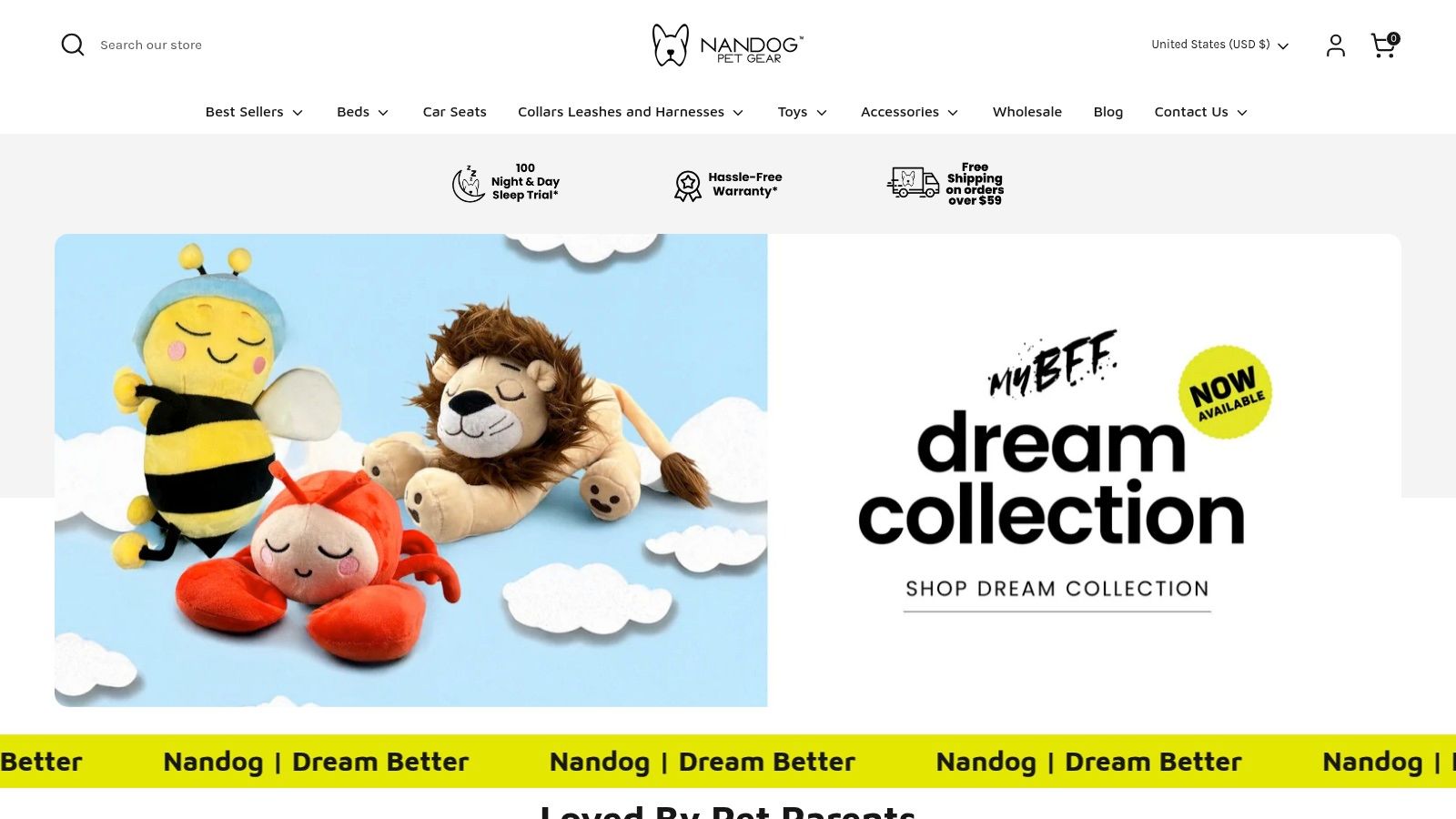
The useful design question isn't whether a character looks appealing. It's whether the toy's details fit the dog using it. A crinkle texture may suit a dog that enjoys quiet sensory play. A securely integrated squeaker may work for fetch with an owner who checks the toy after each session. A dog that opens every plush toy should be directed toward a no-stuffing or non-plush alternative rather than being given a more decorative target.
Nandog's product range includes a dedicated My BFF™ plush collection and an XL line aimed at medium and large breeds. Those options give owners a way to consider scale and intended interaction, but the same safety rules remain: inspect seams, watch for detached components, and retire the toy when the internal structure becomes accessible.
Where well-being fits into toy selection
Comfort is not just decoration. A familiar plush object can become part of a dog's settling routine, especially when the dog carries it, rests beside it, or uses it during quiet time. That role is different from a tug toy or puzzle, and the toy should be managed differently as well.
Industry commentary describes a broader movement toward dog toys that support emotional health, behavior regulation, confidence building, and calming, while also pointing to demand for premium and more sustainable materials. Pet Insight's coverage of dog-toy trends places that shift within a wider move from simple entertainment toward wellness-oriented products.
The right plush toy can support a routine. It can't replace training, exercise, supervision, or veterinary care.
This video offers another visual look at Nandog's plush-toy approach and product presentation.
The practical takeaway is modest but important. Choose design features because they support a known behavior, not because they make a product look more luxurious. Well-being comes from the fit between dog, toy, supervision, and routine.
Routine Care and Maintenance for Longevity
Even the best plush dog toys become unsafe when owners stop checking them. A maintenance routine doesn't need to be complicated, but it does need to happen before the dog finds the weak point.
A quick inspection routine
Run through the same checks each week, and inspect more often if your dog is an enthusiastic chewer:
- Check every seam. Press along the neck, limbs, belly, and corners. Look for lifted stitching, stretched fabric, or a gap beginning to form.
- Test attached details. Examine eyes, ribbons, labels, tails, and trim. If you can loosen a feature with your fingers, your dog may be able to remove it.
- Feel for internal changes. A squeaker that has moved, rattles freely, or sits close to a torn area deserves immediate attention.
- Look for loose threads. Trim only very short, harmless threads if the structure remains sound. A long thread or exposed inner layer means the toy should be removed.
- Make a decision. Repair a minor surface issue only if you can restore the construction securely. Otherwise, discard the toy.
A toy with a small repairable seam isn't the same as a toy whose stuffing has already become accessible. Once your dog has learned that pulling the fabric reveals something interesting, the toy may deteriorate quickly even after a superficial stitch.
Cleaning without weakening the toy
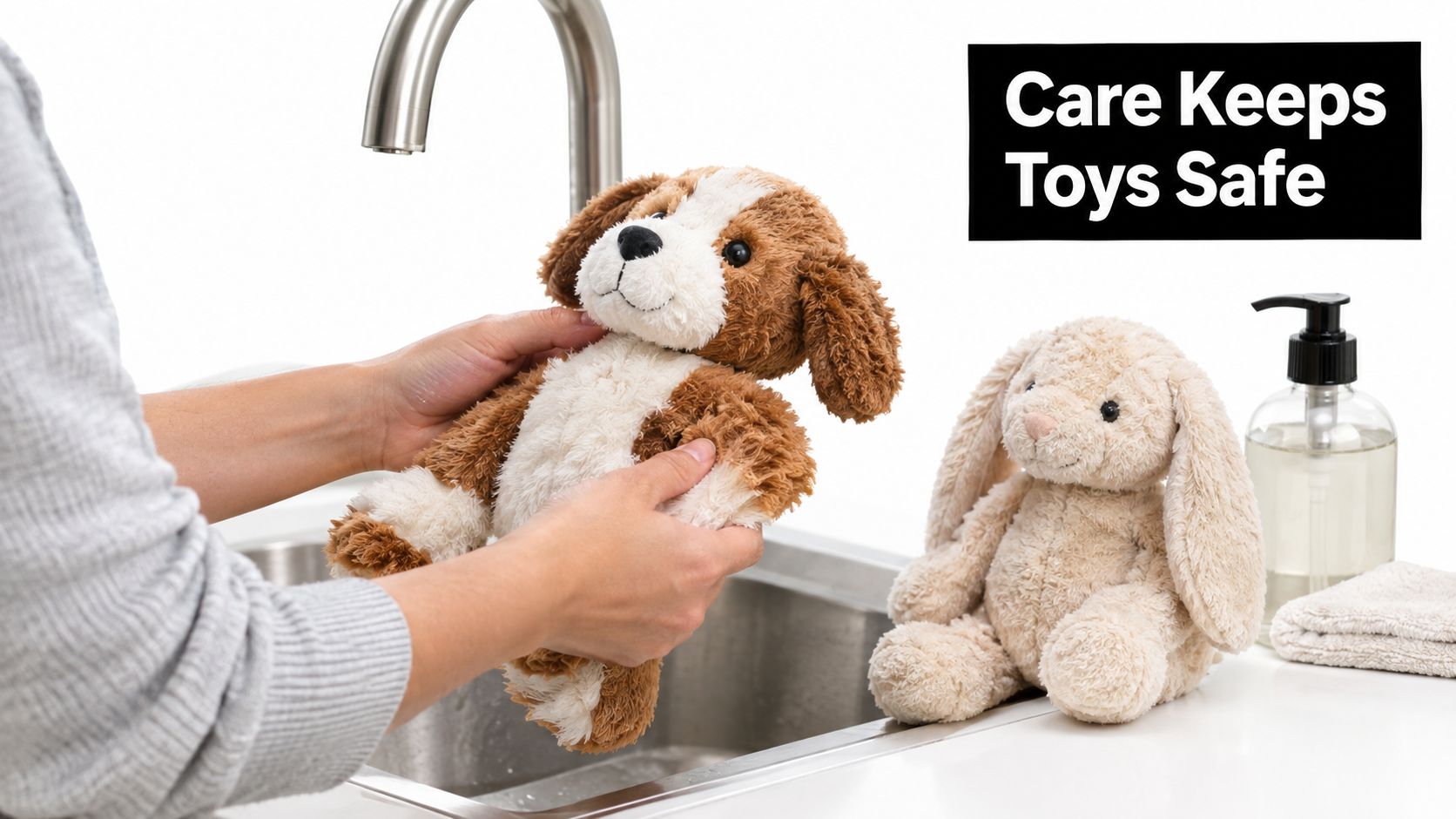
Read the manufacturer's care instructions before washing. If machine washing is allowed, use a gentle cycle, a mild pet-safe detergent, and a washable bag or pillowcase to reduce friction. Remove any removable insert first, and don't wash a toy with a squeaker if the care instructions warn against soaking it.
For hand washing, use cool or lukewarm water and press the toy rather than twisting it. Rinse thoroughly so detergent doesn't remain in the fabric. Guidance on how to wash plush toys can help you choose a method that protects the textile instead of relying on aggressive scrubbing.
Dry the toy completely before returning it to your dog. Air drying is usually gentler than high heat, which can distort fabric, weaken adhesives, or affect internal components. Damp stuffing also creates an unpleasant environment inside a toy that isn't fully ventilated.
Rotate instead of overexposing
Keep several toys available, but don't leave every toy on the floor all the time. Rotate comfort, sensory, and interactive options so each one stays familiar without becoming the sole focus of your dog's attention.
Put away a toy after a supervised session if your dog has started targeting it. Novelty can come from changing the activity, not constantly buying replacements. A short carry game, a gentle retrieve, and a quiet settling period each place different demands on the same object.
Debunking Common Plush Toy Myths
Myth one: every squeaker is safe because it's inside the toy. A squeaker is safe only while the dog can't access or swallow it. Once a seam opens, the plastic component can become a choking or obstruction hazard, so a loose squeaker means immediate removal.
Myth two: stuffing is harmless because it's soft. Soft fibers can still be swallowed, especially by a dog that opens toys methodically. If stuffing is coming through a seam, stop the play session and remove the toy rather than waiting to see whether your dog loses interest.
Myth three: natural fabric automatically makes a toy safe. Natural material says little about seam strength, dye safety, attached decorations, or the cleanliness of a toy after repeated use. Construction and care matter as much as the fiber label.
Myth four: a thick toy is indestructible. Thickness may delay damage, but it doesn't predict how a particular dog will attack the toy. A seam-focused chewer can defeat a heavy fabric product, while a gentle carrier may enjoy a simpler design for a long time.
Replace a plush toy when you see exposed stuffing, a detached squeaker, torn stitching, loose appendages, long threads, or a change in shape that reveals internal parts. If your dog may have swallowed fabric or a component, contact a veterinarian promptly rather than relying on home observation.
Nandog Pet Gear offers My BFF™ plush dog toys, including character designs with squeaker and crinkle elements, plus an XL collection for medium and large breeds. Visit Nandog Pet Gear to compare those options with your dog's play style, then choose a size and construction you can supervise confidently.