


You're at a café patio with one hand on the leash and the other searching for your phone. Your dog has wrapped the lead around a table leg, the water bottle is rolling toward someone's chair, and the used waste bag is far too close to your wallet. A large tote can carry everything, but an open cavity often turns a simple outing into a small excavation project.
Tote bags with compartments solve a practical problem, not just an aesthetic one. They give treats, waste bags, keys, paperwork, water, and personal items separate places to live. The right layout can make a park visit, café stop, vet appointment, or commute feel calmer because you can reach one item without exposing everything else.
The Everyday Carry Problem Every Pet Parent Knows
Pet owners carry two kinds of essentials at once. There are personal items, such as a phone, wallet, keys, sunglasses, and tissues. Then there are pet supplies, including treats, a collapsible bowl, waste bags, a spare leash, medication, toys, and sometimes a damp accessory that needs to stay away from clean belongings.
The trouble starts when every item shares one deep compartment. You may remember putting the vaccination card in the bag, but finding it means moving a bottle, treat pouch, leash, and half-open packet of wipes. At a clinic reception desk, that delay feels especially awkward. At a café, it can mean placing the entire contents of your tote on a clean table while your dog waits beside you.
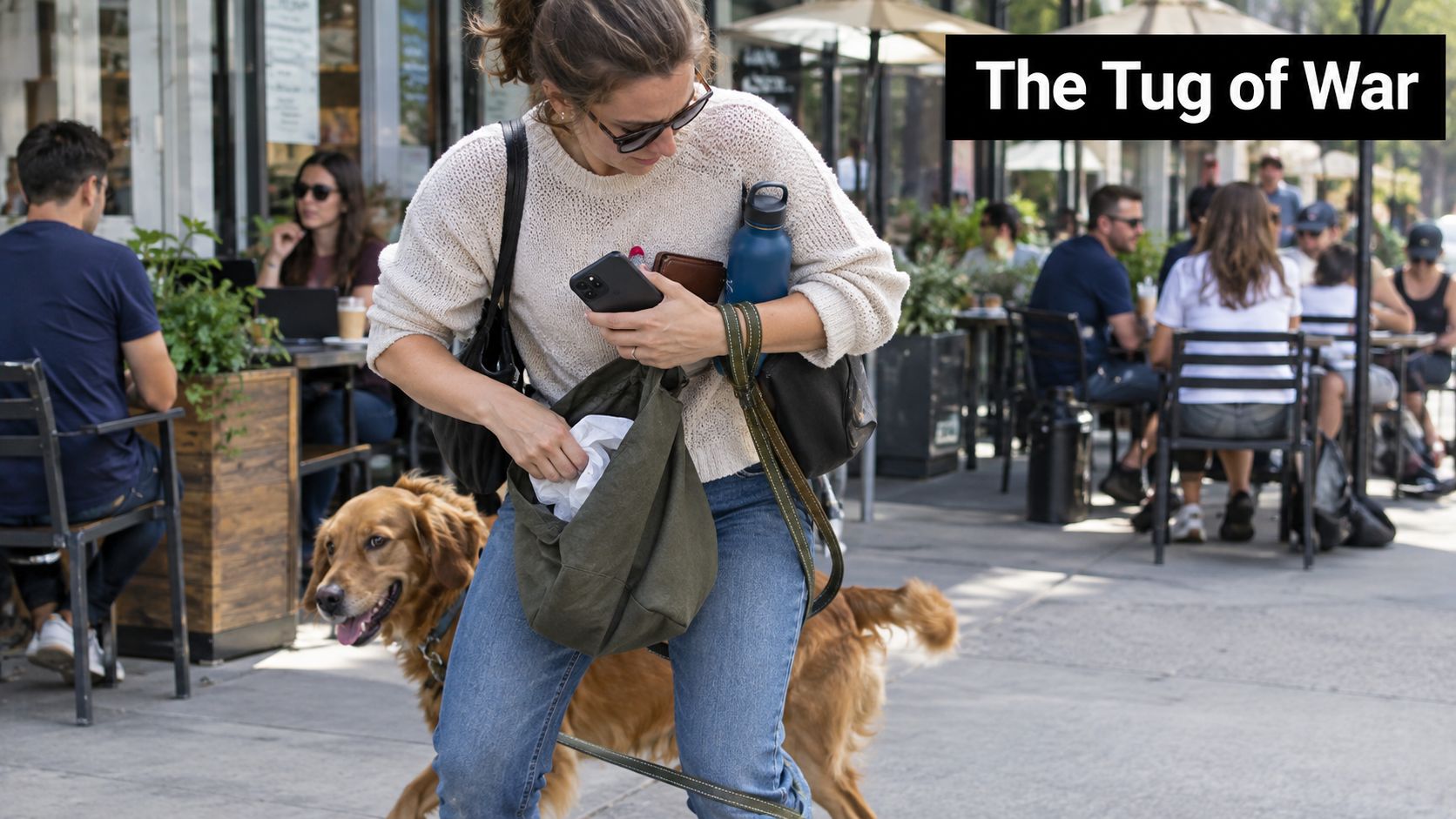
Separate clean items from urgent items
A useful pet tote treats organization as a care routine. Clean treats should have a different home from waste bags. A phone should sit away from a damp bowl. Vet records need protection from crumbs, fur, and accidental spills. A quick-access sleeve for waste bags matters because you often need it while holding a leash.
This is why practical dog travel accessories are easier to evaluate when you consider the whole outing rather than the number of pockets. A compartment earns its place when it reduces handling, protects an item, or helps you act quickly.
Practical rule: If you can't name the job of a pocket, you probably don't need it.
The best tote isn't the one with the busiest interior. It's the one that lets you find your keys without touching the used waste-bag sleeve, retrieve a treat with one hand, and keep your dog's supplies from taking over your personal space.
What Makes a Tote Bag Compartmentalized
A compartmentalized tote uses built-in dividers, dedicated pockets, or defined zones instead of relying on one open cavity. The word “compartment” can describe several different constructions, and those constructions behave differently when the bag is full.
An internal divider runs through part of the main body and separates larger items. It works well for dividing personal belongings from pet supplies, or for keeping a laptop upright beside a bottle. Attached pockets and sleeves are sewn onto the interior or exterior walls. They're better suited to small objects that need quick access, such as keys, cards, treats, or waste bags.
A modular insert takes a different approach. A removable pouch, organizer, or hook-and-loop panel creates structure only when you need it. This format suits people whose routines change from a dog walk to grocery shopping or commuting. You can remove the insert when you need a broad carrying space.
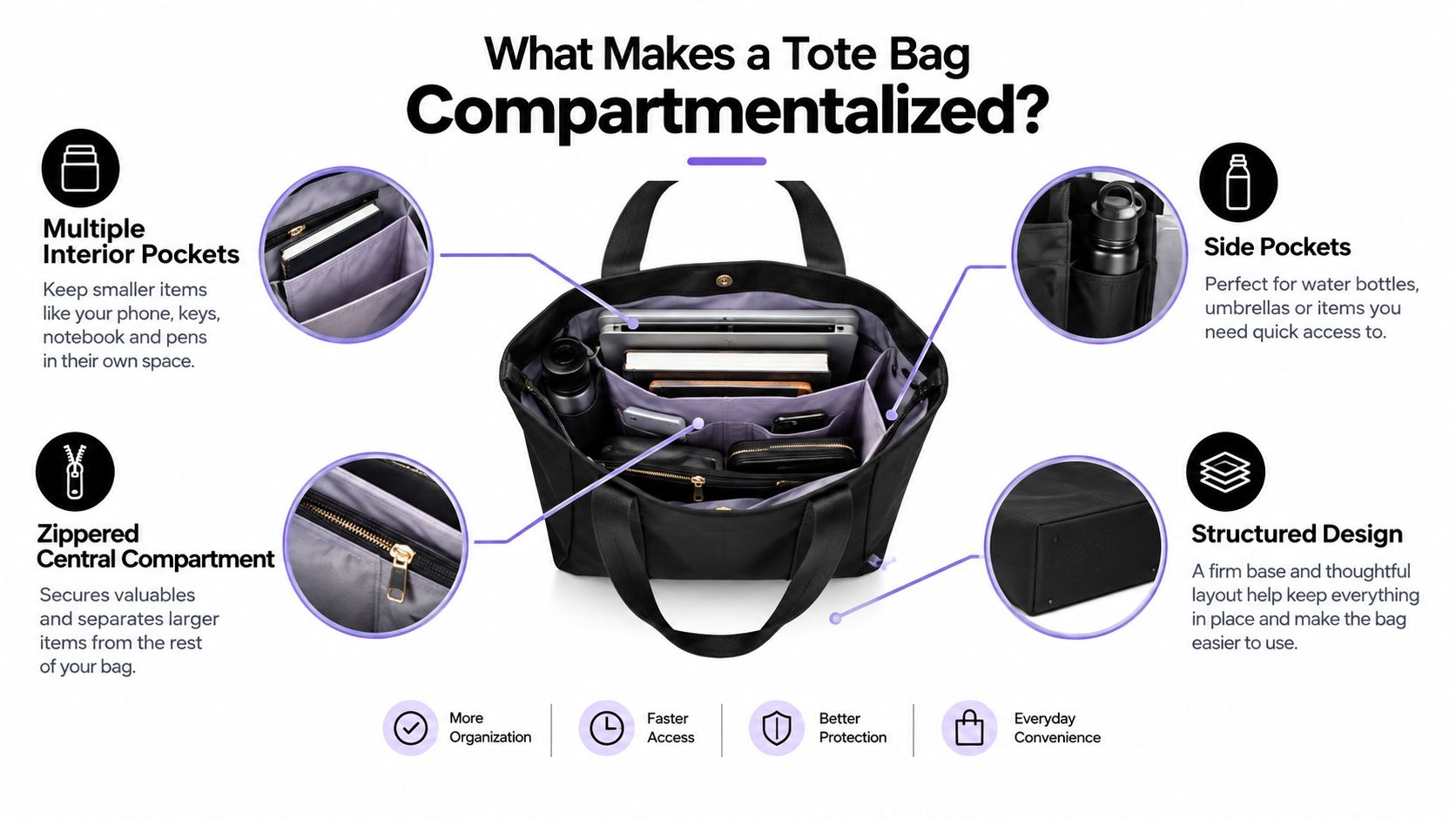
Three forms of organization
- Fixed dividers: These create stable zones and help heavier objects stay upright, but they add seams and can make the interior less flexible.
- Wall pockets and sleeves: These improve quick access and use otherwise empty space, although shallow pockets can spill small items.
- Removable organizers: These adapt to different routines, but the insert can add weight and may shift inside an unstructured tote.
The category sits between a simple open-top market bag and a fully structured briefcase or backpack. A basic tote gives you capacity with minimal construction. A structured organizer gives you control, but can feel restrictive when you need to carry an oddly shaped blanket, toy, or food container.
A useful comparison is a best packable beach tote, where flexible storage and easy packing may matter more than rigid internal separation. For pet use, the question is whether that flexibility helps your routine or lets wet, dirty, and fragile items collide.
Think of compartments as a design philosophy. The bag should assign space according to how you move, what you reach for first, and which items need protection.
Materials and Construction That Actually Hold Up
A compartment can look excellent in a product photograph and still fail at its attachment point. Bottles, electronics, food containers, and pet supplies shift as you walk. That movement puts pressure on divider seams, pocket openings, gussets, bottom panels, and handle anchors.
Outer materials create different trade-offs. Coated canvas offers a sturdy, more substantial feel and can resist light moisture. Recycled nylon usually keeps the bag lighter and may dry quickly. Waxed cotton brings texture and a relaxed appearance, but it needs care that differs from ordinary cotton. Vegan leather looks polished and wipes clean, while treated cotton twill offers a softer, fabric-led style with some surface protection.
Compare the material by the mess you expect
| Material | Weight | Water Resistance | Cleanability | Best For |
|---|---|---|---|---|
| Coated canvas | Medium to heavy | Good for surface moisture | Wipe clean; follow maker guidance | Structured daily carry |
| Recycled nylon | Light | Often good, depending on coating | Usually easy to wipe | Walks, commuting, and travel |
| Waxed cotton | Medium | Moderate surface resistance | Spot clean; avoid aggressive washing | Casual, textured styling |
| Vegan leather | Medium | Good on the surface | Simple wipe-down | Polished urban use |
| Treated cotton twill | Light to medium | Moderate | Spot clean or gentle care | Soft everyday totes |
The lining matters most where contamination is likely. A PEVA or TPU-lined zone can make sense for damp bowls or used accessories. Ripstop nylon can add resistance to tearing and repeated handling. A removable washable liner is useful when the bag regularly carries treats, food, or muddy items.
Inspect the load paths
Look for bar-tack or box-X stitching where handles meet the body. D-rings should connect to reinforced webbing or a substantial panel, not a thin strip of lining. Bound edges reduce fraying and make pocket mouths less likely to catch claws or snag fabric.
The divider-to-body junction deserves special attention. A floating divider may flex comfortably, but it needs secure anchoring at the points where loads transfer. A sewn-through divider can add stability, yet it may create concentrated stress if the surrounding fabric lacks reinforcement.
A finished bag should be tested as a finished assembly. Seam-breaking-force methods and abrasion testing for bags distinguish seam failure from flat-fabric wear, which matters because pocket edges and handle-contact areas experience different rubbing patterns. Look for clear failure standards such as visible seam opening, thread breakage, fabric tearing, or coating exposure.
Compartment layout also affects durability. A reinforced central or rear zone should carry dense objects, while lighter pockets handle accessories. A structured base helps distribute point loads instead of pushing them into side seams. Quality guidance for reusable bags recommends checking seam opening, handle distortion, stretching, and loss of shape after loading, as well as comparing sewn-seam strength with the strength of the unseamed fabric. The reusable-bag quality control guidance provides useful context for that evaluation.
How Compartment Layout Shapes Real Outings
Pocket quantity tells you very little by itself. A tote with many small sections can be less useful than one with three well-placed zones if those sections are too shallow, hard to clean, or positioned beside the wrong items.
Start with the outing, then choose the layout.
Park walks
A quick park walk needs speed. A slim front pocket can hold treats or a phone. A dispenser slot keeps waste bags available without opening the main compartment. A side sleeve can hold a collapsible bowl, but mesh is only appropriate if the bowl is dry and clean. A damp bowl needs a wipeable or leak-resistant zone instead.
The ideal park setup keeps frequently used items near the opening. You shouldn't need to remove a leash or water bottle to reach a treat. It also keeps waste supplies physically separate from food.
Café stops
Café outings add human items and a cleanliness problem. An insulated section can keep your drink upright, while a wipeable base pocket catches crumbs, fur, or a minor spill. A zip pocket protects cards and keys when your attention shifts to your dog.
Avoid layouts that put a wet bowl against a laptop sleeve or paper napkins against used accessories. Compartments should create separation, not merely subdivide the same mess.
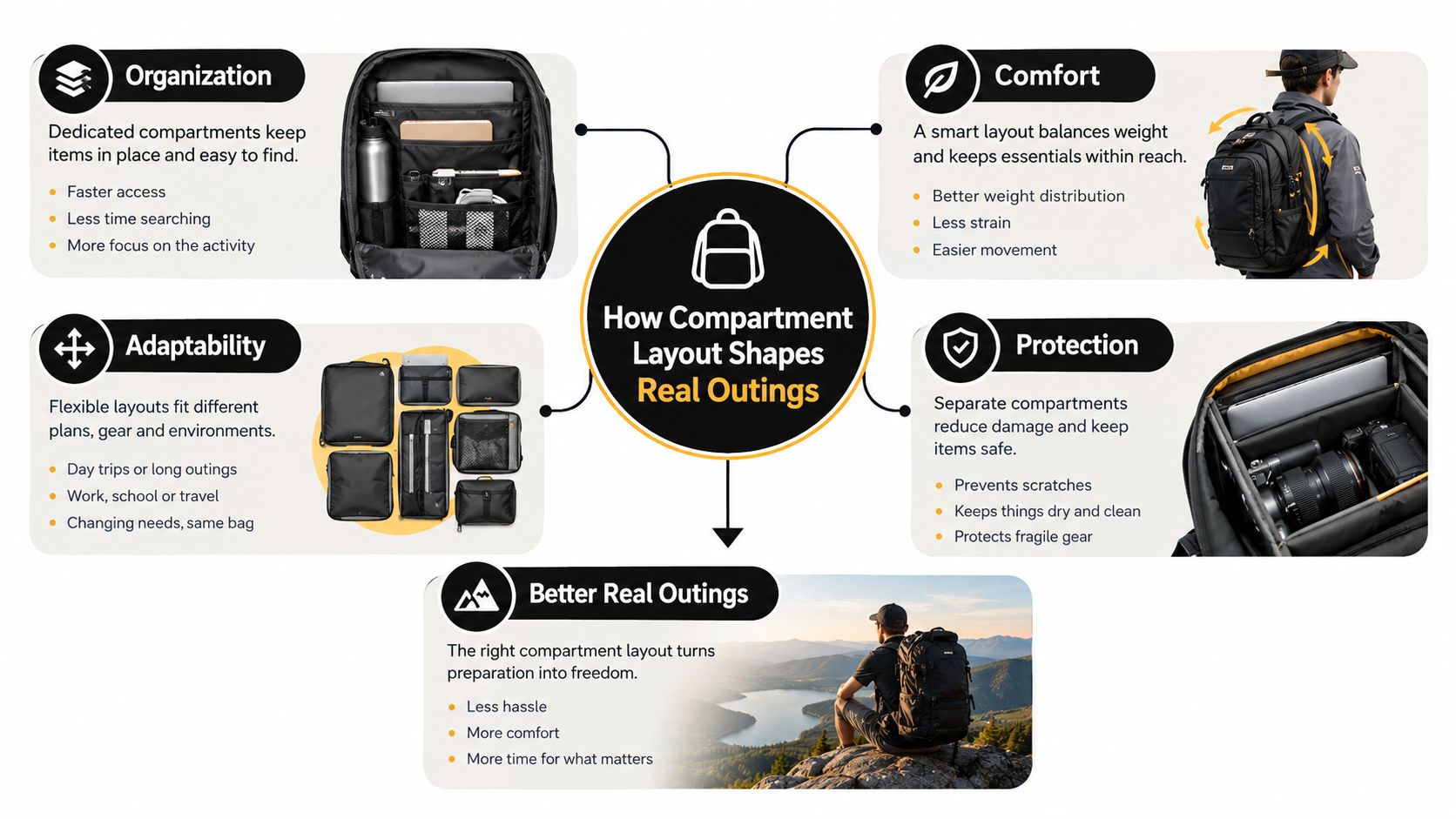
Vet visits and transit
Vet appointments call for a protected document pocket for records, cards, and written instructions. Keep that zone away from the treat pocket, particularly if treats shed crumbs or have strong odors. A separate sleeve for a spare leash can prevent it from tangling with paperwork.
For a commute or transit-heavy day, a broad central cavity works better than a grid of tiny pockets. It can hold a laptop, light layer, water bottle, and pet supplies while organizer panels keep smaller objects from sinking. A dog travel bag guide can also help you think through which items need immediate access during movement.
The strongest layout usually has a central load zone, quick-access exterior storage, and one cleanable area for wet or dirty gear. That arrangement supports stability without forcing every object into a separate compartment.
Choosing the Right Format for Your Routine
A tote is convenient because it opens wide and lets you see what you're carrying. It also looks at home with everyday clothing and makes quick access easy. The cost is that one shoulder often carries the load, and the bag may swing or pull when you're walking a dog.
A backpack spreads weight across two shoulders and leaves both hands available for a leash, phone, or transit card. It's often the more comfortable choice for longer commutes, but access takes more planning. You may need to remove it or rotate it to reach an item.
A duffel offers capacity for car travel, longer outings, or bulky supplies. Its broad cavity can swallow blankets and toys, but its softer structure often gives you less precise organization.
| Format | Access Speed | Capacity | Structure | Best For |
|---|---|---|---|---|
| Tote | Fast, especially from the top | Moderate to broad | Varies from soft to rigid | Café stops, shopping, and everyday carry |
| Backpack | Moderate | Moderate | Often supportive | Transit, walking, and hands-free routines |
| Duffel | Fast at the main opening | Broad | Usually flexible | Car trips and bulky pet supplies |
Structure changes the experience
A structured tote keeps bottles upright, protects document sleeves, and stops dividers from collapsing into the center. It can feel heavier and less forgiving when you carry an unusual shape. An unstructured tote folds more easily and accommodates bulky items, but contents can shift and small objects may collect at the bottom.
A zip top adds security around curious paws, crowded sidewalks, and spills. An open top is quicker for loading and unloading, although it gives you less protection when the bag tips.
Within tote bags with compartments, compare a wide cavity with removable pouches against a fixed grid. The first option suits apartment living and changing errands. The second suits a predictable routine where treats, keys, paperwork, and waste bags always travel together.
A tote-style carrier such as Nandog's Tote Dog Carrier uses hidden pockets for personal items and a dedicated treat pocket, which illustrates how a pet-focused format can combine the animal's needs with the owner's essentials. For a broader carrier comparison, see this canvas dog carrier tote.
Match the format to your week. Choose a tote if you make short stops and need immediate access. Choose a backpack if you walk or use transit for longer stretches. Choose a duffel if capacity matters more than precise organization.
Cleaning and Caring for a Pet-Ready Tote
A pet-ready tote needs a cleaning routine that matches its use. A bag used for daily walks collects fur, crumbs, soil, and waste-bag residue faster than one reserved for occasional vet appointments.
For a daily-walk tote, empty every pocket regularly, shake out loose debris, and wipe the base and pocket mouths. A weekend park or vet tote can usually receive a deeper clean on a monthly schedule, with extra attention after a spill or contact with muddy equipment.
Clean by material
- Coated canvas: Wipe with a damp microfiber cloth and mild detergent. Avoid harsh scrubbing that can damage the coating.
- Nylon: Use lukewarm water, mild soap, and a soft brush for textured areas. Rinse residue away with a clean cloth.
- Waxed cotton: Spot clean and follow the maker's care instructions. Strong detergents and hot washing can remove or disturb the wax.
- Vegan leather: Wipe promptly with a damp cloth. Don't soak it or use abrasive cleaners.
- PEVA or TPU zones: Clean spills quickly with a mild solution that's compatible with the lining. Protect seam tape by avoiding aggressive brushing and prolonged soaking.
Dry the tote fully before storing it. Leave compartments open, support the base so it doesn't fold into a damp crease, and keep the bag away from direct high heat that can warp coatings or structure. Check zippers for trapped grit, wipe D-rings, and keep magnetic snaps free of crumbs and fur.
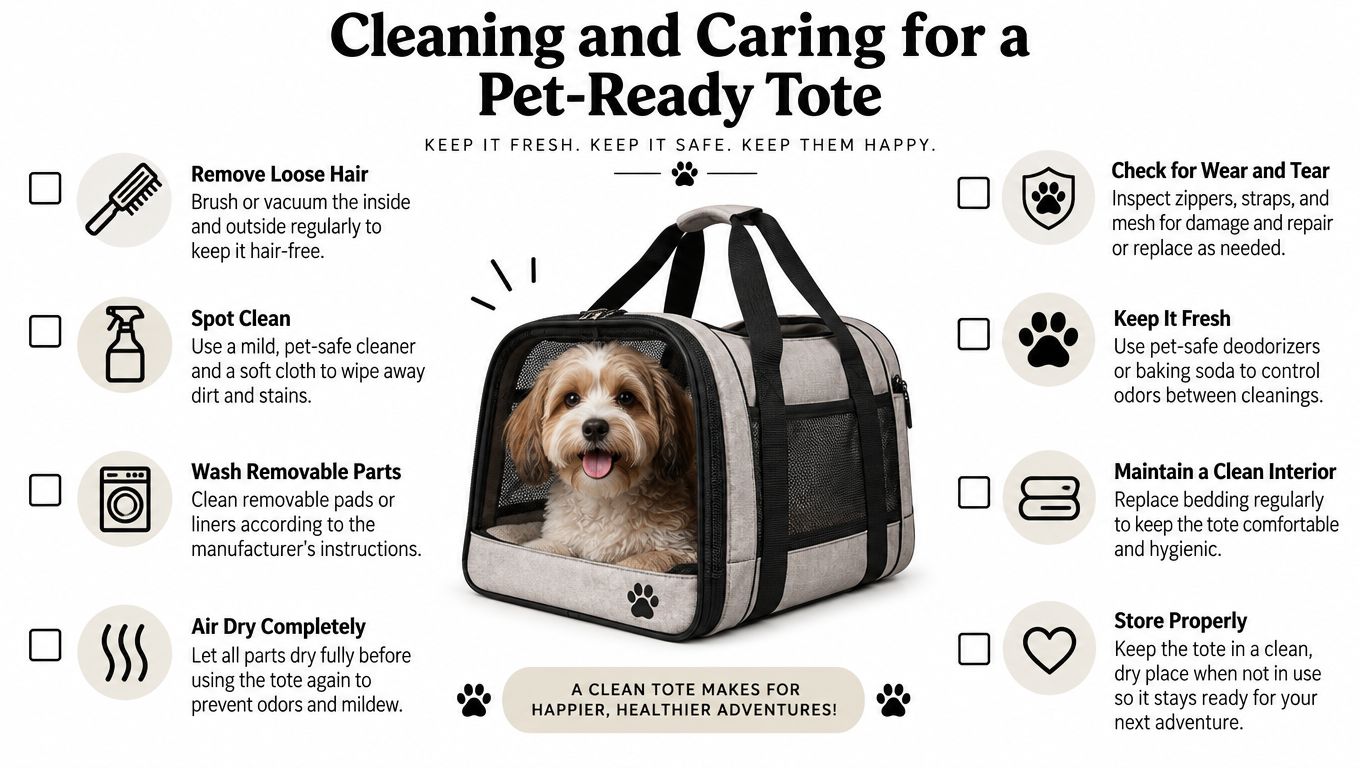
Keep a small care kit nearby:
- Microfiber cloth: For routine surface wiping.
- Mild detergent: For diluted spot cleaning.
- Soft brush: For seams and textured fabric.
- Baking soda: For absorbing odors after the bag is dry.
Clean the treat pocket and waste pocket separately. That small habit reduces odor transfer and makes it easier to notice residue before it spreads into the main compartment.
What to Look for Before You Buy
Treat the purchase like a practical inspection, not a reaction to attractive styling. Start by listing the largest items you carry regularly. A folded blanket, two water bottles, a laptop, or a food container needs to fit without forcing the side seams outward.
Check the interior dimensions, opening width, and base shape together. A bag can have a generous listed capacity but still be difficult to load if the mouth narrows sharply or the divider blocks bulky items.
Use this buyer checklist
- Test access: Reach for the phone, keys, treats, and waste bags with one hand. If every action requires opening the main cavity, the layout isn't serving quick outings.
- Inspect hardware: Zippers should move smoothly without needing both hands. Clips should close with a thumb push, and D-rings should feel anchored rather than stitched into thin lining.
- Study stress points: Look for bartacks, box-X stitching, reinforced strap bases, and secure pocket corners. Bound or double-stitched edges are helpful where claws, buckles, or leash clips might catch.
- Confirm cleanability: Removable liners, wipeable coatings, and machine-washable construction can save the bag after a leak. Always follow the manufacturer's care instructions before using disinfectant.
- Match the style: Neutral canvas, coated nylon, and pebbled vegan leather create different visual impressions. Choose a finish that works with your wardrobe, because a bag left at home can't organize anything.
- Lift it empty: The empty weight matters before you add water, pet supplies, electronics, and personal belongings. A heavier structure may hold its shape better, but it also increases the load you carry.
Load test: Put your usual bundle inside the bag, then walk, bend, open a zipper, and remove one item without setting the tote down.
Look at the bottom corners after loading. Excessive stretching, handle distortion, or a divider that bows into the main cavity suggests that the construction isn't distributing weight effectively. Pocket openings should remain usable when the central compartment is full.
If you're comparing custom options for a team, event, or retail program, reviewing branded promotional totes can clarify how branding choices interact with fabric, construction, and intended use. For an individual pet owner, prioritize the physical details first, then decide whether the appearance fits your daily routine.
Bringing It All Together
A compartmented tote earns its place when it functions as a small pet-care system. Clean treats, waste supplies, paperwork, water, and personal essentials each need a logical home. The best arrangement isn't the one with the most pockets. It's the one that keeps items separate, stable, accessible, and easy to clean.
Match the material to your climate and your pet's habits. Choose a wipeable zone if damp bowls or muddy accessories are part of the routine. Choose a structured base if you carry bottles and electronics. Choose flexible storage if your bag changes jobs between a park visit, grocery run, café stop, and commute.
Before buying, load the tote with your real essentials and walk a few steps. Notice whether the handles stay comfortable, whether the weight pulls to one side, and whether you can open the compartments without putting down the leash. If the bag solves a frustration you already have, it's far more likely to become part of your weekly rotation.
Nandog Pet Gear offers design-focused pet accessories, including tote carriers and everyday essentials made for life with dogs and cats. Explore the Nandog Pet Gear collection to find a pet-ready carry option that brings organization, comfort, and a polished look to your routine.