


You're heading out for coffee, the subway is crowded, and your small dog is already watching the front door. A regular handbag won't give them enough support, while a hard-shell carrier feels bulky and out of place for a short city trip. A well-made canvas dog carrier tote solves that awkward middle ground, but only when its polished exterior is backed by real structure, airflow, and secure construction.
The right tote should look at home beside your coat and still perform like purpose-built pet gear. It needs to support your dog's body, stay stable while you walk, keep them cool, and survive the inevitable wet paw, spilled treat, or muddy sidewalk. Style matters because you'll carry it often, but engineering decides whether you'll keep using it.
The Everyday Canvas Dog Carrier Tote
A canvas dog carrier tote is part handbag, part travel carrier, and part daily companion. It's designed for small dogs who want to come along to the café, boutique, vet appointment, or friend's apartment without turning every outing into a logistical exercise.
The appeal is obvious. Canvas has a softer, more refined appearance than technical nylon, and a structured tote can sit naturally beside your everyday wardrobe. A small terrier peeking over the edge looks less like they're being loaded into equipment and more like they're joining you for the afternoon. That distinction matters to design-conscious owners who don't want to choose between a useful carrier and a bag they actually enjoy carrying.
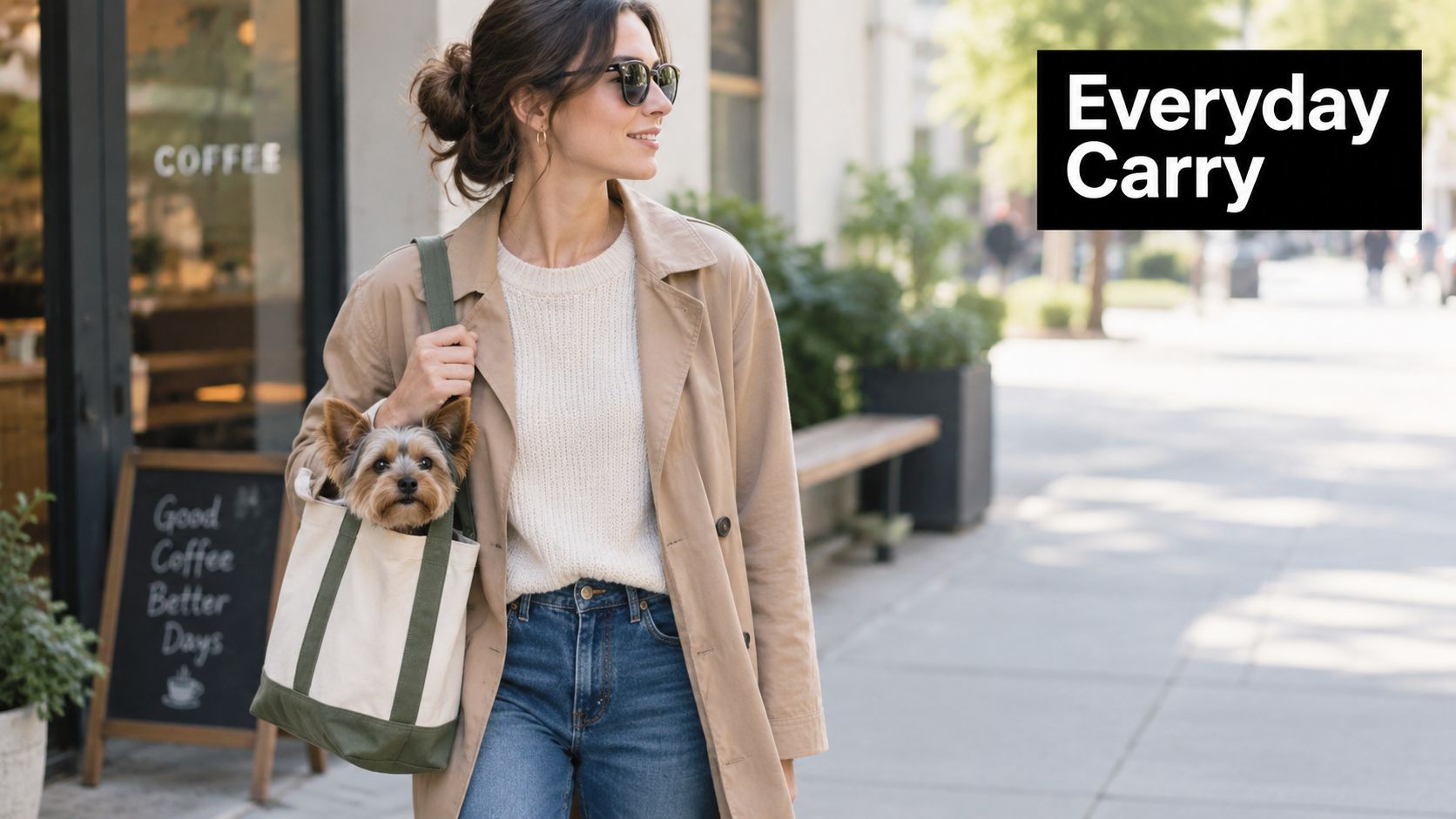
The category has also moved beyond simple fabric bags. Better designs now combine structured floors, safety tethers, breathable openings, reinforced handles, washable liners, and discreet storage. Those details make the difference between a tote that looks attractive online and one that remains comfortable after repeated errands.
My practical rule: If the bag could be mistaken for an ordinary shopping tote when empty, inspect the base, stitching, closures, and ventilation before you trust it with your dog.
The broader category has room to grow. The global dog carrier bags market is estimated at $1.8 billion in 2026 and projected to reach $3.23 billion by 2035, implying a 6.7% CAGR over 2026 to 2036, with tote-style products and canvas listed as market segments in the same forecast (dog carrier bags market forecast). Canvas totes therefore sit inside an expanding pet-travel category shaped by portability, convenience, and cabin-friendly transport, rather than existing only as fashion accessories.
Design can also make the carrier feel like part of your home and personal style. Owners who enjoy visual reminders of their pets may pair a polished tote with handcrafted dog canvas prints, creating a cohesive look between their everyday accessories and living space.
For a closer look at how a purpose-built option handles storage, straps, and small-dog use, compare The Tote Dog Carrier. The point isn't to buy the first attractive canvas bag you find. It's to choose a carrier that treats your dog as the load-bearing priority.
What Makes a Quality Canvas Carrier
Not all canvas totes deserve the word carrier. Some are just roomy bags with pet-themed styling, and that isn't enough. Your dog's weight shifts every time you turn, climb stairs, set the bag down, or reach for a door, so the construction must manage movement rather than just hold volume.
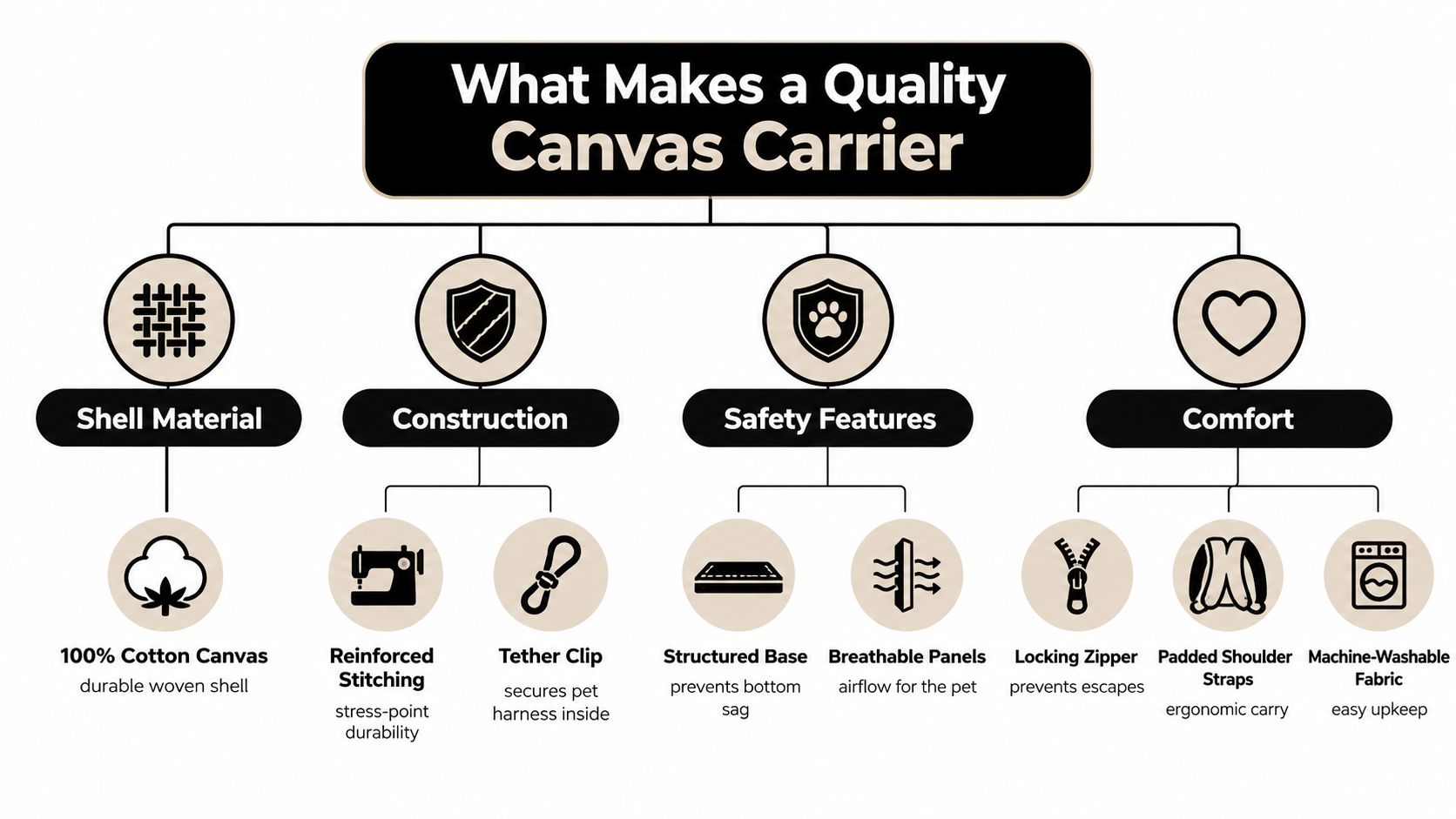
A durable design commonly starts with a 100% cotton canvas shell, a wipeable polyester lining, and a firm, water-resistant bottom. That combination gives the bag shape, simplifies cleanup after wet paws or spills, and helps distribute your dog's weight so the base stays level instead of folding inward (canvas dog tote construction example).
The shell and interior
Canvas should feel dense and substantial rather than flimsy or overly loose. A durable woven shell resists everyday abrasion, while the lining should be smooth enough to wipe without trapping fur and debris. A removable liner is even better because it lets you clean the dog-contact surface without subjecting the entire bag to unnecessary wear.
Water resistance is useful, but don't confuse it with waterproofing. Treated fabric can help with light rain and damp pavement, yet it won't make the tote suitable for prolonged exposure or heavy weather.
The structure underneath
The base is the feature I'd inspect first. A soft cushion is pleasant, but it can't replace a firm floor that supports the dog from front to back. Without that structure, your dog sinks toward the center, shifts repeatedly, and may struggle to settle.
Look at the connection between the base and the side panels. The stitching should be even and reinforced at stress points, particularly where handles, shoulder straps, tether clips, and zippers attach. Hardware should feel secure in your hand, not thin or decorative.
Marketing claims versus useful evidence
Ignore vague labels such as “luxury,” “premium,” or “boutique” until you can identify the physical features behind them. A well-considered carrier should answer practical questions clearly.
- Shell material: Is the fabric described precisely, or is it only called durable?
- Base support: Does the bottom remain level when loaded?
- Cleaning: Can you remove the liner, wipe the interior, or wash the fabric safely?
- Security: Is there a tether that clips to a harness, not a collar?
- Airflow: Are openings large and unobstructed enough for continuous ventilation?
- Load design: Are the handles and seams reinforced where the weight actually travels?
A beautiful exterior is a bonus. A stable base, washable interior, and reinforced load points are the actual value.
Key Features That Matter Most
A canvas tote earns its place in daily life through a handful of functional details. Prioritize them in this order: airflow, support, security, carrying comfort, and cleanup. Pockets and color options are useful, but they shouldn't distract you from the features that protect your dog.
Ventilation deserves the highest priority because a soft carrier can become warm when enclosed, carried close to your body, or used during longer outings. Multiple mesh panels or large open-air apertures allow fresh air to move around the dog. Small decorative holes don't offer the same confidence as broad, unobstructed openings.
Carrier guidance commonly emphasizes sturdy canvas or nylon, reinforced stitching, secure closures, and weight-limited use. Small-pet totes are often listed for roughly 15 to 30 lb, while one premium tote example specifies a 16 lb maximum and dimensions of 17 x 7.5 x 12 inches (dog carrier feature guidance). Treat those figures as product-specific limits, not universal rules.
| Feature | Budget Tote | Premium Tote | Why It Matters |
|---|---|---|---|
| Ventilation | One opening or small vents | Multiple mesh panels or a generous open top | Helps air circulate and reduces heat buildup |
| Base | Flexible fabric floor | Firm, level, water-resistant base | Keeps your dog supported and prevents sagging |
| Closures | Basic zip or snap | Locking zipper, secure snaps, or controlled open design | Reduces escape risk in busy environments |
| Handles | Lightly stitched straps | Reinforced handles with balanced load support | Protects the carrier during repeated lifting |
| Interior | Fixed fabric lining | Wipeable or removable washable lining | Makes accidents, fur, and muddy paws manageable |
| Storage | Minimal or decorative pocket | Secure pockets for treats, waste bags, and essentials | Lets the tote replace a separate small bag |
Security without frustration
A tether is valuable in an open tote, especially around traffic, crowds, elevators, and unfamiliar dogs. Attach it to a properly fitted harness rather than a collar. The tether should prevent a sudden leap without forcing your dog into an uncomfortable fixed position.
Closures need to match temperament. A calm, carrier-trained dog may do well with an open scoop design, while a nervous or escape-prone dog needs a fully enclosed carrier with dependable zippers and ventilation on multiple sides. Don't choose openness just because it looks stylish.
Carrying comfort
A tote that feels manageable when empty can become awkward once your dog shifts position. Look for handles that sit comfortably in your hand, a shoulder strap that doesn't cut into your neck, and a shape that keeps the load close to your body without pressing against your dog.
Storage should stay secondary. A secure pocket for treats, waste bags, keys, or a phone is useful, but an oversized accessory compartment doesn't compensate for weak stitching or a collapsing base.
How to Choose the Right Size and Style
Weight is only the starting point. Two dogs with the same weight can have completely different needs because one may be long-backed, tall, broad-shouldered, or unwilling to curl up. One canvas tote listing gives a 20 to 25 lb range depending on length, height, weight, and body shape, which is a useful reminder that fit can't be reduced to a single number (canvas tote sizing guidance).
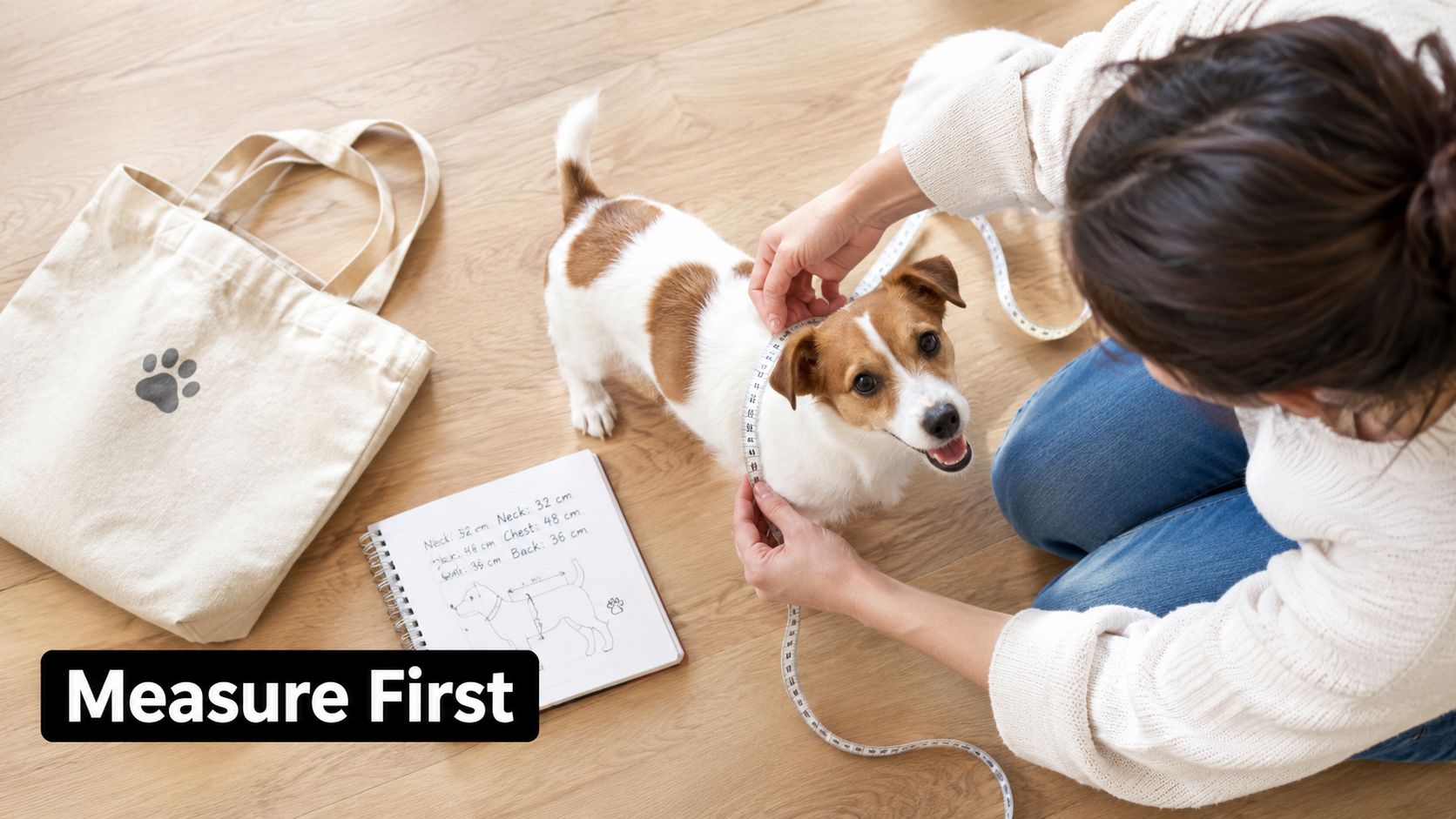
Measure before you shop
- Standing height: Measure from the floor to the top of your dog's shoulders while they're standing naturally. The carrier should give them enough vertical room to position their head without being forced into a crouch.
- Body length: Measure from the front of the chest to the base of the tail. Compare that measurement with the usable floor length, not the outside dimensions of the bag.
- Shoulder width: Measure across the broadest part of the chest. This helps you judge whether your dog can turn and settle without pressing against both sides.
- Curl-up space: Watch your dog settle on a bed or blanket. The carrier floor should provide enough room for that natural resting shape without leaving them sliding around inside a much larger compartment.
A long-bodied dog needs floor length and full-body support. A compact dog may need more vertical clearance than expected. A flat-faced breed deserves especially careful attention to airflow and heat, because a stylish tote can still be unsuitable if the dog can't breathe comfortably or regulate temperature during the outing.
Match the style to your routine
Choose short handles if you'll move from car to café and want the bag close to your side. Add a crossbody or shoulder option if you regularly carry groceries, open doors, or use public transit. A removable strap is practical because it lets you change the bag's balance without committing to one carrying position.
Color is personal, but lighter interiors make it easier to spot dirt, fur, and forgotten treats. Dark canvas hides marks better, while treated finishes may protect against light weather without making the material fully waterproof. The best style is the one you'll carry consistently because it fits your wardrobe and your route.
Real-World Use Cases and Scenarios
A canvas dog carrier tote works best when the outing is short, controlled, and built around your dog's comfort. It's excellent for the final stretch from the car to the vet, a café visit, a quick market trip, or a city commute where walking the entire route would be tiring or unsafe.
For a calm small dog, an open top or scoop opening can make the journey feel social rather than restrictive. Your dog can watch the surroundings, stay close to you, and settle on a stable base. The carrier should still have a harness tether, because a sudden noise or passing dog can change a peaceful outing instantly.
Four situations and the feature to prioritize
- Coffee shop or short errand: Choose a comfortable opening, stable floor, and easy-access pocket for treats or waste bags.
- Vet appointment: Prioritize secure handling, a washable interior, and a design that doesn't require wrestling your dog through a narrow opening.
- Subway or crowded sidewalk: Choose reliable closures, a harness tether, and a shoulder strap that keeps the carrier controlled against your body.
- Warm-weather outing: Favor broad, unobstructed airflow and keep the trip brief. Watch for heavy panting, agitation, or repeated attempts to escape.
Carrier use is already established across pet travel. One market source cites 44% of pet owners using pet-specific travel carriers during trips, while the same source reports that the pet carriers market was estimated at USD 764.5 million in 2023 and USD 809.8 million in 2024, with soft-sided carriers holding a 59% revenue share in 2023 (pet carriers market reporting). That scale reflects a practical need, not just a lifestyle trend.
A tote isn't a substitute for every carrier type. It shouldn't be treated as crash protection in a vehicle, and it isn't the right tool for a long hike or an extended period of carrying. Dogs who are highly anxious, reactive, or determined to escape are safer in a fully enclosed design.
Accidents happen, especially during stressful appointments or long urban days. If odor travels from the carrier into your vehicle, practical guidance on Nanak Car Wash deep cleaning service can help you deal with the surrounding upholstery as well as the bag itself.
Cleaning and Care for Longevity
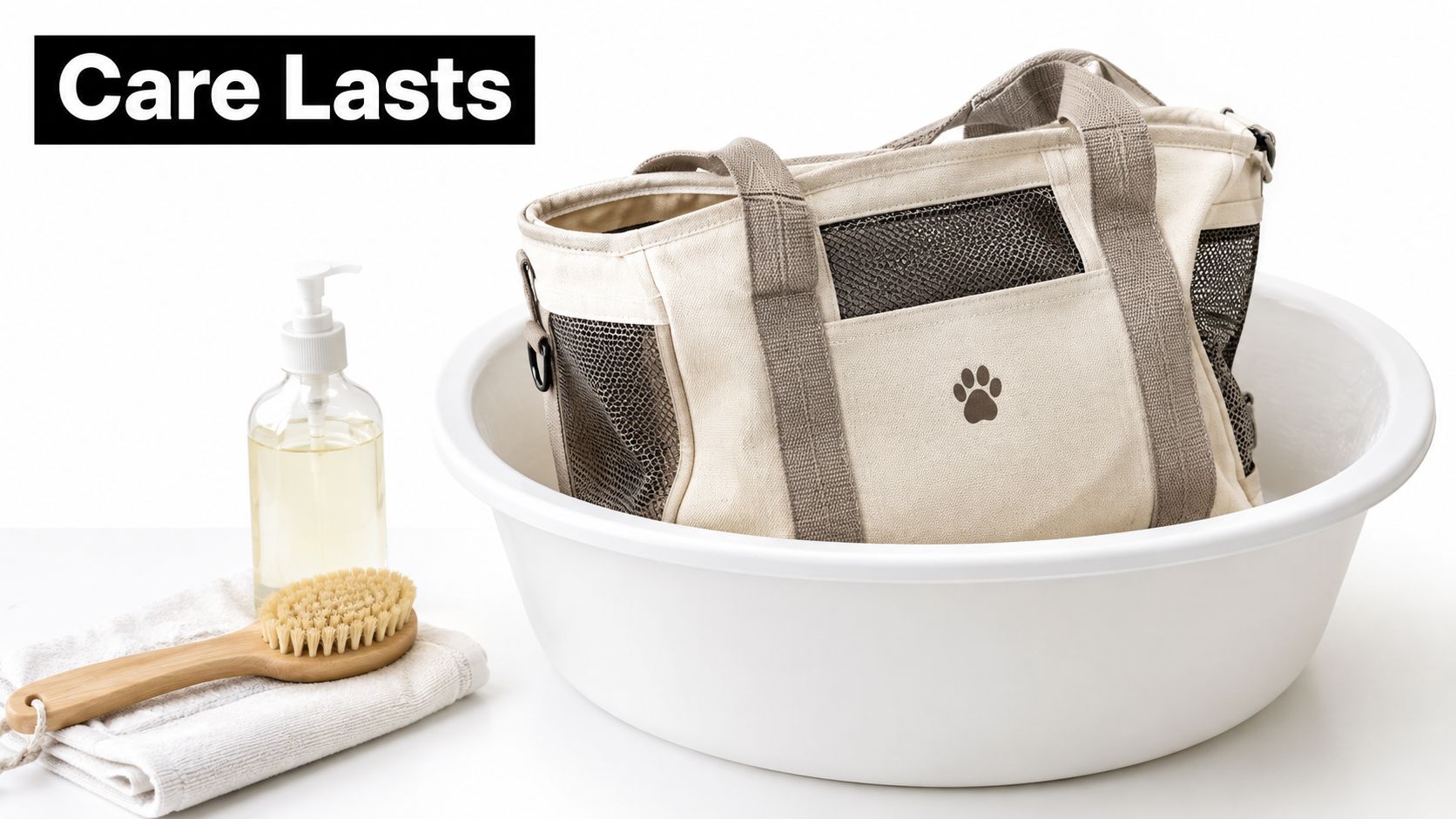
Canvas looks better with use, but only if you clean it before dirt becomes embedded. Start by emptying every pocket, removing the liner or footpad, and shaking out loose fur outdoors. Vacuum seams and corners with a soft attachment, then spot-clean visible marks with a mild solution that won't strip the fabric treatment.
Clean the parts differently
A removable liner should be washed according to the manufacturer's instructions and dried completely before it returns to the bag. A wipeable polyester interior can usually be cleaned more frequently with a damp cloth, which is useful after wet paws or a spilled treat.
Treat leather trim, metal hardware, and reinforced stitching with care. A carrier that includes leather details or fixed hardware may not be suitable for a full machine wash, even if the canvas itself appears washable. Water left inside seams or beneath a structured base can create odors and weaken materials over time.
Cleaning rule: Never store the tote while it's damp, even if the outside feels dry. Open it fully and let air reach the lining, base, and pockets.
Understand weather resistance
Waxed or treated canvas can handle light rain and everyday wear, but it isn't designed for heavy rain or prolonged exposure (waxed canvas carrier example). That means you can generally use it for a damp sidewalk or a brief shower, but you shouldn't leave it exposed on wet pavement, carry it through sustained rain, or assume the dog inside will stay dry.
Mud needs prompt attention. Let heavy dirt dry enough to brush away, then spot-clean rather than scrubbing aggressively across the entire shell. Avoid adding a new waterproofing product unless the manufacturer confirms compatibility, since sprays and waxes can alter the fabric's breathability, finish, or color.
For odor, remove the source first. Wash or wipe the contact surface, clean the tether and hardware, and air the bag thoroughly. If the dog has repeated accidents, a removable liner is more valuable than a fashionable exterior detail.
Store the carrier upright or lightly supported so the base doesn't remain bent. Keep it in a dry, ventilated place, and don't pack it away with treats, damp towels, or used waste bags. Good care protects both appearance and structural reliability.
Your Complete Canvas Tote Buying Guide
Choose a canvas dog carrier tote only after checking the usable floor dimensions, ventilation, base support, tether, closures, and cleaning instructions. Those are essential. Color, pocket layout, leather trim, and interchangeable straps come after them.
A tote makes sense for a small, calm dog on short everyday outings. It isn't a universal travel solution, a crash-tested car restraint, or an excuse to carry a dog who is uncomfortable or overheated. Measure your dog's body, inspect how the handles attach, and reject any design that sags, traps heat, or hides its load limit.
For more ideas on matching carrier design with a polished everyday lifestyle, explore this guide to stylish pet carriers. The best purchase is the one that looks refined enough for your routine and is engineered well enough that your dog can settle safely inside it.
Nandog Pet Gear offers design-forward pet essentials, including tote carriers and other accessories that combine practical details with a polished look. Visit Nandog Pet Gear to find a carrier and complementary gear that fit your dog's size, your daily routine, and your standards for comfort.