


You open the back door after a wet walk, and your dog charges straight onto the cleanest cushion in the house. Within minutes, the sofa has muddy paw prints, a damp patch, and that unmistakable smell of wet fur. A waterproof dog bed cover seems like the obvious fix, but buying the first product labeled “waterproof” can leave the part you care about most, the foam, completely unprotected.
The right question isn't whether the cover repels water. Ask where the waterproof barrier sits, how the seams are finished, and whether the construction can survive repeated washing. A soft outer cover keeps hair and surface dirt under control. A sealed inner liner keeps urine, drool, rain, and wet fur away from the foam. Those are different jobs, and serious protection usually requires both.
The Wet Dog Problem and Why a Cover Is Only Half the Fix
Most owners discover the weakness of a basic cover during a messy week. A puppy has an accident overnight. A senior dog leaks while sleeping. A rescue dog comes in from the rain and settles down before anyone can grab a towel. The removable cover looks washable, so you throw it in the machine and assume the bed is safe.
Sometimes it is. Often it isn't.
The cover may protect the visible fabric while moisture slips through a zipper opening, a stitched seam, or the underside. Once liquid reaches foam or loose fill, the problem changes. You can wash the cover repeatedly, but the absorbent core remains inside, holding dampness and odor where a washing machine can't reach it.
Practical rule: If the bed smells clean only when the cover is freshly washed, the foam may already be the source of the odor.
This is why I treat a waterproof dog bed cover as the first line of defense, not the complete system. The outer shell handles fur, dirt, claws, and ordinary dampness. The liner closest to the foam determines whether an accident becomes a quick laundry job or a replacement-bed problem.
A product guide from Pet Care Shed's discussion of waterproof dog beds makes the same useful distinction: odor problems often begin in the fill, not on the surface, because urine and wet material become difficult to remove once they penetrate padding. That point matters most for puppies, incontinent seniors, and dogs that regularly return from outdoor activity wet.
Buy a simple washable cover for fur and occasional spills. Upgrade to a layered cover with a true waterproof inner liner when the foam must stay dry. If the existing bed already carries a persistent smell, adding another outer layer won't restore it. Replace or professionally assess the contaminated insert first.
What a Waterproof Dog Bed Cover Actually Does
A proper cover works like a small weatherproof system, not a single piece of fabric. Think of the outer layer as a raincoat, the middle barrier as a tarp, and the inside as the soft shirt touching your dog.
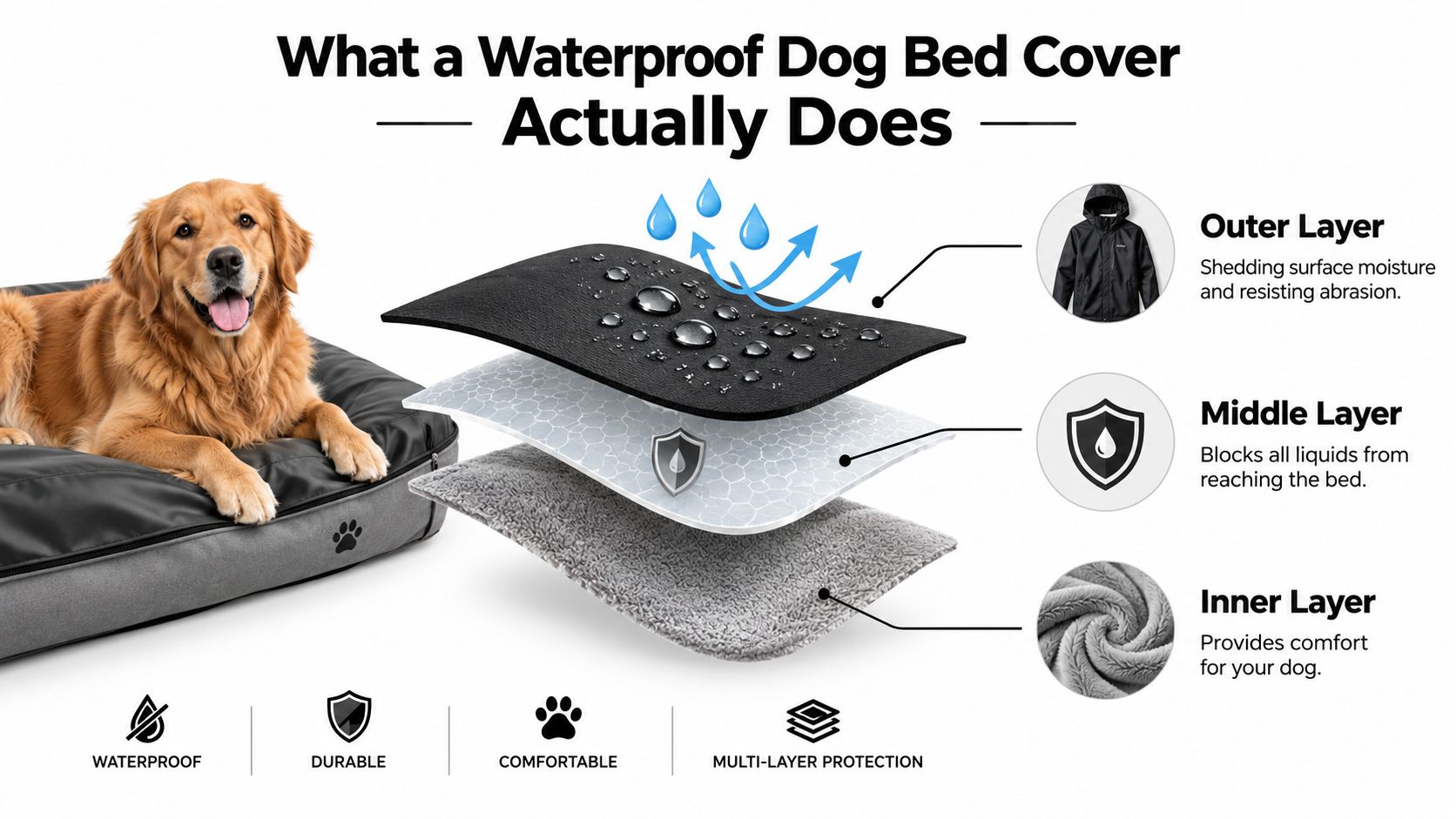
The outer shell handles daily abuse
The outer fabric takes the clawing, rubbing, fur, dust, and wet coat. Polyester is common because it dries quickly and tolerates everyday moisture better than untreated cotton. Cotton feels pleasant, but it absorbs water readily and dries slowly, which is a poor combination for dogs that bring dampness to bed. Fabric guidance on washable waterproof dog bed covers explains why modern designs usually combine a washable textile with a separate barrier rather than relying on one absorbent fabric.
A water-repellent face fabric makes droplets bead and roll away. That helps with a tipped bowl or wet paws, but it isn't the same as a sealed barrier. Surface treatment can slow absorption while liquid still passes through under pressure or after prolonged contact.
The middle layer protects the foam
The membrane or coating is the part that blocks liquid. Polyurethane backing, TPU film, and PVC-coated nylon are common approaches. Fabric engineering measures resistance with hydrostatic head, which describes the water pressure a material can withstand before it leaks. A cover can resist splashes yet fail when liquid pools beneath a sleeping dog, so the product listing should describe a membrane, coating, or waterproof liner explicitly.
Breathability matters too. MVTR measures moisture-vapor transmission, while RET measures resistance to evaporative transfer. These are separate targets from liquid-water resistance. Guidance from The North Face on waterproof-breathable technology explains why a barrier can stop rain while still needing to move vapor and heat away from the body.
Closures decide whether the system stays sealed
The zipper, elastic hem, and seams are common failure points. A zippered encasement that surrounds the entire foam insert offers much better protection than a loose slipcover that leaves the underside exposed. A separate liner placed directly around the foam adds another defense if the decorative outer cover gets soaked.
For useful background on the same protection principle in household bedding, compare this guide to waterproof mattress covers. The buying lesson is simple: look for a washable outer cover plus a barrier that sits between the cover and the foam.
Materials and Construction Compared
Material names don't tell the whole story. A polyester cover with a properly bonded membrane can outperform a heavier fabric with exposed stitched seams. A soft cotton blend may feel nicer on the floor but take longer to dry and hold more odor after repeated wetting.
The construction details I prioritize are straightforward. Look for explicit PU, TPU, or PVC barrier language, sealed or taped seams where practical, a covered zipper, and a liner that wraps the foam rather than merely sitting on top. “Water-repellent” describes the face fabric. It doesn't prove that the inside is protected.
| Material | Waterproof Membrane | Seam Type | Machine Washable | Key Trade-Off |
|---|---|---|---|---|
| Polyester | PU or TPU backing | Stitched, taped if upgraded | Often, follow the care label | Flexible and quick drying, but heat and harsh washing can damage the coating |
| Cotton blend | Laminated membrane | Usually stitched | Sometimes | Soft and quiet, but slower to dry and more likely to retain dampness |
| Oxford nylon | PVC or similar coating | Reinforced or welded on heavy-duty models | Varies | Tough and highly protective, but can feel noisy and warm |
| Ripstop polyester | Bonded TPU film | Bonded or taped preferred | Often, with careful laundering | Strong balance for active dogs, though the film still needs gentle care |
A neoprene material overview from Nandog is useful when you're comparing padded, flexible materials, but don't confuse stretch and cushioning with complete waterproof protection. Neoprene-like constructions can be comfortable and resistant to moisture, yet the seams and backing still determine whether liquid reaches the insert.
Construction beats marketing language
Welded or taped seams generally offer a more dependable liquid path than ordinary needle holes. A hidden zipper or zipper guard protects the closure from claws and reduces direct exposure to spills. Reinforced corners matter for dogs that dig before settling, especially on crate beds and outdoor pads.
I also prefer a two-part setup for messy dogs. The decorative shell should come off for routine washing. The inner waterproof sleeve should remain around the foam, with its own closure and durable seam treatment. That way, one failed outer layer doesn't immediately expose the bed's core.
Choose based on routine, not appearance. A calm indoor dog with occasional drool can use a lighter polyester cover. A puppy, senior, or water-loving dog needs a barrier system designed for repeated moisture and laundering. For outdoor use, prioritize coated nylon or ripstop polyester, reinforced corners, and a base that won't slide across the floor.
Choosing the Right Size and Fit
A waterproof dog bed cover should fit like a fitted sheet around a mattress, not like a blanket tossed over furniture. Too loose, and liquid can pool in folds. Too tight, and the zipper strains, the foam bends, and the barrier may pull away from the seams.
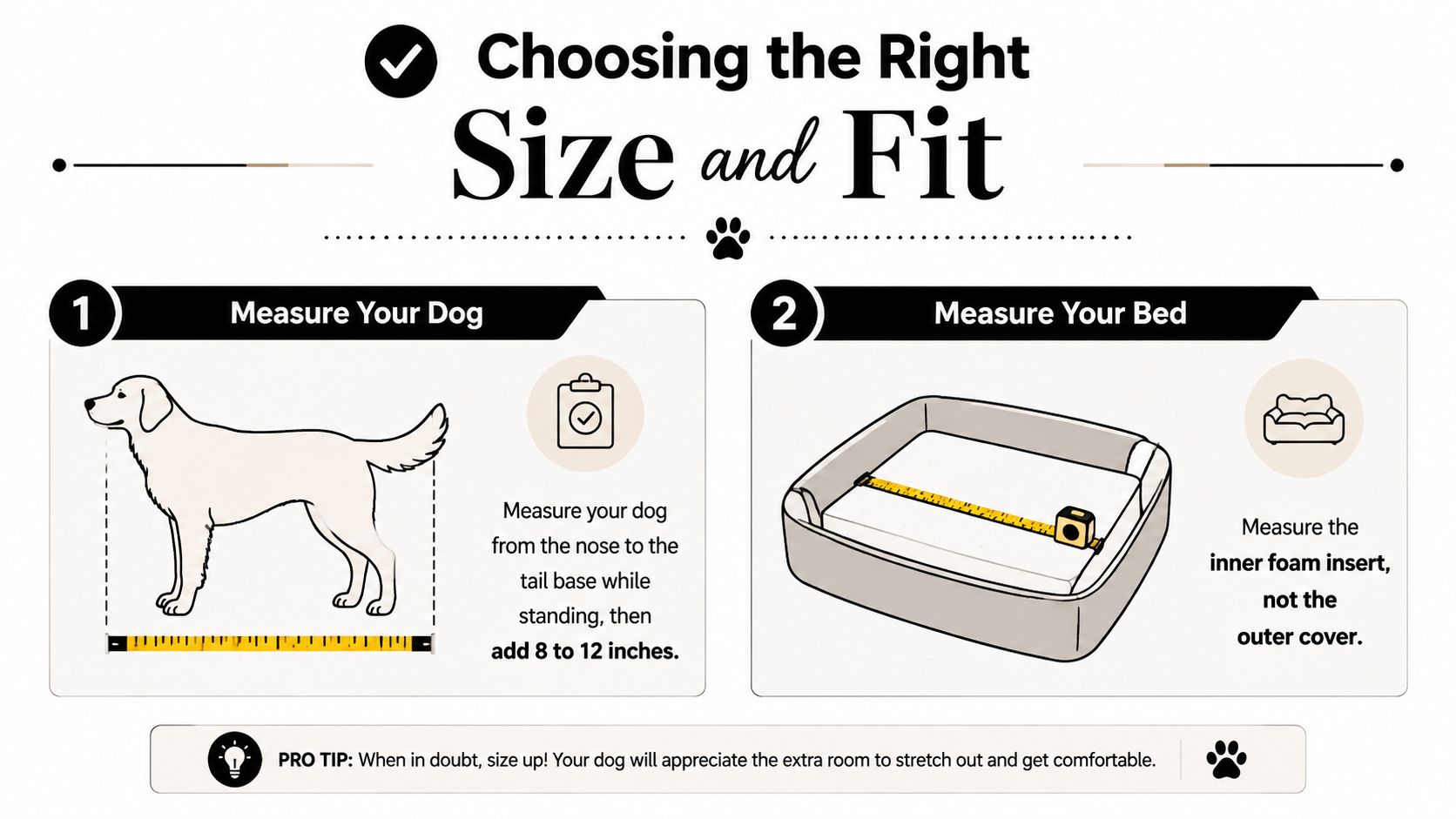
Start with the dog. Measure from the nose to the base of the tail while your dog is standing naturally. Add 8 to 12 inches so the dog can stretch without hanging over the edge. A compact dog that curls tightly may need less room than a long-backed dog with the same body weight, so don't rely on weight ranges alone.
Next, measure the inner foam insert, not the outside of the old cover. The cover often includes fabric thickness, bolsters, piping, and extra ease. Use the foam's actual length, width, and depth when comparing the seller's size chart.
Avoid the two sizing traps
- Sizing to the dog alone: A cover can suit a large dog but still fail to fit the existing mattress.
- Using stretch as a substitute for measurement: Stretchy fabric may disguise a mismatch, but it won't create a snug waterproof sleeve around oversized or unusually deep foam.
Match the bed's length and width to the nearest 2-inch increment available from the manufacturer. Pay close attention to depth when the bed has bolsters or orthopedic foam. Deeper edges can add 3 to 4 inches of height, and a shallow zipper may not close around them.
For breed-based reference points, use this dog bed size chart by breed, then confirm the measurements against your individual dog and insert. Breed charts are a starting point, not a replacement for a tape measure.
Use this measuring demonstration as a visual check before ordering:
Matching the Cover to Your Dog's Life Stage and Routine
A puppy and a senior dog can sleep on the same style of bed, but they don't create the same cleaning problem. Choose the construction around the mess you expect, not the breed label printed on the package.
| Life Stage | Best Construction | Key Feature | Avoid |
|---|---|---|---|
| Puppy | Fully encased cover with bonded TPU liner | Accident protection and easy washing | A water-resistant shell without an inner barrier |
| Senior dog | Layered cover with removable waterproof sleeve | Keeps moisture away from skin and foam | A single absorbent quilted cover |
| Outdoor dog | Heavy-duty coated fabric with reinforced corners | Handles wet coats, dirt, and movement | Lightweight indoor upholstery |
| Crate dog | Snug liner with a non-slip base | Stays in place during settling and digging | Loose fabric that bunches under the insert |
| Traveler | Low-profile, foldable waterproof cover | Dries quickly and packs without bulk | Thick padding that stays damp in a hotel room |
Puppies need the least forgiving setup. Repeated accidents can overwhelm a soft-shell cover, especially if the product only promises water resistance. Buy the liner first, then choose the outer texture your puppy won't immediately shred.
Senior dogs deserve equal attention to comfort and moisture control. A removable waterproof sleeve keeps liquid off the foam, while a soft top layer should move dampness away from the skin instead of trapping it. If your dog has incontinence or mobility issues, inspect the bed often rather than waiting for a smell.
Outdoor and crate dogs need abrasion resistance, reinforced corners, and a base that grips. Travelers need something slimmer and faster to dry. If pests become part of the outdoor routine, keep cleaning and pet-safe prevention separate, and use this practical resource on handling palmetto bugs with pets for broader household precautions.
Installation, Washing, and Long-Term Care
A good cover can fail early if you wash it like an ordinary blanket. Waterproof and breathable textiles need mild chemistry, controlled temperature, and enough time to dry completely.
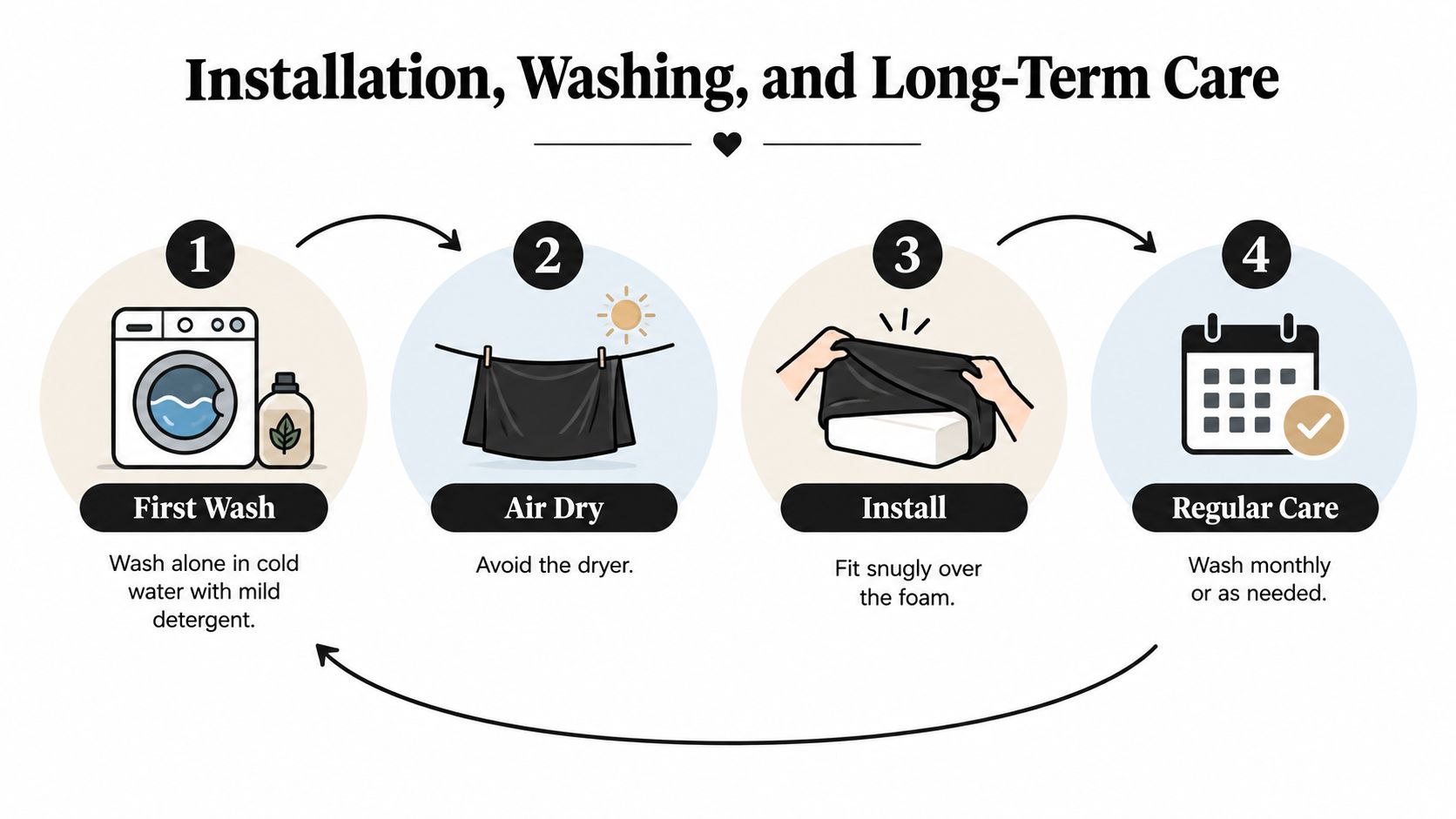
Before first use, check the manufacturer's label. If the label permits machine washing, wash the cover alone in cold water with a mild, fragrance-free detergent. Skip fabric softener. Technical guidance on waterproof textiles recommends avoiding softeners because they can interfere with surface repellency and moisture transfer. Research on breathable laminate performance after laundering also reinforces the broader point that repeated washing can alter textile behavior, so maintenance needs to be part of the purchase decision.
A sensible care routine
- Close the zipper: This prevents the teeth from catching on other fabric and reduces abrasion inside the drum.
- Turn the cover inside out: Put the waterproof side inward if the care instructions permit it, so the coated face receives less mechanical wear.
- Use cold water and mild detergent: Avoid aggressive chemistry that can weaken finishes or coatings.
- Dry gently: Hang dry when possible. If the label permits a dryer, use low heat only.
- Inspect the barrier: Check seams, zipper tape, corners, and peeling film before reinstalling the cover.
Avoid the silent damage
Bleach, vinegar soaks, dryer sheets, dry cleaning, ironing, and high heat are poor choices unless the manufacturer specifically approves them. High temperatures can distort zippers and contribute to delamination in coated fabrics. Fabric softener can leave a film that reduces water beading and breathability.
Don't promise yourself that a waterproof cover will last forever. Treat the membrane as a working component. If droplets stop beading on the outer face, first clean the cover according to its instructions and consider a compatible DWR restorer only when the manufacturer allows it. A care guide for machine-washable dog beds can help you compare all-in-one bed care with removable-cover systems.
Do You Actually Need a Separate Cover with Your Current Bed
Before buying an add-on cover, inspect the bed you already own. A separate waterproof dog bed cover can extend the life of a clean, supportive mattress. It can't repair foam that has collapsed or remove contamination hidden inside the insert.
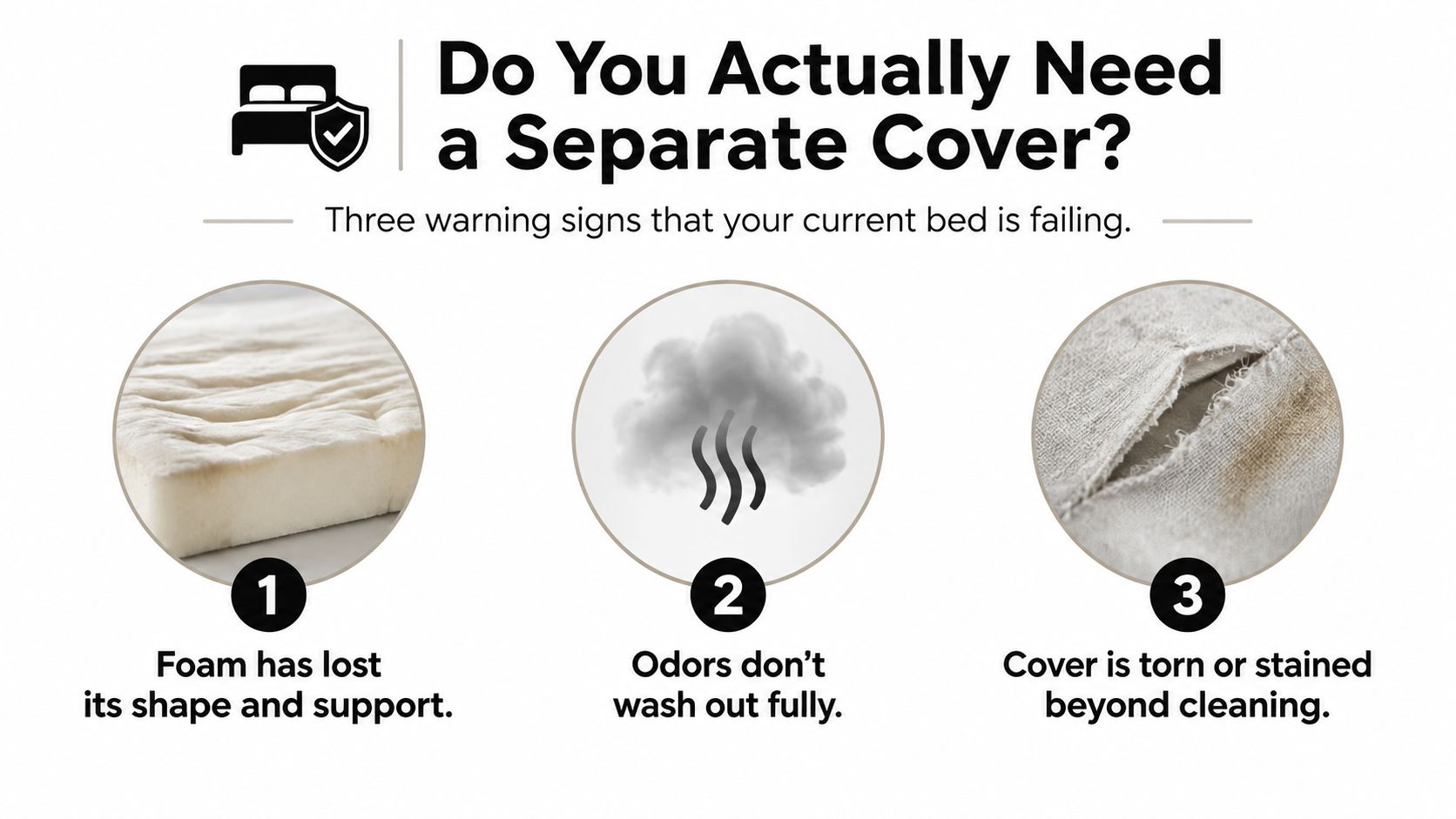
Look for three warning signs:
- Compressed foam: The bed no longer returns to shape or support feels uneven.
- Persistent odor: The smell returns after the outer cover has been washed.
- Damaged interior: Yellowing, staining, torn lining, or exposed fill suggests moisture has traveled below the surface.
If the foam is firm, the bed fits properly, and the current cover is worn or difficult to wash, an encasing liner is a sensible upgrade. Choose a zippered sleeve that surrounds the insert. A loose top cover is useful for fur and light surface mess, but it doesn't protect the underside or edges where liquid can collect.
Check whether the bed already has a built-in liner. Adding a second cover over a waterproof bed may create heat, bulk, or a poor fit. Orthopedic beds need special caution too. A thick topper can flatten the support profile, change the sleeping surface, or make the original cover impossible to close.
The cleanest choice is often an all-in-one washable bed that integrates protection into its own construction. Nandog Pet Gear offers fully machine-washable dog bed designs, including beds where the entire product can be cleaned without hunting for a mismatched outer sleeve. Inspect the product specifications carefully, though, because machine washable doesn't automatically mean waterproof. One Nandog bed listing explicitly says the bed isn't waterproof and recommends a waterproof pillow cover for the inner pillow.
FAQ and Troubleshooting Common Waterproof Cover Issues
How can I test whether the cover is genuinely waterproof?
Remove the foam, place a dry towel beneath the liner, and add a small amount of water to the inside surface. Leave it long enough to test the seams and closure, then inspect the towel. Don't perform this test with urine or cleaning chemicals, and don't assume a successful splash test proves protection against prolonged pressure.
Why does water get through after washing?
The face treatment may have worn down, the membrane may be damaged, or the zipper and seams may be wicking moisture. Fabric softener and harsh wash chemistry can reduce repellency, while excessive heat can damage coatings and contribute to delamination. Follow the care label, then inspect the barrier rather than washing the outer shell again.
Can heat drying destroy the membrane?
It can shorten the life of coated or laminated materials. High heat may warp zippers, weaken adhesive bonds, and damage TPU or other barrier films. Air drying is the safer default unless the manufacturer gives a low-heat instruction.
What should I do about trapped odor?
Smell the foam separately from the clean cover. If the foam carries the odor, stop trying to mask it with sprays or fragrance. Replace the insert when it can't be cleaned effectively, then install a barrier that sits directly between the new foam and the outer cover.
Can a puppy chew through the cover?
Yes. No textile barrier is chew-proof. Use a covered zipper, keep loose edges away from the puppy, and supervise chewing behavior. If the puppy repeatedly attacks the cover, choose a tougher construction and treat the bed as a supervised resting area until the habit changes.
Should I replace the cover or re-treat it?
Re-treat only when the fabric is structurally sound and the manufacturer approves a compatible water-repellent product. Replace the cover when the membrane peels, seams separate, the zipper no longer closes, or liquid reaches the towel during testing.
Use this quick diagnosis:
- Liquid beads but leaks at the zipper: The closure or seam is failing.
- Liquid spreads through the face slowly: The outer treatment may be worn, but the barrier may still be intact.
- The cover passes testing but the bed smells: The foam was likely contaminated before the cover was installed.
- The whole bed feels damp after washing: Dry it completely before use and reassess whether the liner retains water.
A cover that looks clean isn't necessarily protecting the bed. Test the liner, protect the foam, and replace failed components before the next accident becomes permanent.
If you're replacing a tired bed or outfitting a new puppy, explore Nandog Pet Gear for fully machine-washable dog beds and comfort-focused designs. Choose a washable all-in-one bed when you want simpler cleanup, or pair a compatible bed with a true waterproof liner when foam protection is the priority.