


Your dog is on the floor with a new toy between their paws, testing it the way dogs test everything important. One chew. Pause. Flip it. Another chew from the side. That little routine tells you a lot. Dogs don't just want something to gnaw on. They want something they can hold, angle, mouth, and work at.
That's why the classic bone shape keeps showing up. It isn't just familiar to us. It gives many dogs an easy grip at both ends and a middle section they can settle their teeth onto. A good bone dog toy can become a play object, a boredom buster, a comfort item, or a way to redirect chewing away from your shoes.
But bone toys confuse a lot of new pet parents. Some are soft and cuddly. Some are springy. Some are so hard they sound like a rock on the kitchen tile. Some are toys. Some are edible chews. Some look almost identical on a product page even though they serve completely different jobs.
Introduction to Bone Dog Toys and Why Shape Matters
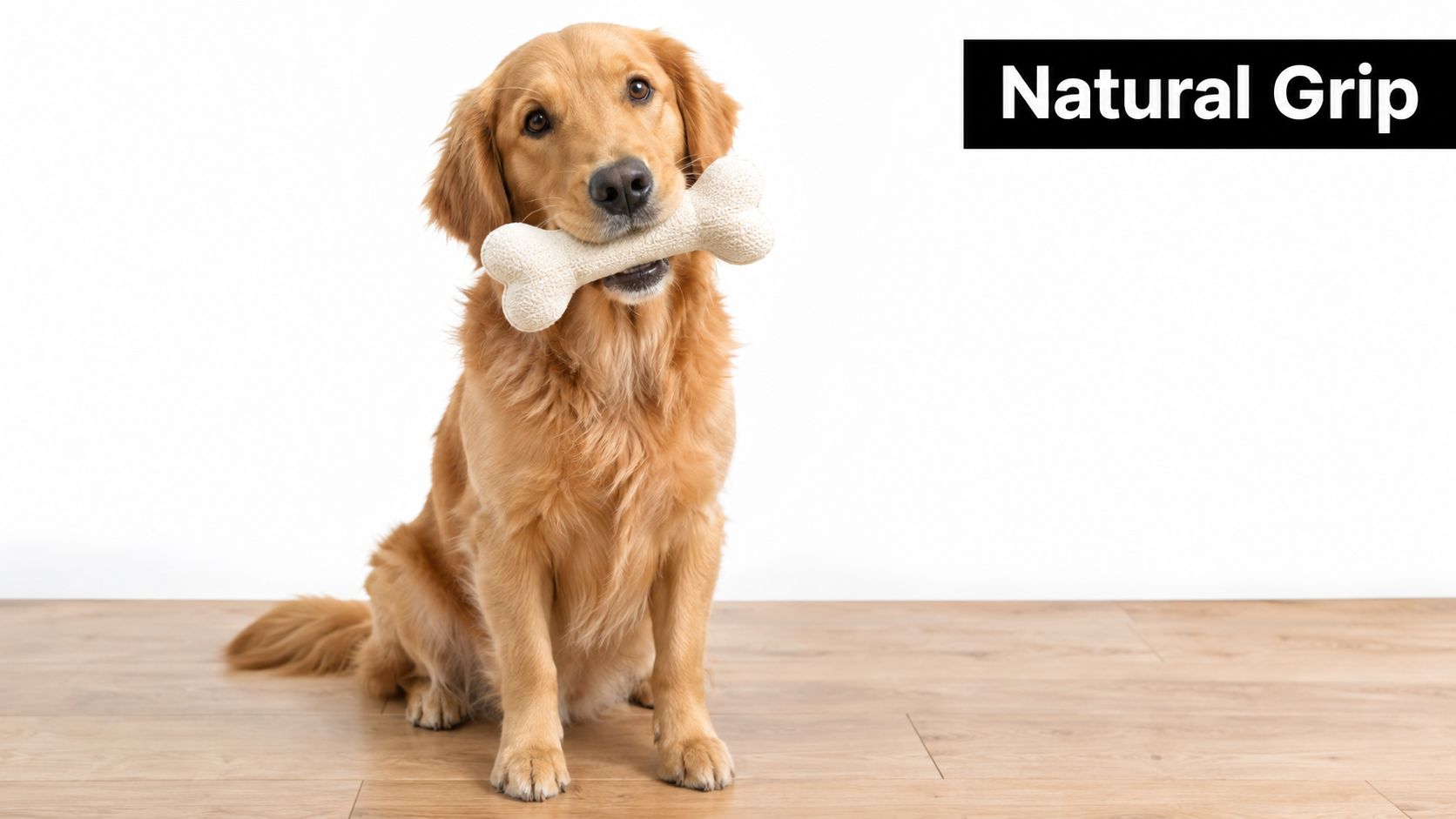
A dog usually tells you whether a shape works long before a label does. If your dog keeps picking up the bone-shaped toy instead of the flat plush star or loose rope, there's a reason. The ends act like handles. The center gives the mouth a target. For many dogs, that feels natural in the same way a well-shaped hammer feels better in your hand than a smooth metal bar.
Why the shape helps
A bone dog toy often works because the shape supports several common dog behaviors at once:
- Gripping: Dogs can pin one end with their paws and chew the other.
- Repositioning: The toy is easy to rotate when your dog wants a fresh angle.
- Solo engagement: Many dogs can manage it without needing a person to hold it.
- Mouthing comfort: Rounded contours are usually easier to carry than awkward, blocky shapes.
That doesn't mean every bone toy is a fit for every dog. A plush bone for a puppy nap crate serves a very different purpose than a dense chew toy for a dog who likes to work their jaws after dinner.
Practical rule: Don't ask one toy to do every job. Ask one toy to do one job well.
Why owners get stuck
The most common mistake is shopping by material name alone. People think rubber means safe, nylon means durable, plush means babyish. Real life is messier than that. The better question is, what does your dog need this toy to do today?
A nervous puppy might need comfort and gentle chewing. An adult dog left alone for short stretches might need enrichment. A senior dog might still enjoy carrying a bone-shaped toy but need a softer feel because their mouth is more sensitive.
Bone toys also sit inside a very large and growing product category. The global chew-toys segment was valued at USD 2,297.6 million in 2023 and is projected to reach USD 4,096.3 million by 2030, with a projected 8.7% CAGR from 2024 to 2030 according to Grand View Research's chew-toys market data. That matters because bone-style chew toys aren't a niche novelty. They're part of a major repeat-purchase category, so choosing well matters.
What a Bone Dog Toy Is and How It Differs From Edible Chews
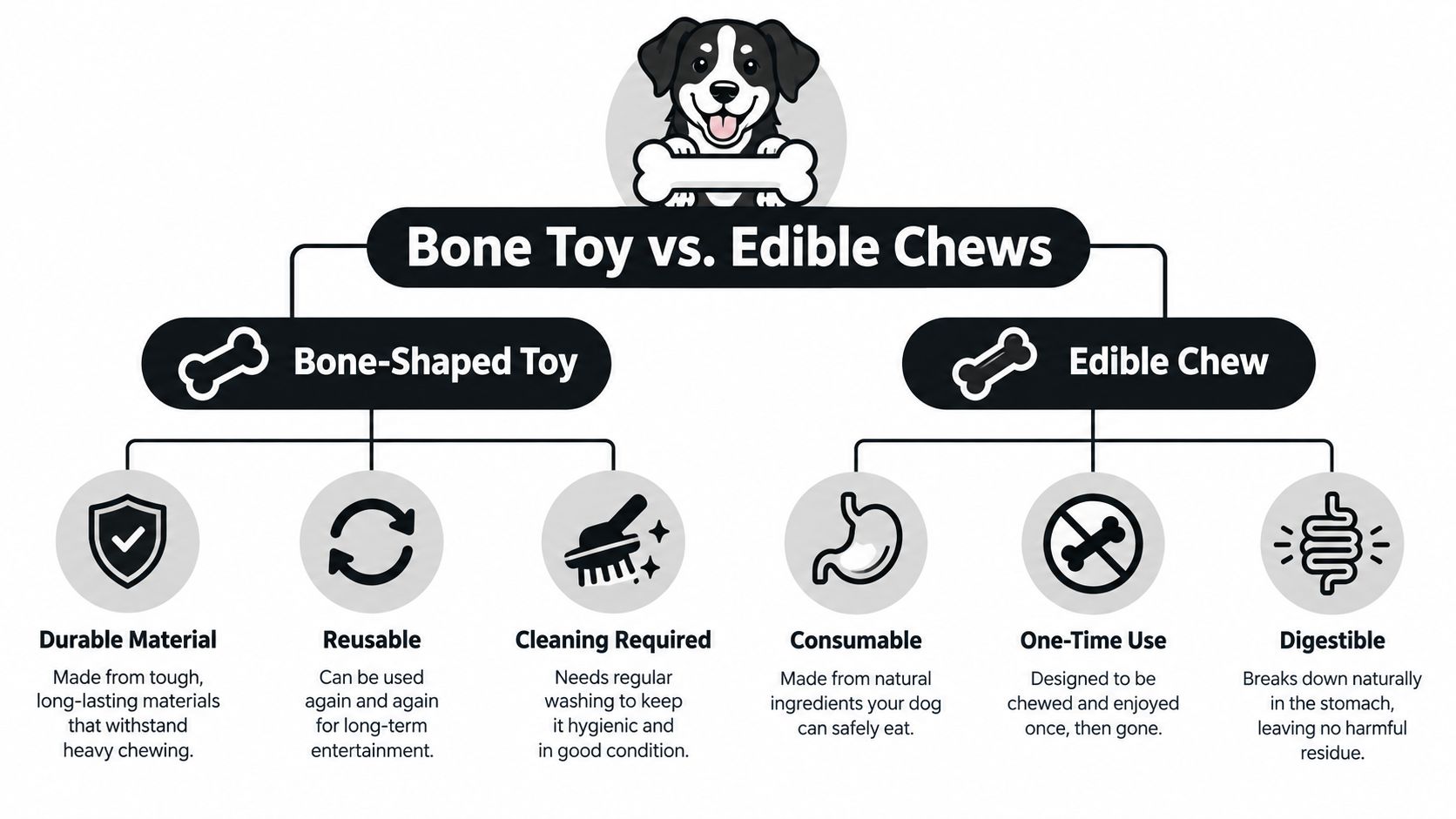
A simple way to sort this out is to think toy versus treat. A bone-shaped toy is meant to be used again. An edible chew is meant to be consumed. They may look similar on a shelf, but you use them differently, supervise them differently, and replace them for different reasons.
Bone-shaped toy versus edible chew
A bone dog toy is usually made for repeated play or repeated chewing sessions. You inspect it, clean it, and put it away if it gets damaged. An edible chew, by contrast, gets smaller as your dog uses it. That changes the safety picture because swallowing is part of the intended use.
Use this quick sorting test:
- If it's meant to last through many sessions, it's a toy.
- If your dog is supposed to consume it, it's a chew or treat.
- If the product claims dental support, check whether that comes from chewing action, edible ingredients, or both.
For more context on toy-based dental play, this guide to dog teeth cleaning toys is useful if you're comparing enrichment with oral-care goals.
The four jobs a bone toy can do
Bone toys get confusing because one shape can serve several functions.
- Play object: Tossed, carried, squeaked, or chased around the room.
- Comfort item: Held during rest time, especially by puppies or dogs that like soft mouthfeel.
- Chewing enrichment: Used to satisfy the urge to work the jaw and stay occupied.
- Dental stimulation: Surface texture may help scrub during chewing, though that doesn't turn every toy into a full dental product.
If you mix up those jobs, you usually buy the wrong thing. A plush bone may be perfect for comfort and light play but wrong for a dog that destroys seams in minutes. A dense chew toy may satisfy a determined chewer but be a poor fit for a senior dog with tender teeth.
A toy can look like a bone without acting like a bone, and it can act like a chew without being edible.
Why this matters in daily life
The confusion has grown as more owners shop online and premiumize their purchases. Future projections cited by Future Market Insights in its pet toys market report say chew toys are expected to hold about 36.0% of the global pet-toy market in 2026, and the broader market is projected to reach about USD 10.0 billion in 2026. The same report notes that rawhide and leather chews still make up a large share of U.S. dog-chew volume, though that share is eroding as buyers shift toward alternatives.
That means product pages often blend words like chew, dental, bone, toy, and treat in ways that blur the category. Your job as a buyer is to ask one plain question first: Is this for chewing, consuming, comforting, or playing?
Types of Bone Dog Toys Compared by Material and Feel
If you pick up three bone toys made from different materials, your hand will understand the difference before your brain puts labels on it. One flexes. One barely gives. One feels like a stuffed pillow. Dogs notice those differences even faster than we do.
Rubber, nylon, and plush in real life
Rubber bone toys usually have some spring. They may bounce a little, feel grippy, and offer more give under pressure. Many dogs like that because it feels active in the mouth, not dead or rigid. Some can also be easier to rinse clean after slobbery chew sessions.
Nylon bone toys usually feel denser and firmer. They often appeal to dogs that want resistance and like to settle in for longer gnawing. The upside is longevity for some chewers. The trade-off is that a toy can move from durable into too hard, which matters for tooth safety.
Plush bone toys are the softest category. They're less about jaw work and more about carrying, cuddling, squeaking, and light chewing. For some dogs, a plush bone is closer to a security blanket than a true chew outlet.
Bone Dog Toy Materials at a Glance
| Material | Durability | Safety Profile | Best For |
|---|---|---|---|
| Rubber | Moderate to high, depending on density | Better when it yields slightly and stays intact | Moderate chewers, interactive play, enrichment |
| Nylon | High for many dogs | Can become a tooth risk if too hard or if rough edges develop | Determined adult chewers who are supervised closely |
| Plush | Low to moderate | Safer for gentle mouthing, but seams and stuffing need monitoring | Puppies, seniors, comfort-seekers, light play |
How each one feels to your dog
Think about shoes. A hiking boot, a running shoe, and a bedroom slipper all cover the foot, but they don't serve the same body or activity. Bone toys work the same way.
- Rubber feels responsive. Good for dogs that enjoy chewing plus a little bounce and movement.
- Nylon feels resistant. Better for dogs that lose interest in toys that compress too easily.
- Plush feels soothing. Best for carrying, nuzzling, squeaking, or settling down with.
The hidden home-life factor
Material choice affects your home too.
A rubber toy is often the simplest to wipe or rinse. A nylon toy may last a long time but should be checked often for rough points. A plush toy can fit your dog's emotional needs beautifully, but it usually needs the most cleaning and the closest seam checks.
This is also where design details matter. Some pet parents want easy-care toys that fit a tidy routine, especially in smaller homes. If you're shopping among plush play options, Nandog Pet Gear's toy collection includes soft toys with interactive features like squeakers and crinkle textures, which makes them more relevant to comfort and light play than to heavy-duty chewing.
Durability Versus Safety Trade Offs Every Owner Should Know
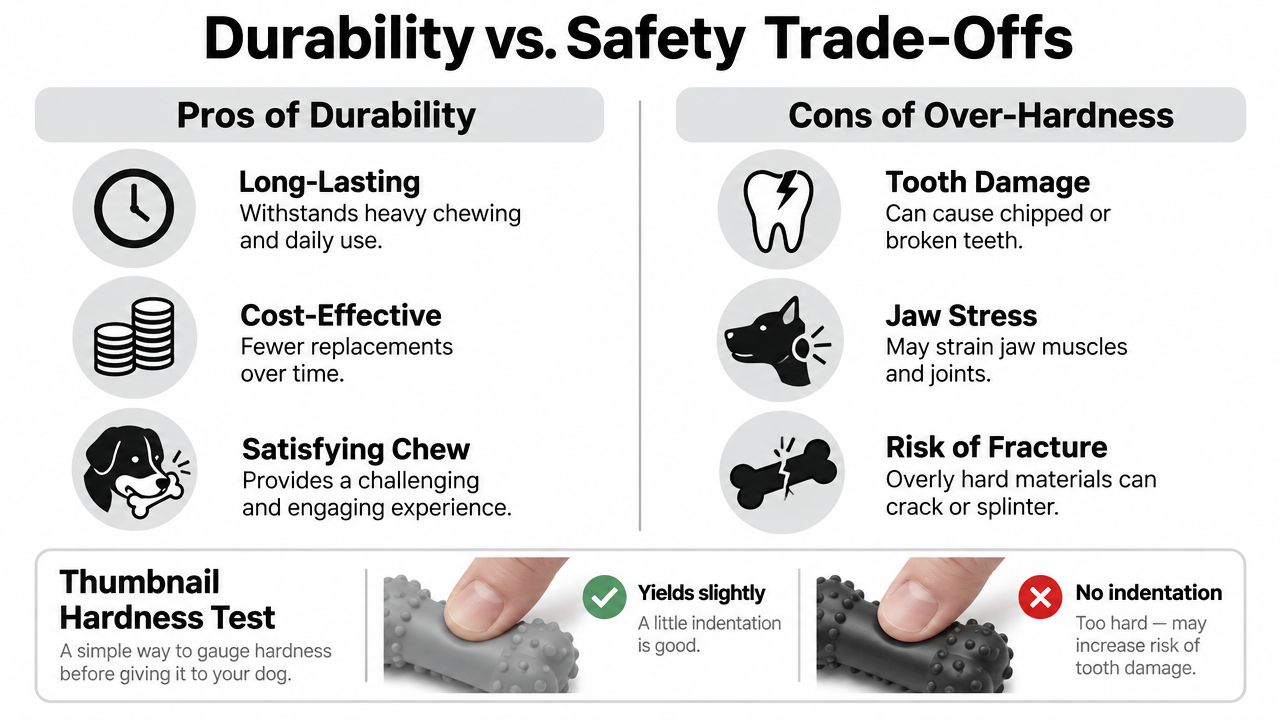
Most owners start by asking, “What's the toughest toy?” A better question is, “What's tough enough without becoming a hazard?” The longest-lasting toy isn't always the safest one.
The thumbnail rule
A helpful safety check is simple. Press your thumbnail into the toy. If it yields slightly, that's usually a better sign than a toy that feels like stone. Veterinary guidance notes that hard bones used as dog chew toys are a major dental fracture hazard because materials that can't be indented by a thumbnail are typically harder than canine enamel, and both raw and cooked bones can crack the maxillary fourth premolar, which is the tooth most commonly injured in hard-chew fractures, according to St. Pete Animal Hospital's guidance on toys that cause dental damage.
That doesn't mean every firm toy is dangerous. It means hardness needs to be judged, not admired.
If a toy feels like it would hurt if you tapped it against your own front teeth, pause before giving it to your dog.
Broken pieces matter as much as hardness
Tooth safety isn't the only concern. Fragment safety matters too. When dogs break off pieces and swallow them, the risk shifts from the mouth to the throat and gut.
Veterinary guidance from Cherry Hill Animal Hospital on chew toys that can damage dogs' teeth warns that small bone pieces can lodge in the mouth or throat, damage the GI tract, and potentially cause intestinal obstruction. The same guidance notes that ring-shaped bones can trap the lower jaw behind the canine teeth and may require anesthesia for removal.
Why inspection matters more than ever
Store shelves and online shops offer endless choices, but not every product fits every dog. In the United States dog-chew-toys market, an estimated 70–80% of unit volume is sourced from manufacturing hubs in China and Vietnam, and the U.S. market is expected to grow at a projected 7% to 9% CAGR over 2026–2035 according to IndexBox's U.S. dog chew toys market analysis. That broad availability is convenient, but it also means owners need to inspect what they buy rather than assume all dense chew products are equally safe.
If your dog is a forceful chewer, compare toughness with caution. This overview of durable dog toys for aggressive chewers can help you think in terms of supervised durability instead of maximum hardness.
Stop using the toy if you see these signs
- Sharp edges: A once-smooth toy now has knife-like ridges or rough points.
- Small breakaway pieces: Your dog can remove chunks big enough to swallow.
- Jaw fit problems: The opening, curve, or ring shape catches around the mouth.
- Blood spots or sudden avoidance: Your dog drops the toy quickly, paws at the mouth, or seems reluctant to chew.
Sizing and Chew Level Recommendations for Every Dog
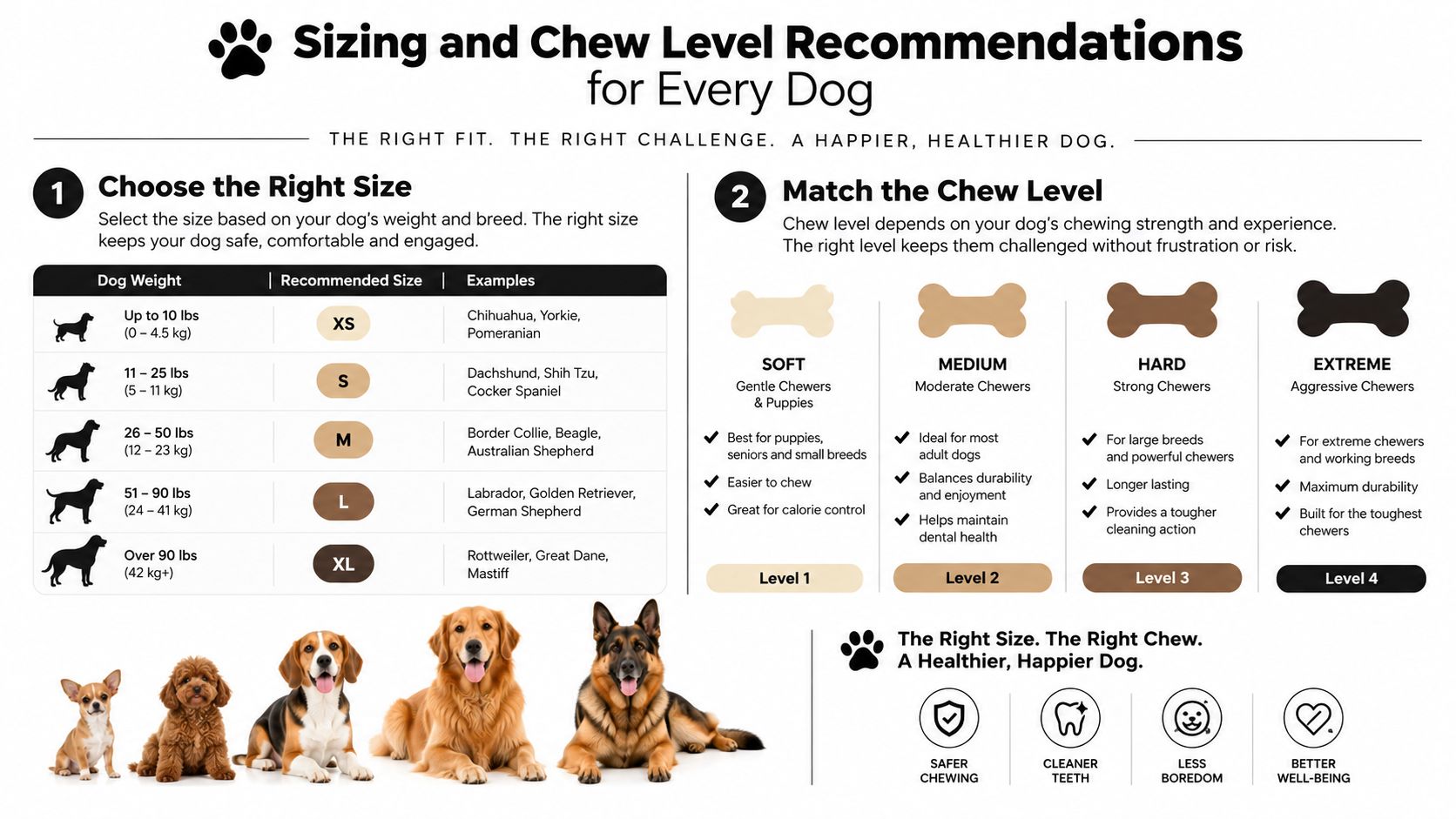
A toy can be the right material and still be the wrong choice if the size is off. Too small, and it becomes easier to swallow or wedge awkwardly in the mouth. Too large, and the dog may ignore it because it's clumsy to grip.
Match the toy to the mouth, not the label
Start with jaw width, not breed pride. A compact but muscular dog may need a thicker toy than a taller but gentler dog. The toy should be large enough that your dog can't easily fit the whole thing deep into the mouth, but manageable enough that they can carry and reposition it.
A good rule is to size up if your dog sits on the border between two sizes and chews with intensity. If your dog is tiny or has a narrow mouth, oversized toys can make chewing awkward and frustrating.
For smaller dogs, this round-up of small chew toys for dogs can help you compare options built for little jaws.
Read your dog's chew style honestly
Chew level usually falls into three practical buckets:
-
Gentle chewer
These dogs mouth, nibble, carry, and squeak more than they grind. Plush and softer rubber often make sense here. -
Moderate chewer
These dogs spend real time chewing and can wear down softer toys, but they don't attack every item with full force. Flexible chew toys and sturdier plush options can work. -
Power chewer
These dogs brace with their paws, focus hard, and keep working at one spot. They need close supervision, careful hardness checks, and frequent inspections.
Here's a useful visual refresher before you buy:
Life stage changes the answer
Puppies often need softer options because they're learning how to chew and may be dealing with teething discomfort. Adults vary the most, so chew style matters more than age alone. Seniors may still love the bone shape but prefer gentler textures if their teeth are worn or their gums are sensitive.
A senior dog doesn't stop enjoying toys. They usually just become less tolerant of hard ones.
Quick examples help:
- Puppy who chews table legs: Try a softer, grippy chew toy and redirect often.
- Adult dog who destroys fluffy toys: Move toward a more resilient material, but still do the thumbnail check.
- Senior dog who carries toys to bed: A plush bone may meet the emotional need better than a dense chew.
How to Choose a Long Lasting and Safe Bone Dog Toy
Shopping gets easier when you stop looking for the perfect toy and start looking for the right match. Think of it as a short checklist, the way you'd buy walking shoes. You don't begin with color. You begin with use.
A buying flow that works
Start with the dog in front of you.
First, identify the job.
Is this for solo chewing after meals, fetch in the living room, crate comfort, or light dental-style enrichment? If you can't answer that, the purchase is mostly guesswork.
Next, pick the feel.
Choose plush for comfort and light play. Choose more flexible chew materials for moderate chewing. Be cautious with very dense options if your dog hits toys hard with the back teeth.
Then, check the size and shape.
A true bone shape should let your dog grip both ends without swallowing the toy whole or struggling to reposition it.
What to look for on the product page or package
Scan for practical details, not just marketing words.
- Material clarity: The listing should make it obvious whether the item is plush, rubber-like, dense chew material, or edible.
- Use case: Look for whether the toy is intended for comfort, chewing, interactive play, or all-purpose use.
- Care instructions: Easy-clean products are easier to keep in rotation.
- Visible design cues: Rounded edges, textured grip areas, and seams that don't look flimsy are all useful signs.
The pet-toy market continues to expand, and industry reporting notes that chew toys remain the largest category while safety challenges persist around choking hazards and broken pieces, as outlined in Grand View Research's broader pet toys market report. That makes clear product information more than a convenience. It's part of safe buying.
Build a simple care routine
A toy lasts longer when you treat it like equipment, not clutter.
- Inspect after active sessions: Check ends, edges, seams, and any textured grooves.
- Clean on a schedule: Drool, dirt, and floor grime build up fast, especially on toys that live in the crate or bed area.
- Retire early, not late: The right time to replace a toy is when damage starts, not after a piece comes off.
- Rotate toys: Rotation keeps interest up and reduces nonstop wear on one favorite.
If you like products that fit neatly into daily life, easy-care details matter. Machine-washable plush toys or reversible soft items can make hygiene simpler, especially in apartments or homes where dog toys are always visible.
Choosing Confidently for Happier Healthier Play
The best bone dog toy isn't the toughest one on the shelf or the cutest one in the cart. It's the one that fits your dog's mouth, chew style, age, and daily routine. That's the shift that makes toy shopping feel less random.
Bone shape matters because many dogs can hold and work it naturally. Material matters because feel changes how the toy performs. Safety matters because chewing satisfaction and risk can sit uncomfortably close together, especially when a toy is too hard or starts to break down.
Three habits will keep you out of most trouble.
First, test hardness. If it doesn't yield at all, be cautious.
Second, match the toy to chew strength and life stage. A teething puppy, a healthy adult, and a senior dog rarely need the same thing.
Third, replace at the first sign of damage. Sharp edges, missing chunks, and rough wear patterns are your stop signs.
You don't need to become a toy engineer to choose well. You just need to watch your dog. A dog who cuddles toys is giving you one answer. A dog who braces and grinds is giving you another. Once you see that, the right category becomes much easier to spot.
Good play should leave your dog content, not sore, frantic, or in danger. When the toy matches the dog, you usually see the difference right away in calmer chewing, better engagement, and fewer “take that away” moments.
If you're building a safer, more thoughtful toy and comfort setup, Nandog Pet Gear offers design-forward pet essentials that support everyday play, rest, and easy care. Their broader collection includes plush toys and other pet lifestyle products that can help you match comfort and play style more intentionally. You can explore the full range at Nandog Pet Gear.