


You're leaving a café with one hand around your coffee, the other on your phone, and your dog tucked beside you in a carrier that looks more like a polished handbag than pet equipment. That's the appeal of stylish pet carriers. They need to work in real life, but they also need to belong in your wardrobe, your apartment, and your daily routine.
A good carrier is a small piece of travel gear, a comfort zone for your pet, and a lifestyle accessory at once. The wrong one looks beautiful online but collapses under a dog who shifts position, traps heat behind decorative panels, or becomes awkward the moment you board a train.
The category has grown alongside pet humanization, better materials, and more thoughtful product design. The global pet carriers market was estimated at USD 764.5 million in 2023 and is projected to reach USD 1,178.7 million by 2030, with a projected 6.5% CAGR from 2024 to 2030, according to Grand View Research's pet carriers market report. Soft-sided carriers held the largest revenue share, at 59% in 2023, while specialty pet stores accounted for 40.8% of sales. Those figures point to a clear buyer preference for flexible, design-conscious products that fit everyday pet life.
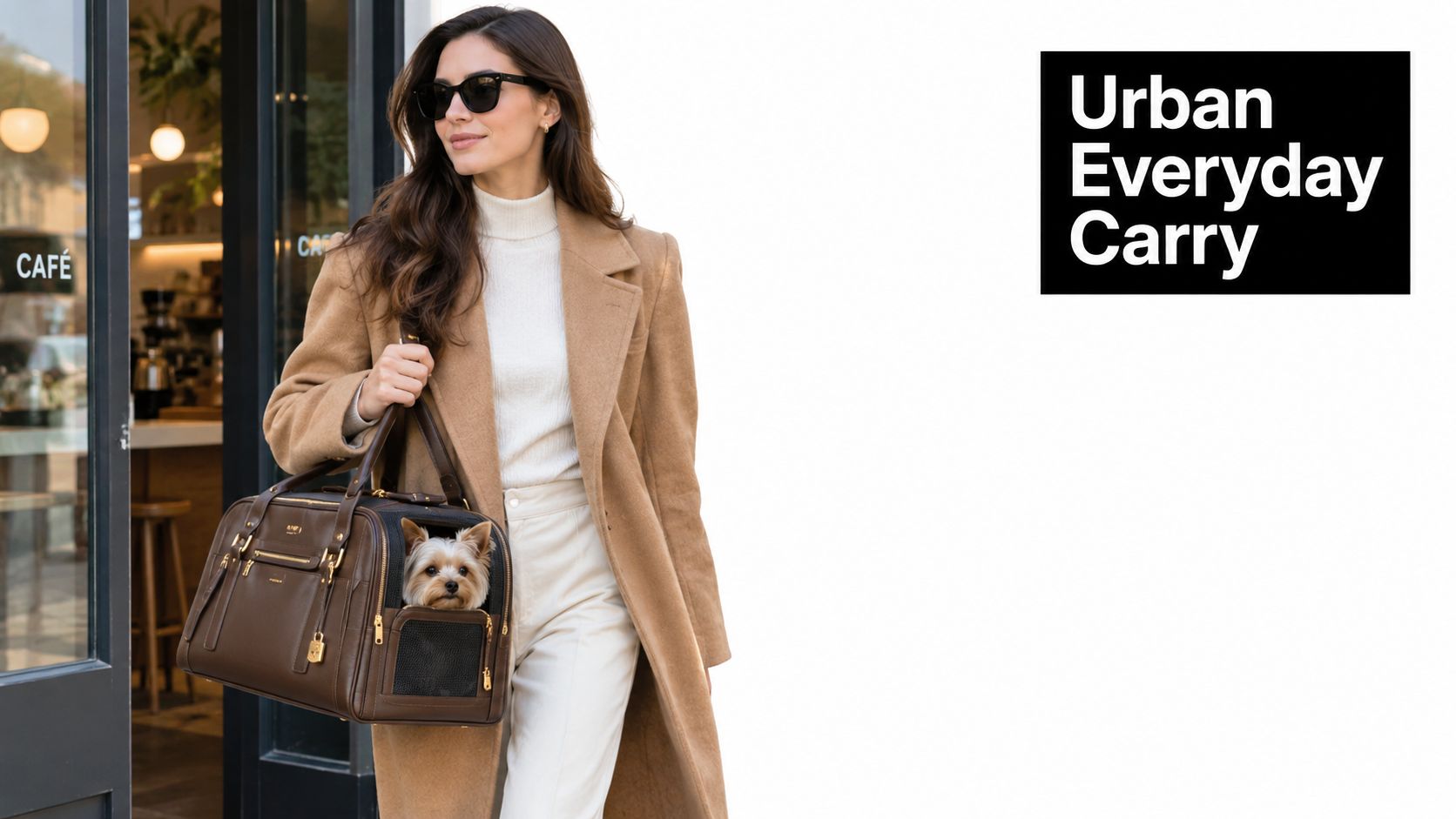
This guide uses a practical decision framework. You'll match the carrier to your pet's size and temperament, then to your commute, errands, outdoor plans, and flying habits. The best-looking option is the one that still feels secure, breathable, and manageable when the day gets busy.
Why Stylish Pet Carriers Have Become Everyday Essentials
A small dog carrier once came out mainly for airport trips or veterinary visits. In a dense city neighborhood, one outing may include an apartment walk, a ride-share, a café, a boutique, and time with friends. Leaving a small dog at home for every stop is often impractical.
That routine raises the standard for daily gear. The carrier must sit comfortably against your body, remain upright beside a chair, and work with a coat or relaxed weekend clothes. A bulky travel crate can serve a particular journey, yet it feels excessive for a short errand or café stop.
Urban routines also reward compact, soft-sided formats. They fold into limited storage, flex around crowded interiors, and suit quick changes between walking, transit, and indoor stops. The category has also benefited from pet humanization, improved materials, and product designs that treat appearance and usability as connected priorities.
The carrier now has two jobs
Your pet needs containment, ventilation, and a stable surface. You need a manageable silhouette, useful storage, comfortable straps, and materials that hold up through regular use. A carrier that serves only one side of that equation is a poor purchase.
Air travel helped push the category toward more exacting design. The Business Research Company's pet carriers market overview notes that the U.S. Federal Aviation Administration Reauthorization Act of 1996 required the FAA to issue regulations for transporting pets in aircraft cabins. That development formalized demand for carriers designed around dimensions, ventilation, and comfort, rather than simple containment.
My rule: Treat the carrier like a handbag only after you've tested it like safety equipment.
Match the format to the day. A structured tote suits a calm, compact dog joining you for errands. A backpack handles crowded transit better by keeping both hands free and distributing weight more evenly. A flight carrier may look less polished at brunch, but its flexible walls and under-seat profile make it the sensible choice for air travel.
Choose by your pet's body and personality first, then by your commute, errands, and travel habits. Style matters, but the right carrier must remain secure, breathable, and manageable once the day gets busy.
The Four Main Types of Stylish Pet Carriers
Carrier formats aren't interchangeable. A tote, backpack, airline carrier, and sling each solve a different problem, and choosing based on appearance alone usually creates frustration.
Totes for daily errands
A tote is the closest match to a traditional purse. It works well for small dogs and cats who are comfortable being carried, especially during café visits, short shopping trips, and brief neighborhood outings. The open, familiar shape makes entry straightforward, while shoulder straps keep the carrier visually polished.
The trade-off is weight distribution. A tote can become tiring during a longer walk, and a pet who moves constantly may make the bag swing. Choose a reinforced base, a secure interior tether, and enough structure to keep the opening from collapsing.
Backpacks for hands-free movement
Backpacks suit public transit, walking-heavy days, and outdoor outings. They're particularly useful when you need both hands for doors, luggage, or a leash. Look for padded shoulder straps, a stable back panel, and ventilation positioned where your pet's body sits.
A backpack's limitation is fit. Some designs restrict turning or standing, so measure the internal space rather than relying on the product's visual size. A rigid fashion backpack may look sleek but feel cramped for a pet with a longer body.
Airline-approved soft-sided carriers for flying
Airline carriers prioritize flexibility and compliance. Their soft walls can help the carrier slide beneath a seat, but that same flexibility often limits interior volume and structure. They're designed for a specific travel task, not necessarily for a full day of urban carrying.
Under-seat requirements vary by airline. A practical design target is the common soft-sided envelope of about 18 x 11 x 11 inches, while some airlines allow different dimensions for particular carrier types. Mr. Peanut's airline-approved carrier size guide emphasizes that airlines assess the carrier's outside dimensions, including rigid corners, trim, and handles.
Slings and front packs for short outings
Wearable slings keep a small pet close to your chest and can work beautifully for brief walks, quick errands, or pets who settle when they feel your body nearby. They're lightweight and easy to store, but they typically offer less structure and less ventilation than a tote or backpack.
Avoid using a sling for long periods or warm conditions unless airflow and support are clearly adequate. Your pet should remain secure without being compressed against your body.
Carrier Formats Compared
| Carrier Type | Best For | Pet Size | Key Limitation |
|---|---|---|---|
| Tote | Cafés, errands, short urban trips | Small pets who remain settled | Can strain one shoulder |
| Backpack | Transit, walking, hands-free travel | Small pets with a suitable body shape | Interior fit varies widely |
| Airline-approved soft-sided carrier | In-cabin flights | Small pets within airline limits | Limited space and airline-specific compliance |
| Sling or front pack | Brief outings and close contact | Very small, calm pets | Reduced structure and potentially limited airflow |
Many owners eventually keep two carriers, one attractive everyday tote and one travel-focused backpack or airline model. That isn't overbuying if the use cases differ. A brand that develops several formats usually understands that pet travel includes cafés, commutes, airports, and quiet time at home, not one universal scenario.
Key Features That Separate Great Carriers From Average Ones
A stylish carrier earns its place through performance details you can inspect before buying. Start with the interior, not the color.
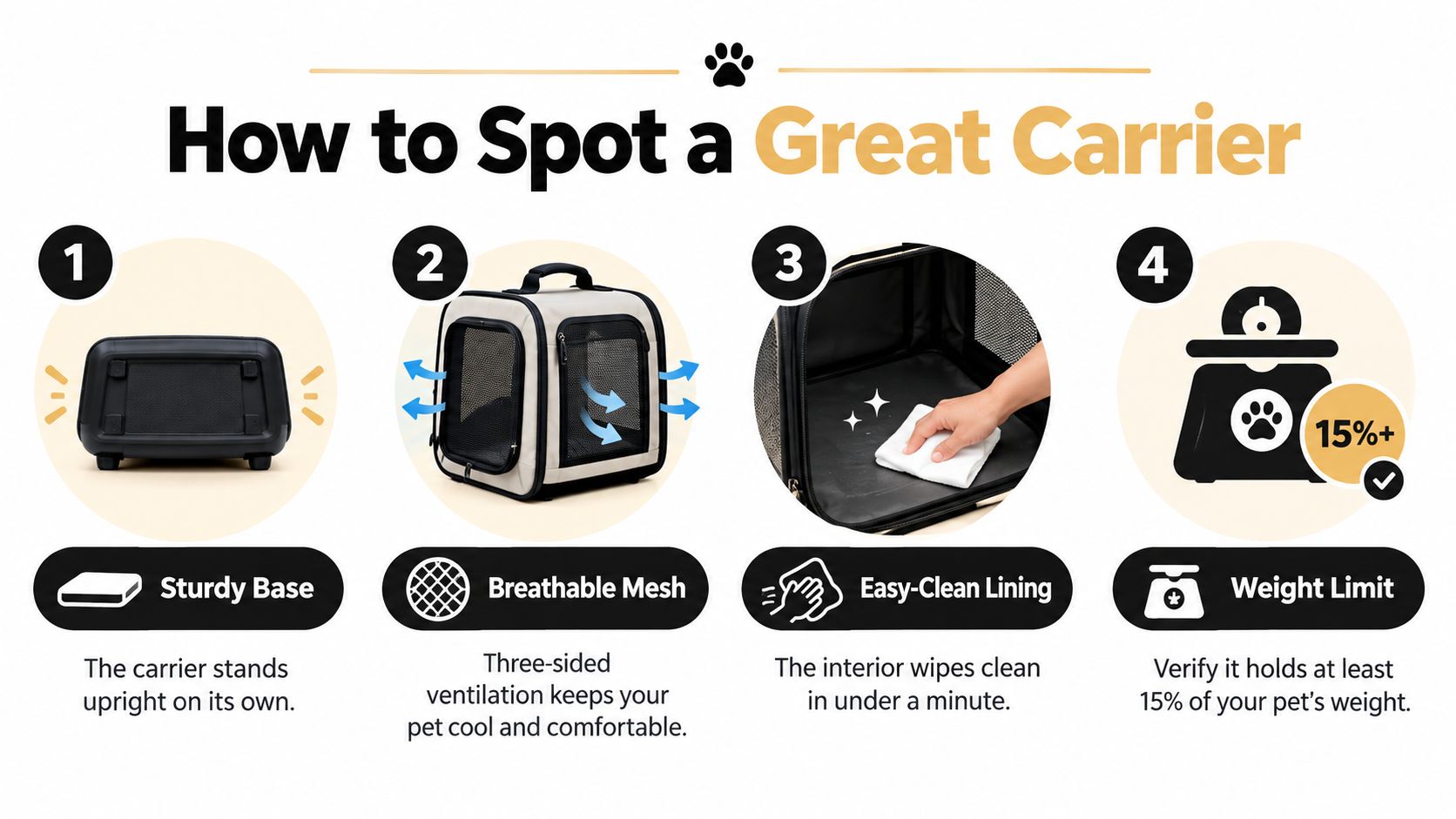
Measure your pet from chest to rump and from the floor to the shoulder. The carrier should allow a comfortable standing posture and enough room for a natural adjustment of position without becoming so large that your pet slides around during movement. Weight limits matter, but they can't replace length, height, and usable floor space.
Inspect the interior first
Press the base with your hand. It should resist folding when lifted, and the carrier should stand upright instead of tipping toward the opening. Low-profile padding is useful because it adds comfort without consuming too much interior height.
A decorative exterior can hide a cramped cabin. Check the entrance width, the location of internal clips, and whether the lining bunches under your pet. If the carrier feels narrow before your pet enters, it won't become more comfortable once loaded.
Treat airflow as a design requirement
Mesh panels should appear on multiple faces rather than as a token window. Airline guidance commonly calls for carriers that are well ventilated, leak-proof, and fully stowed beneath the seat. Some policies specify ventilation on three sides for domestic use and four sides for international use, as described in Animal Passport's airline-approved carrier guidance.
Fashion fabrics, quilting, and coated surfaces shouldn't block those openings. Breathable mesh or perforated inserts can preserve a refined exterior while allowing air to circulate around the pet.
Choose materials for your actual routine
Pebbled vegan leather gives a polished appearance and usually wipes clean easily. It's a strong choice for commuters who want a carrier that coordinates with workwear, but inspect the seams and base because smooth structure alone doesn't guarantee durability.
Canvas and nylon are lighter and practical for frequent handling. Technical mesh improves airflow, while a reinforced floor prevents the carrier from sagging around your pet. Don't accept a soft bag that has no stable support beneath the animal.
Safety hardware deserves equal attention:
- Locking zippers: The closure should resist nose and paw pressure.
- Interior leash: Attach it to a reinforced point, not a thin lining panel.
- Reinforced stitching: Check strap anchors and corners for doubled or boxed seams.
- Stable base: The carrier should sit level when placed on the floor.
- Leak-resistant construction: Sealed seams or an internal waterproof liner make accidents easier to manage.
Finally, look for a machine-washable lining, a removable or reversible insert, padded straps, and discreet storage pockets. A beautiful carrier that demands fragile handling every day isn't functional luxury. It's a prop.
Choosing the Right Carrier for Your Pet's Size and Temperament
Measure your pet before falling for a silhouette. Record body length from the chest to the rump, shoulder height from the floor, and current weight. Then compare those measurements with the carrier's interior dimensions, not the external dimensions printed on the product page.
A small allowance for movement helps, but don't turn the carrier into a roomy crate. Your pet should be able to stand naturally, settle comfortably, and adjust position without being tossed around as you walk. For long-bodied pets, floor length matters more than a simple weight category.
Match the format to the pet
A calm small dog may do well in a structured tote, backpack, or sling. A pet who becomes tense in unfamiliar settings often benefits from firm sides, privacy panels, and a predictable entry. An open-top design can be convenient, but it's a poor choice for a pet who tries to climb.
Medium-sized small dogs often need a backpack or soft-sided tote with a firm base. Pets who exceed the carrier's comfortable interior capacity should move into a wheeled or ground-supported option rather than being squeezed into a fashionable bag.
This guide to choosing a carrier for a medium dog is useful when a dog's weight category doesn't tell the full story. Body shape, entry width, and base stability can matter more than the label on the product.
Carrier Size Reference by Pet Type
| Pet Size | Weight Range | Height Range | Recommended Carrier Types |
|---|---|---|---|
| Small | Under 12 pounds | Up to 13 inches | Airline tote, structured backpack, sling |
| Medium | 12 to 20 pounds | Measure carefully against the product interior | Backpack or soft-sided tote with reinforced base |
| Large | Over 20 pounds | Measure for standing clearance | Wheeled carrier or ground-supported travel option |
Temperament should decide the final format. A curious pet may appreciate broad mesh views, while an anxious traveler may settle better behind a privacy panel. Test the opening at home, place a familiar blanket inside, and allow your pet to investigate before carrying them outdoors.
Best test: If your pet can't enter calmly or maintain a natural posture, a more fashionable color won't fix the design mismatch.
Styling Tips for Fashion-Forward Urban Pet Owners
Start with your wardrobe, not the seasonal color chart. If you mostly wear denim, camel, charcoal, bone, or olive, a carrier in a related neutral will look intentional across more outfits than a novelty print.
Use the carrier's material to set the mood. Pebbled vegan leather works with a weekday coat and polished shoes. Canvas feels relaxed for markets and weekend brunch. Quilted nylon pairs naturally with athleisure, sneakers, and airport layers.

Make the details look deliberate
Hardware can make a carrier appear refined or overly utilitarian. Matte gold, brushed silver, and tonal zippers each create a different effect, so coordinate them with the hardware on your bag, watch, or belt rather than mixing unrelated finishes.
Your pet's accessories can complete the look. A matching collar, leash, or harness doesn't need to be identical, but repeating a color or texture creates cohesion. A charcoal carrier with a muted olive harness usually looks more considered than a carrier covered in logos.
For a compact everyday option, Nandog's The Tote Dog Carrier is designed as a city tote for small dogs, with a removable washable lining, interchangeable color straps, hidden pockets, and a treat pocket. Those details matter because urban style has to coexist with practical storage and cleanup.
A carrier should also fit the physical environment. Check whether it can sit beneath a café table, rest securely beside your feet on public transit, or hang from a suitable chair hook without tipping. Avoid oversized decorative hardware that catches on doors, crowds, or coat sleeves.
Here's a closer look at how a crossbody-style carrier can support a polished, hands-free outfit.
Printed and limited-edition designs work best as statement pieces when your wardrobe is otherwise simple. For a carrier you'll use frequently, a quiet neutral usually wins because it stays useful after the novelty fades.
Airline and Travel Considerations You Should Not Skip
A polished carrier still has to pass the airline's practical tests. Rules differ by airline and route, so check the current cabin restrictions, pet booking process, carrier dimensions, and whether the carrier counts toward your carry-on allowance before buying a ticket.
Complete these checks before departure
- Measure the loaded fit: Confirm that your pet can stand, turn, and settle comfortably inside.
- Verify outside dimensions: Measure the carrier in its travel configuration, including handles, trim, and hardware.
- Check ventilation: Make sure air can move through several sides without fabric covering the mesh.
- Inspect closures: Zippers should close fully, while tabs and locks should resist accidental opening.
- Add leak protection: Use a waterproof liner or absorbent pad that leaves ventilation clear.
- Pack essentials: Bring a collapsible water bowl, familiar bedding, and cleaning supplies.
- Confirm the booking: Ask how the pet ticket and carrier affect your personal item or carry-on allowance.
The loaded fit matters more than the carrier's appearance. A decorative exterior can reduce usable space, while a soft base may sag during a security queue. Check that the structure supports your pet without becoming too rigid for the cabin storage requirements.
Test every closure before leaving home. A zipper that feels adequate in a quiet room may be harder to manage in a crowded terminal, and a loose base can make the carrier unstable when you set it down.
Travel rule: Airline approval is not a permanent product attribute. It depends on the specific carrier, route, aircraft, and current policy.
International trips require another layer of planning. Review documentation, vaccination records, crate rules, and breed restrictions well before departure. Treat these as booking requirements, not airport-day details. For preparation and logistics beyond standard commercial airline routines, read these 5 tips for private jet pet travel.
Your travel routine should determine what you carry. For road trips, train journeys, or longer days away, a dog travel bag guide can help you plan space for food, cleaning supplies, and familiar comfort items alongside the carrier. Choose a compact carrier for short urban trips, then add a separate travel bag when your pet's supplies would overcrowd the carrier.
Care and Maintenance for Long-Lasting Style
A stylish carrier stays attractive when you treat cleaning as part of ownership, not an emergency response. Pet hair, drool, treats, and outdoor dust collect quickly around seams, pockets, and zipper tracks.
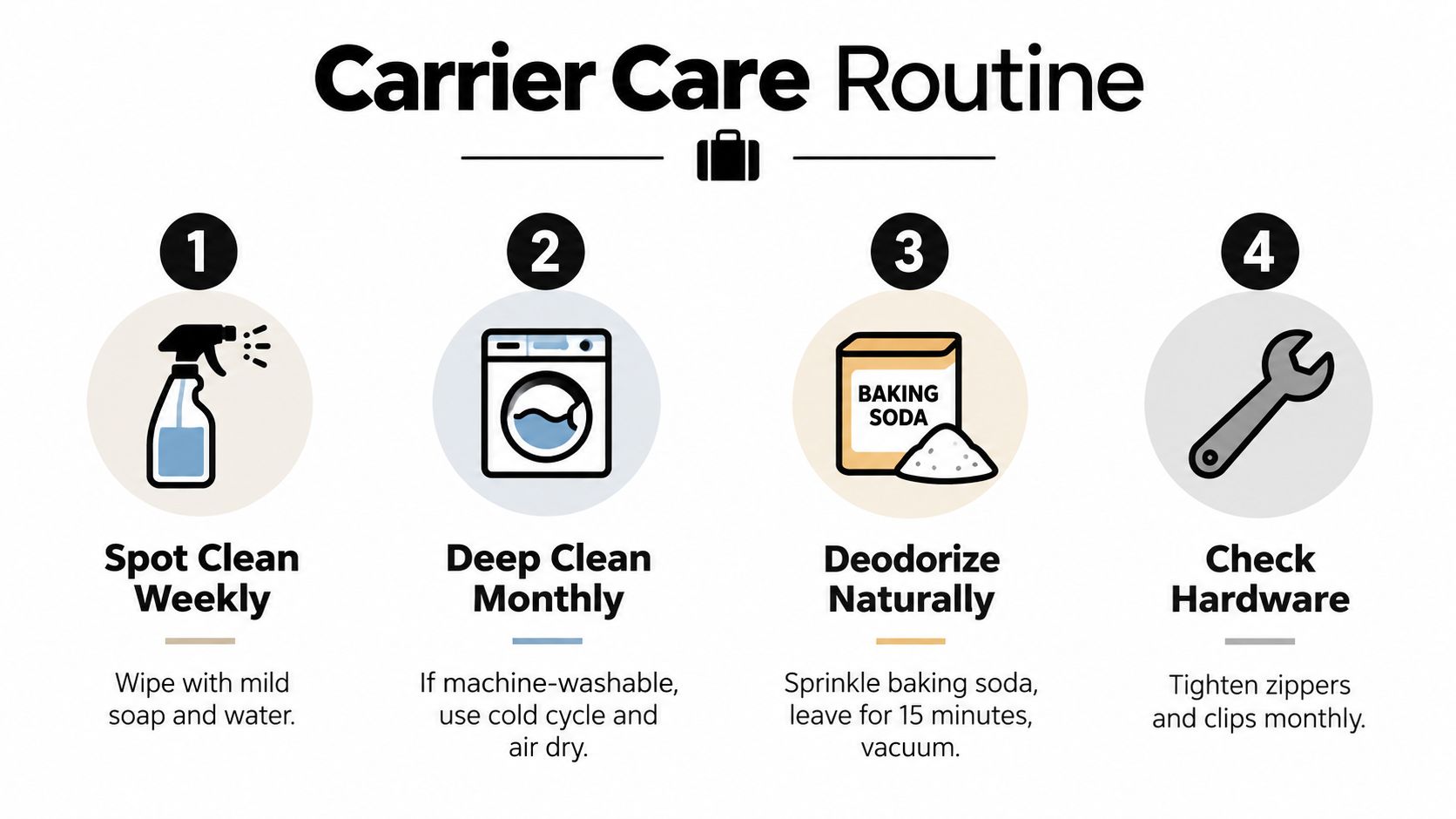
Check the care label before using water or a washing machine. A removable, machine-washable lining is the easiest setup for regular use. If the main body is spot-clean only, use mild soap and water on a small hidden area first, then dry it completely before storing.
Use a simple weekly routine
- Remove debris: Shake out crumbs and hair, then vacuum corners and pockets.
- Wipe contact areas: Clean handles, shoulder straps, base edges, and hardware with a suitable cloth.
- Refresh the lining: Use a pet-safe deodorizing spray and allow the carrier to air out fully.
- Inspect the structure: Look for loose stitching, bent clips, damaged mesh, or a base that no longer sits flat.
Canvas usually tolerates gentle spot cleaning, while vegan leather needs a damp cloth rather than saturation. Technical mesh benefits from careful brushing and thorough air drying. Don't use harsh solvents on coated finishes because they can dull the surface or weaken adhesives.
For persistent odors, a light application of baking soda can help refresh a dry lining before vacuuming. Keep moisture away from zipper tracks and metal hardware, then operate the zipper gently after cleaning so residue doesn't create friction.
Smooth surfaces can show claw marks more readily than textured materials. If your pet scratches at the carrier, prioritize a removable interior pad and stronger mesh over a delicate finish. Reversible inserts are especially useful because they let you change the visible side and isolate stains without replacing the entire carrier.
Making the Final Choice With Confidence
Choose the carrier in this order: pet size, temperament, daily routine, and travel requirements. Style comes next, not because appearance is unimportant, but because a carrier that fails the first four tests won't become useful through better color coordination.
Three features deserve a firm status.
- Secure closure: Your pet shouldn't be able to push through a zipper, loose flap, or weak opening.
- Adequate ventilation: Mesh and airflow should remain functional when the carrier is fully loaded.
- Accurate sizing: Interior length and height must support a natural posture without letting your pet slide around.
Then assess the lifestyle details. A tote suits a small, settled pet and short urban trips. A backpack handles hands-free transit and walking. A soft-sided airline carrier serves a narrow but demanding travel purpose. A sling is convenient for close contact and brief outings, not a substitute for every other format.
Nandog Pet Gear offers design-forward pet accessories, including tote carriers, alongside its broader range of comfort and travel products. Its carrier approach fits buyers who want a polished urban silhouette with practical details such as washable components and organized storage, while other formats may be more suitable for hiking, larger pets, or specialized airline travel.
The strongest purchase is rarely the most decorative one. It's the carrier your pet can enter calmly, occupy comfortably, and travel safely in, while you can carry it without resentment. Choose that piece carefully, and it becomes a long-term lifestyle accessory rather than another attractive item that stays in the closet.
Visit Nandog Pet Gear to explore design-forward carriers and everyday pet accessories made for polished urban routines. Compare the carrier's dimensions, materials, washable features, and storage details against your pet's needs before choosing the style you'll carry.