


Your Labrador spots a squirrel, leans into the leash, and suddenly the collar that looked perfectly sturdy in the shop is pressing hard against the front of the neck. You hold on, your dog keeps pulling, and the question changes from “Which collar looks good?” to “Where is that force going?”
That's the right question for dog collars for large breeds. A collar must fit securely, match your dog's anatomy, and suit the way your dog moves on leash. Width, padding, webbing, buckle design, and stitching all matter, but a wider collar alone won't make a powerful puller safe. The better choice depends on whether the collar is carrying identification, providing brief control, or restraining a dog that regularly surges forward.
Why Large Breed Collars Need a Different Approach
A large dog doesn't need a collar just because its neck is bigger. It needs equipment that can handle stronger movement without concentrating force in a small area. A calm Great Dane wearing a properly fitted flat collar for identification presents a different challenge from a young Rottweiler that lunges toward every passing dog.
Think of the collar as a load-distribution band. A narrow strap places more pressure along a smaller strip of skin and soft tissue, while broader webbing can spread contact over more of the neck. That doesn't remove pressure, and it doesn't correct pulling, but it can change how the force reaches the dog.
Mainstream sizing charts commonly place large collars around 16 to 26 inches of neck circumference and extra-large collars around 24 to 30 inches, with examples including Boxers, Golden Retrievers, Labradors, Bernese Mountain Dogs, Great Danes, Mastiffs, Rottweilers, and Saint Bernards. These ranges are summarized in the PetSmart dog collar sizing chart, but the label still comes second to your dog's actual neck measurement.
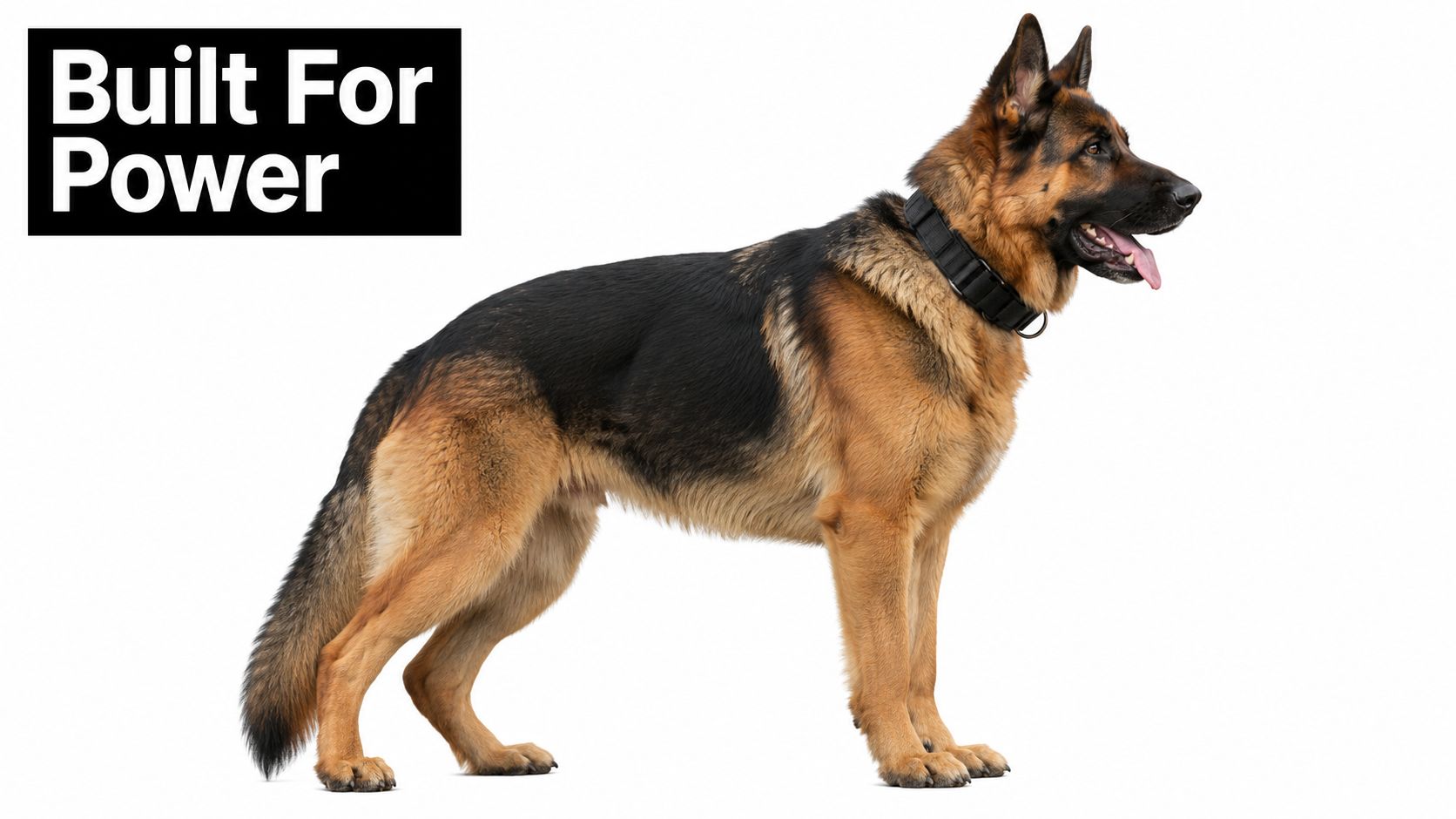
Strength is only one part of safety
A collar can have a strong buckle and still be unsuitable if it slips over the dog's head. It can also fit securely while placing uncomfortable pressure on the throat during a sudden pull. For that reason, selection should account for neck circumference, head shape, coat thickness, pulling behavior, and intended use.
A Greyhound mix may have a relatively narrow head and escape from a loose flat collar. A thick-coated Bernese Mountain Dog may need careful measurement through the coat. A deep-chested Labrador may wear a collar comfortably for tags but do better in a harness for daily walking if it consistently pulls.
Practical rule: Choose a collar for the job it must perform, not just for the dog's breed or the style shown in a product photograph.
ASTM's 2025 announcement of WK94204, a proposed specification covering the safety of dog collars, harnesses, and leashes, reflects growing attention to performance, materials, and everyday consumer safety. The ASTM work item for dog-walking equipment safety is especially relevant to large dogs because failures in webbing, stitching, or hardware can have serious consequences when a strong animal reaches the end of a leash.
How to Measure and Fit Dog Collars Large Breed Correctly
Measure your dog before shopping, even if you know the breed. Two Labradors can have different neck shapes, and the same dog's measurement can change with coat growth, weight, or grooming.
Follow a repeatable measuring routine
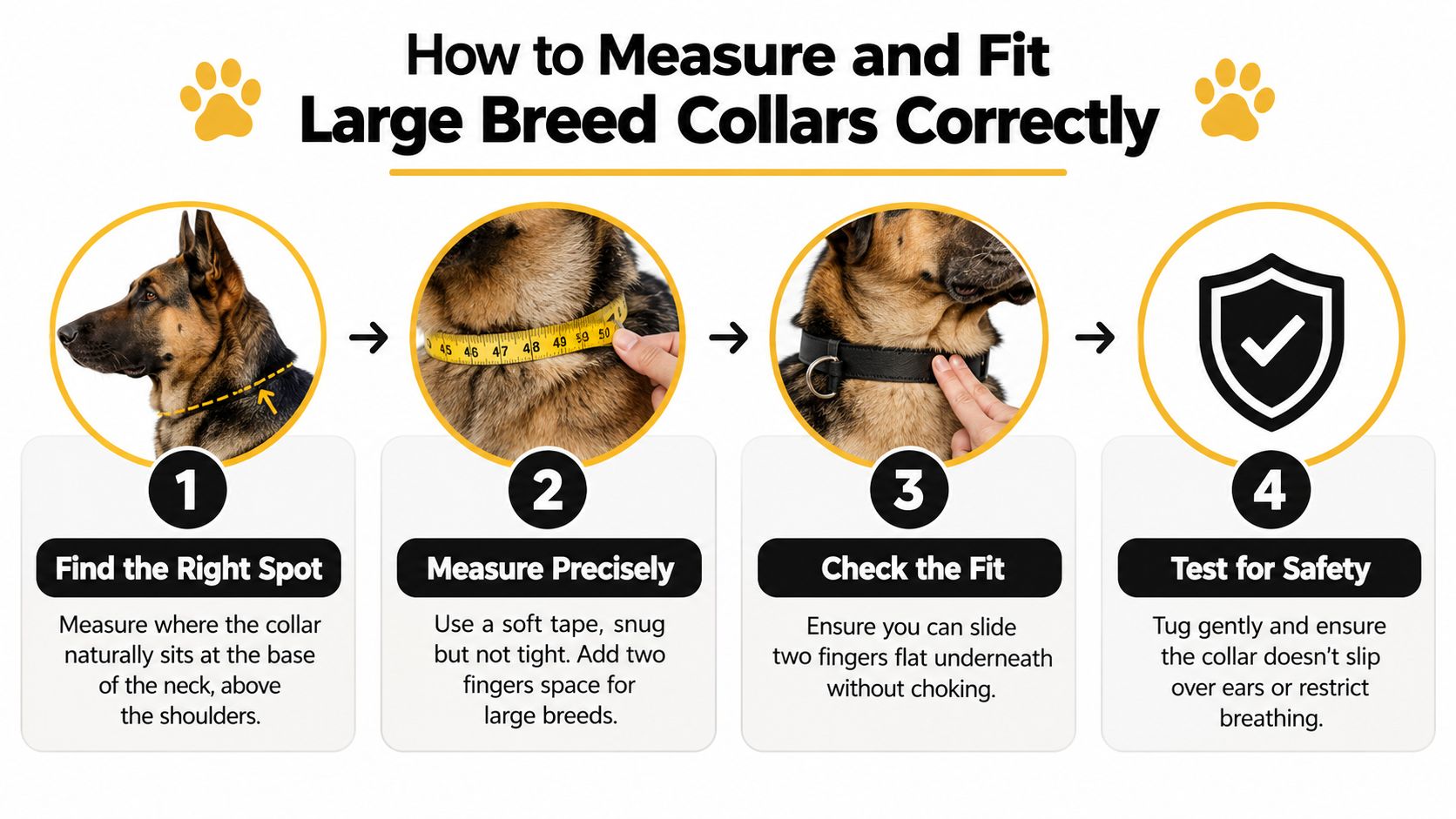
- Find the collar position. Place a soft tape around the neck where the collar will naturally sit, usually near the lower part of the neck above the shoulders. Don't measure tightly under the throat, and don't place the tape so high that it represents a position your chosen collar won't occupy.
- Keep the tape comfortable. Wrap it snugly against the coat without compressing the neck. With a very thick coat, part the fur enough to avoid measuring a loose layer of hair. Record the circumference, then compare it with the collar's adjustable range rather than relying only on “large” or “extra large.”
- Allow room for the fit check. Animal-welfare guidance commonly uses the two-finger rule, meaning two fingers should fit between the collar and the dog's neck. The Nandog guide to measuring dog collar size offers a practical reference for taking and checking the measurement.
- Test the finished fit. Slide two fingers flat beneath the collar. You shouldn't have to force them in, but they shouldn't move freely through a large gap either. Gently test whether the collar can move over the ears. If it can, tighten it or choose a different design.
Check anatomy, not just the number
A Mastiff with a broad neck may need a different shape of collar from a slim Doberman with a long, narrow head. A martingale can help an escape-prone dog, but it still needs a carefully adjusted stop so it doesn't tighten excessively. A thick coat can make a collar appear loose when it's snug against the neck, so check beneath the fur with your fingers.
Use the fit check every time the collar is put on after an adjustment. Recheck it as the coat changes, after grooming, and whenever your dog gains or loses condition. The collar should remain secure enough that it can't slip over the head while leaving normal breathing and swallowing unrestricted.
Materials Hardware and Width That Handle Strength and Comfort
Material affects how a collar feels against the neck, how it behaves in wet weather, and how easily you can inspect or clean it. Hardware determines how the collar closes and where the leash connects. Width influences contact area, but none of these features compensates for poor fit or uncontrolled pulling.
Market sizing guidance commonly places large-breed collars around 1 to 1.25 inches wide, with extra-large options around 1.5 inches wide. The Coastal Pet sizing guide provides this type of width guidance alongside the two-finger fit principle. Use it as a starting point, then consider your dog's neck length and daily activity.
| Material | Best For | Trade Offs |
|---|---|---|
| Nylon webbing | Active dogs, everyday use, and owners who want quick drying | Can feel stiff or rub sensitive skin if the edges are rough |
| Leather | Owners who prefer a traditional material and a structured feel | Needs conditioning and can take longer to dry after soaking |
| Neoprene-lined designs | Dogs that need a softer contact surface during routine wear | Padding can retain moisture if it isn't dried thoroughly |
| Water-resistant coated materials | Muddy walks, rain, and dogs that spend time around water | Coatings can crack or wear, so inspect the surface regularly |
| Soft fabric overlays | Identification collars and style-focused daily wear | The decorative layer must not hide damaged webbing or stitching |
Look closely at the load-bearing parts
A buckle should close fully and stay closed during ordinary movement. The leash ring should be firmly attached to the load-bearing webbing, not merely to a decorative outer layer. Reinforced stitching, clean edges, and webbing that doesn't stretch excessively are more useful indicators than a rugged name or tactical appearance.
Wider webbing may distribute leash force over a larger neck surface area, but pulling still creates a loading event at the throat. A padded collar can improve contact comfort, yet padding doesn't make it appropriate for a dog that repeatedly hits the end of the leash.
If you're choosing coordinated accessories, resources about custom pet merchandise with DTF transfers can help explain how decorative graphics are applied to pet-related products. Keep the functional priorities separate from the visual ones. A print, color, or texture should never obscure hardware, interfere with adjustment, or make inspection difficult.
Collar Types Explained From Flat to Martingale and Training Options
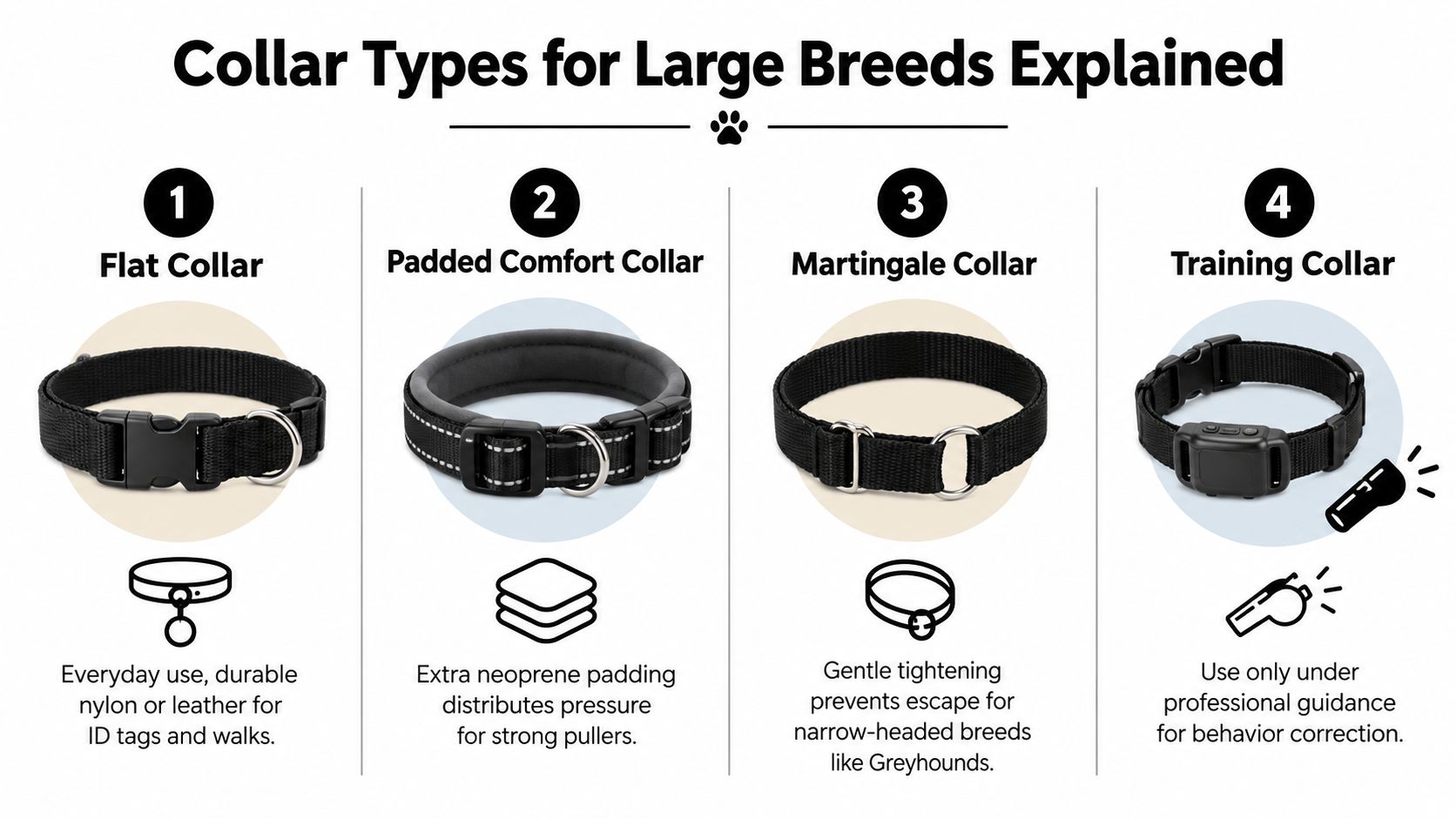
Different collar designs solve different problems. A flat collar is usually the simplest option for identification and routine control, while a martingale addresses escape risk. Training collars involve greater risk and shouldn't become a shortcut for teaching leash skills.
Flat collars for calm, controlled use
A flat collar has a fixed circumference once adjusted. It works well for ID tags, short controlled outings, and dogs that walk without sustained pressure. It should sit comfortably, close securely, and leave enough room for two fingers without becoming loose around the head.
For a strong Labrador that pulls from the first step to the last, a flat collar may still be useful for identification, but it isn't necessarily the best primary restraint. The more often the dog loads the leash, the more important it becomes to consider how that force reaches the neck.
Padded collars for contact comfort
Padding can reduce rubbing and make a collar feel gentler against short or sensitive coats. It may also help a collar sit smoothly on a muscular neck. However, padding changes the contact surface, not the dog's behavior. A dog that surges forward can still place substantial pressure through a padded design.
Martingales for narrow heads
A properly adjusted martingale can reduce the chance that a narrow-headed dog slips backward out of the collar. This can suit some Greyhound-type dogs and other escape artists. The tightening action should stop before the collar becomes chokingly tight, and the collar shouldn't be left on an unattended dog where it could catch on objects.
Training collars require professional judgment
Prong, slip, and other corrective designs can create sharp or concentrated pressure. They're easy to misuse, especially with a large dog whose size can make an owner feel they need more control. If a training collar is being considered, work with a qualified trainer who can assess the dog, demonstrate the equipment, and prioritize reward-based handling and safer management.
A collar that prevents escape isn't automatically a collar that should carry every leash load.
When a Collar Is Enough and When a Harness Is Safer
The common advice to “just buy a wider collar” leaves out the most important variable, what happens when the dog pulls. Research on canine equipment indicates that collar type changes pressure distribution, but no single tested collar reduced neck pressure enough to clearly eliminate injury risk during pulling. A 2026 review also describes the evidence as limited mainly to pressure and force studies rather than broad real-world outcomes, as summarized in this veterinary review of dog-worn equipment and welfare.
Use the collar for identification when needed
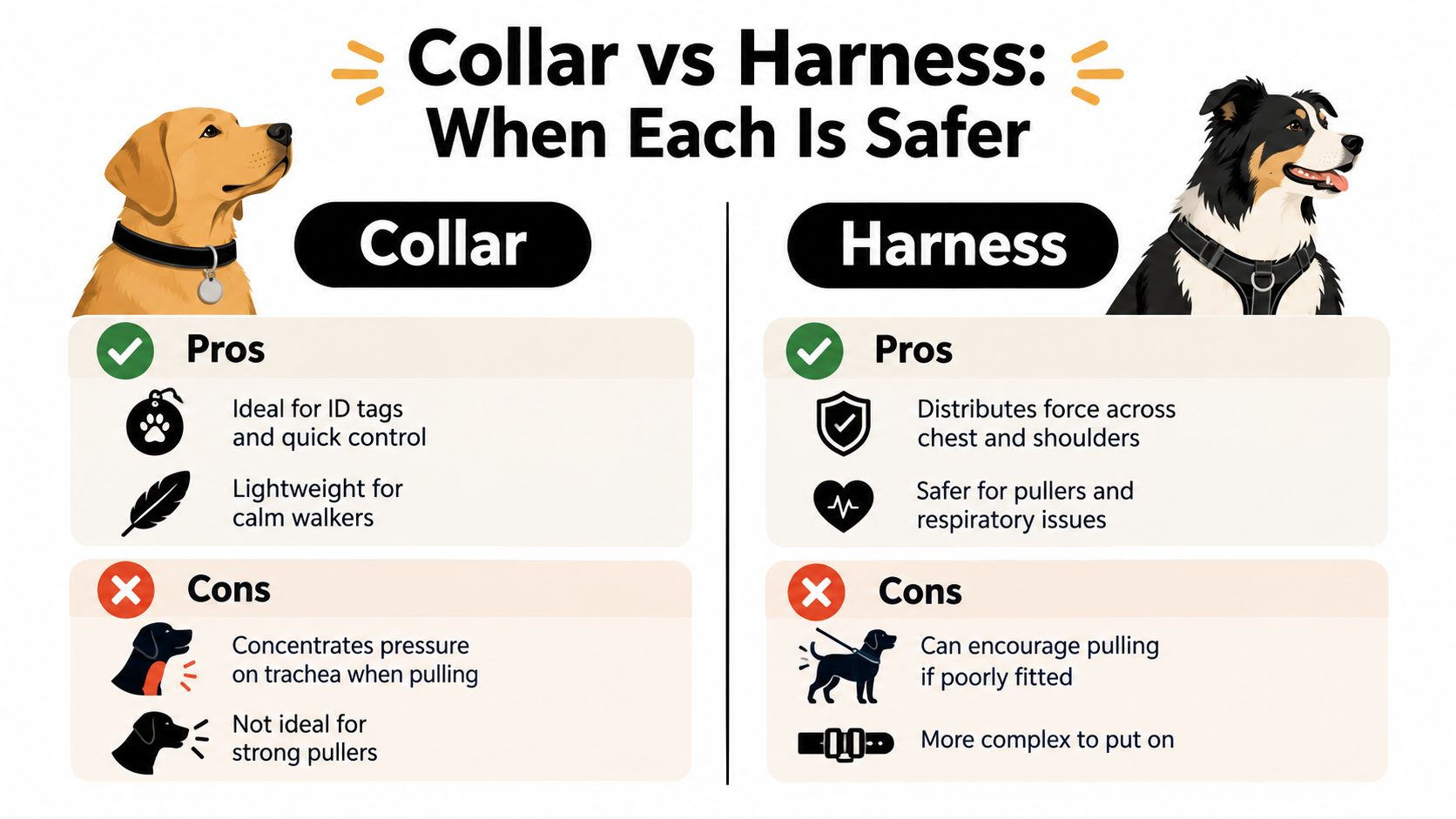
A well-fitted flat collar is often sensible for tags and everyday identification, even when a harness carries the leash. That setup separates two jobs. The collar identifies the dog, while the harness gives you a broader contact area for walking.
A collar may also be appropriate for a calm dog on a short, controlled outing where the leash remains slack. The decision should reflect the dog's actual behavior, not the assumption that every large breed needs the same restraint.
Treat pulling as a health and equipment issue
A strong dog that repeatedly reaches the end of the leash can load the neck suddenly. Veterinary literature summarized in a 2026 review reports that a normal canine trachea can withstand about 20 mmHg of direct compressive force without lumen closure, while dogs with pre-existing tracheal collapse may experience severe airway compromise at that same pressure. See the Frontiers in Veterinary Science review of canine airway mechanics for the cited clinical context.
The risk assessment also changes for dogs with respiratory compromise, neck sensitivity, ocular disease, or particular head shapes. A review reports that wearing a collar can increase intraocular pressure in some dogs, and that exercise in a collar increased IOP in both brachycephalic and dolichocephalic dogs in the cited study, while a harness did not.
For a dog that pulls, a properly fitted harness is often the more defensible daily walking default because it places leash forces across the chest and shoulders rather than relying on the neck alone. It still needs careful adjustment. A loose harness can rub or allow escape, while a poorly chosen design can interfere with movement or fail to improve pulling.
For detailed selection criteria, compare options in this guide to the best dog harnesses for large dogs. Continue leash training alongside equipment changes. Management lowers immediate risk, but it doesn't replace teaching the dog how to walk with a slack leash.
Cleaning Inspection and Care to Keep Collars Safe and Fresh
A collar that was strong when new can become unreliable after repeated exposure to water, dirt, saliva, friction, and sunlight. Large dogs place meaningful loads on every component, so maintenance should include both hygiene and structural inspection.
Match cleaning to the material
Start by checking the manufacturer's care instructions. Many nylon collars can be hand-washed with mild soap and cool or lukewarm water, then rinsed until no residue remains. Leather usually needs a damp cloth and a suitable conditioner rather than soaking. Neoprene and coated materials should be washed gently so the surface doesn't peel or crack.
Dry the collar completely before putting it back on. Don't leave wet fabric folded against the neck, and don't use intense heat that could warp synthetic materials or dry leather excessively. Rotating between a clean spare and the collar in use can help when a dog swims, plays in mud, or gets caught in heavy rain.
Inspect before trusting the collar
Run your fingers along the full length of the collar and examine:
- Webbing edges: Look for fraying, thinning, cuts, or stretched areas.
- Stitching: Check load-bearing seams and the point where the leash ring attaches.
- Buckle function: Confirm that the buckle closes completely and releases normally.
- Metal components: Watch for bending, sharp edges, corrosion, or a ring that no longer sits firmly.
- Odor and surface condition: Persistent odor, cracking, or material breakdown can signal that cleaning won't restore safe use.
Replace the collar when damage affects the webbing, stitching, buckle, or leash ring. Don't wait for a visible break after a large dog has already pulled hard against it.
For washable material choices and care ideas, see this guide to a washable dog collar. A clean collar should still pass the same fit and security checks after washing, since fabric can soften, shrink, or change shape.
Common Fitting Mistakes and Style Tips for Durable Comfort
The most frequent mistake is buying by breed, weight, or appearance alone. A “large” label doesn't tell you whether the adjustable range matches your dog's neck, and a fashionable narrow strap may not provide a comfortable contact area for a powerful walker.
Correct the problems that matter most
- Sizing by weight: Measure the neck directly and compare the result with the manufacturer's range.
- Leaving excess room: Apply the two-finger check, then make sure the collar can't slide over the ears.
- Choosing thin fashion straps: Reserve delicate designs for identification or calm, controlled use. Choose broader load-bearing webbing for dogs that create stronger leash tension.
- Ignoring the head shape: Consider a martingale for a suitable escape-prone dog, but adjust its stopping action carefully.
- Treating padding as protection: Padding can improve comfort, but it doesn't remove neck loading during a pull.
- Skipping inspections: Check stitching, webbing, rings, and buckles before relying on the collar outdoors.
Style can still be part of the decision. Choose a color that contrasts with your dog's coat so tags and the collar are easy to see. Textured fabrics may look attractive, but make sure they don't conceal fraying or make cleaning difficult. Hardware should be smooth, secure, and proportionate to the collar rather than added only for visual impact.
For owners comparing premium accessories, Nandog Pet Gear offers adjustable collars, including a large option listed for an 18 to 22 inch circumference, along with a waterproof Poly-Flex sport collar featuring a double-latch metal buckle and a large size option. An artisan leather collar and leash kit is also described as adjustable for dogs of different sizes. Verify the current product measurements before ordering.
Before each walk, run through one final check: the collar is secure, two fingers fit beneath it, the hardware closes correctly, the leash ring is sound, and your dog is walking calmly enough for a collar to be an appropriate restraint. If pulling remains frequent or your dog has airway, neck, or eye concerns, use the collar for identification and choose a properly fitted harness for daily walking.
Nandog Pet Gear offers thoughtfully designed collars, leashes, harnesses, and other accessories that pair practical function with a polished look. Visit Nandog Pet Gear to compare options for your large dog's identification, walking, and everyday comfort needs.