

You're outside your apartment with a leash in one hand, your phone in the other, treats slipping out of a pocket, and a puppy twisting away just as you try to fasten the harness. If getting out the door feels like a small wrestling match, it makes sense to look for an easier setup.
A good easy dog harness should save time without trading away a secure fit or free movement. The right choice depends on which problem you're solving: a slow, awkward routine; a harness your dog can back out of; or discomfort you notice once the walk gets going. Soft padding and quick buckles help, but they're not the whole answer. You also need adjustable straps, dependable leash attachment, and a fit that still looks right when your dog moves.
That last part matters. A harness can seem fine while your puppy stands still and shift, rub, or limit shoulder movement once you're on the sidewalk. The practical test is not only whether you can put it on quickly. It's whether your dog can walk, turn, and trot comfortably while staying securely fitted.
What an Easy Dog Harness Actually Means for Daily Walks
“Easy” should describe the whole routine, not just the moment you close a buckle. A harness that goes on quickly but twists around your dog's chest, rubs behind the front legs, or slips over the head when they back up isn't easy to live with. It's a new problem wearing a convenient clasp.
Think about what slows you down. If your dog stands calmly but the straps take forever to sort out, a simpler closure or a more intuitive design may help. If your puppy wriggles away, the issue may be how the harness goes on, not how soft it feels. And if your dog walks comfortably at first but starts scratching or shortening their stride, focus on fit and movement rather than buying a harness with more padding.
Three jobs, one piece of gear
A useful harness should help you get ready promptly, secure your dog, and preserve comfortable movement. Those needs can compete. A style that's simple for a calm dog to step into may be a poor match for a puppy who pulls backward while you're fitting it. A vest with plenty of coverage may feel reassuring, but it can take longer to position correctly.
For city walks, security and a repeatable fit matter more than a flashy feature. You should be able to identify the front and back, adjust the straps without guesswork, and attach the leash to a sturdy point. Then check the fit after your dog moves, not only before you open the door.
Practical rule: If the harness is fast to buckle but hard to fit correctly, it isn't easy enough.
Step-In, Overhead, and Quick-Clip Harness Styles Compared
The best style is the one your dog will tolerate and you can fit consistently. Don't choose by the product name alone. Look at how the harness goes on, where it closes, and whether your dog can wriggle out while you're getting ready.
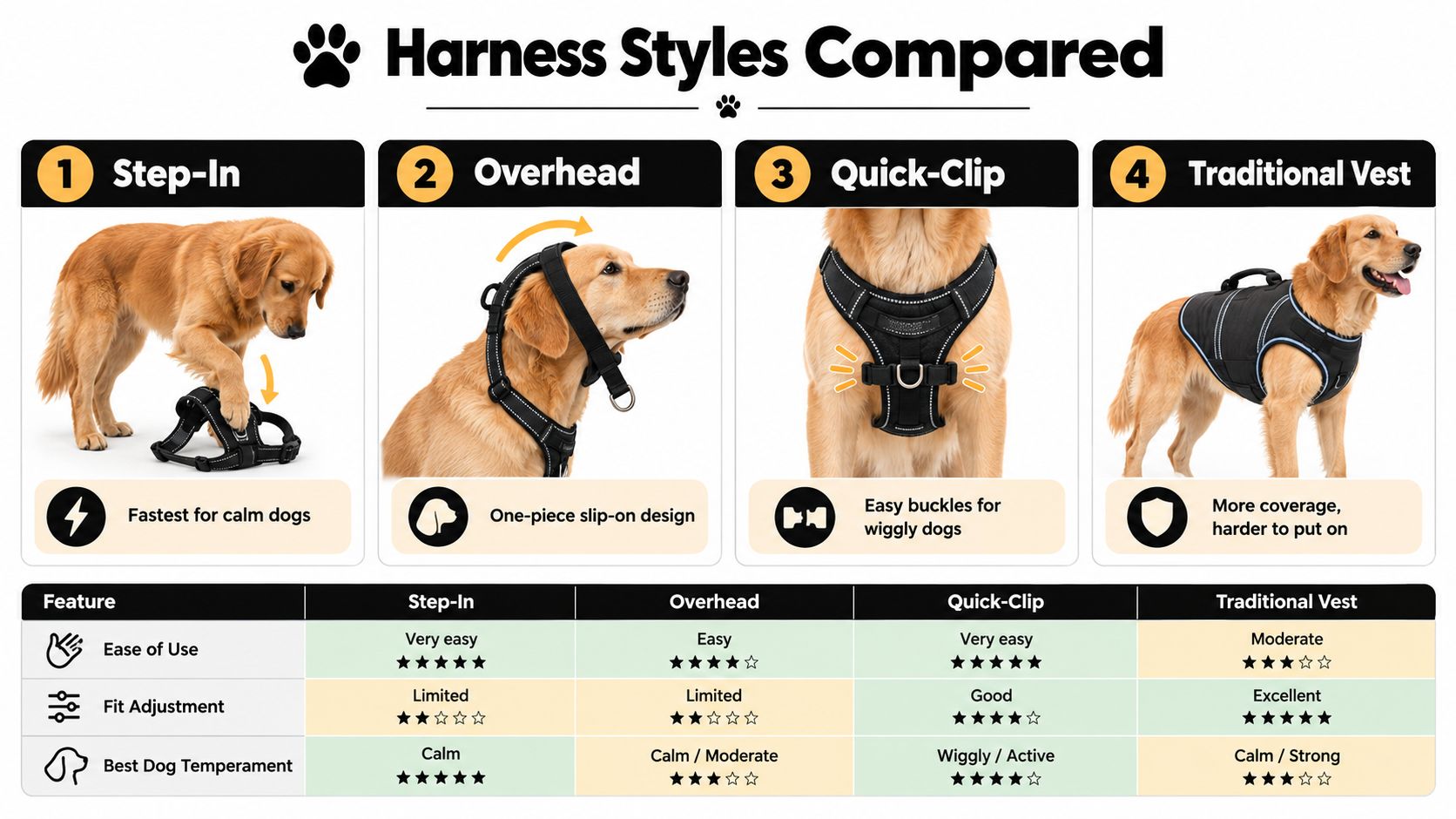
| Style | Ease of Use | Escape Security | Best For | Watch Out For |
|---|---|---|---|---|
| Step-in | Quick when the dog cooperates | Depends on fit and strap layout | Calm dogs comfortable placing their paws into openings | A wiggly dog may step on or out of a loose strap |
| Overhead | Simple once the dog accepts the head opening | Often a secure everyday option when adjusted properly | Dogs who need a snug, full-body fit | Check neck clearance, especially for short-nosed dogs |
| Quick-clip | Fast closures with fewer awkward steps | Depends on the number and placement of clips | Puppies and dogs who dislike standing still | Clips don't compensate for poor adjustment |
| Traditional vest | More handling and positioning | Coverage varies by design | Dogs who need broader coverage or a structured feel | Can be warm, bulky, or harder to put on |
Match the style to the dog in front of you
A step-in harness can be the fastest option for a dog who will stand calmly while you guide their front legs through. If your puppy spins, paws at the harness, or backs away, choose another style rather than turning the routine into a daily struggle.
An overhead harness is a strong everyday choice for a dog who needs secure coverage, but don't force the head opening over a dog who finds that frightening. For short-nosed breeds, make sure the harness leaves the throat clear and doesn't interfere with breathing.
A quick-clip design can be the practical middle ground when your dog is wiggly but tolerates straps around the body. Traditional vests can add coverage, but more material isn't automatically more comfortable. Pay attention to how the edges sit near the elbows and shoulders.
Key Features That Make a Harness Easier to Live With
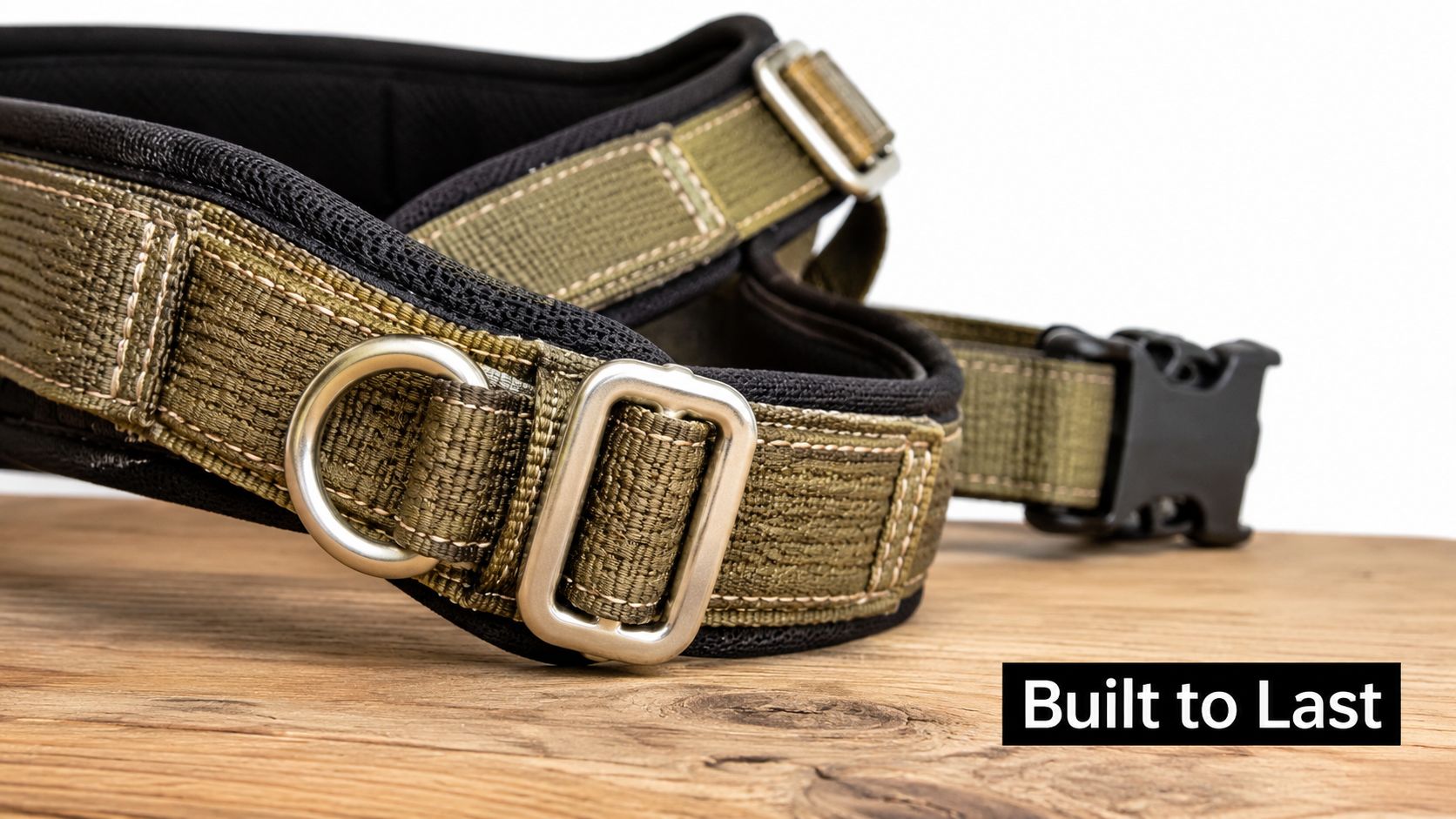
A harness can feel convenient on the first walk and become annoying after repeated use. The details that hold up are usually unglamorous: dependable buckles, useful adjustability, seams that don't rub, and a leash ring that suits your dog's strength.
Spend attention on the parts that affect fit
Buckle quality matters because you'll use the closures every walk. Side-release plastic buckles can be light and simple to operate; metal hardware can feel sturdier, though its weight and placement should suit your dog. Whichever you choose, check that the buckle closes fully and doesn't press against a joint.
Adjustability is more useful than a long feature list. Look for straps that let you tune the chest and girth separately, so you can get a secure fit without pulling the harness tight across the shoulders. Padding should protect contact points without bunching behind the elbows. A smooth lining can help on short-coated dogs, while a thick coat may require room to adjust across seasons.
Reflective trim is a sensible visibility feature for dim walks. A reinforced D-ring is also worth checking, especially if your dog is strong or you use a short leash in busy areas. A grab handle can help you guide a dog briefly around a close distraction, but it doesn't replace a secure leash connection.
Before buying, check whether the product page shows where each strap sits and how the harness adjusts. If you're comparing materials, Nandog's guide to what neoprene is and how it's used can help you understand the fabric choice.
The video below shows a harness being put on and adjusted. Use it as a visual reference, then check the fit on your own dog rather than assuming every body shape will sit the same way.
How to Measure Your Dog and Pick the Right Size
Don't buy a harness by breed name or weight alone. Dogs with the same weight can have very different chest shapes, neck widths, and coat thicknesses. The manufacturer's measurement chart is the starting point, not a promise that a particular size will fit.
Measure before you order
Use a soft tape and keep your dog standing naturally. Measure the girth around the broadest part of the rib cage, usually behind the front legs. Also measure the chest depth and neck circumference if the brand's chart requests them. Keep the tape snug without compressing the coat or skin.
Then compare your measurements with the brand's size guide. If your dog falls between ranges, look at the harness's adjustment points and how much room they provide. Don't size up automatically if it means the straps will sit too loose; don't size down to compensate for a design with limited adjustment.
For a growing puppy, choose a harness with room to adjust as their body changes, but don't leave it loose enough to slip over the head or shoulders. Recheck the fit as your puppy grows and whenever their weight or coat changes. A thick winter coat can affect strap placement, so assess fit in the coat your dog will wear outside.
The two-finger check is a helpful starting point, not the final verdict. You should be able to slide two fingers beneath a strap without forcing them in, but the harness must also stay in place as your dog walks. If tightening the straps causes rubbing or limits movement, the shape may not suit your dog.
Putting the Harness On and Adjusting It the Right Way
A harness can look secure while still sitting badly. Identify the chest panel, belly strap, and leash attachment point first. Position the front panel over the sternum, with the side straps behind the elbows to reduce rubbing.
Make the first adjustment calm and repeatable
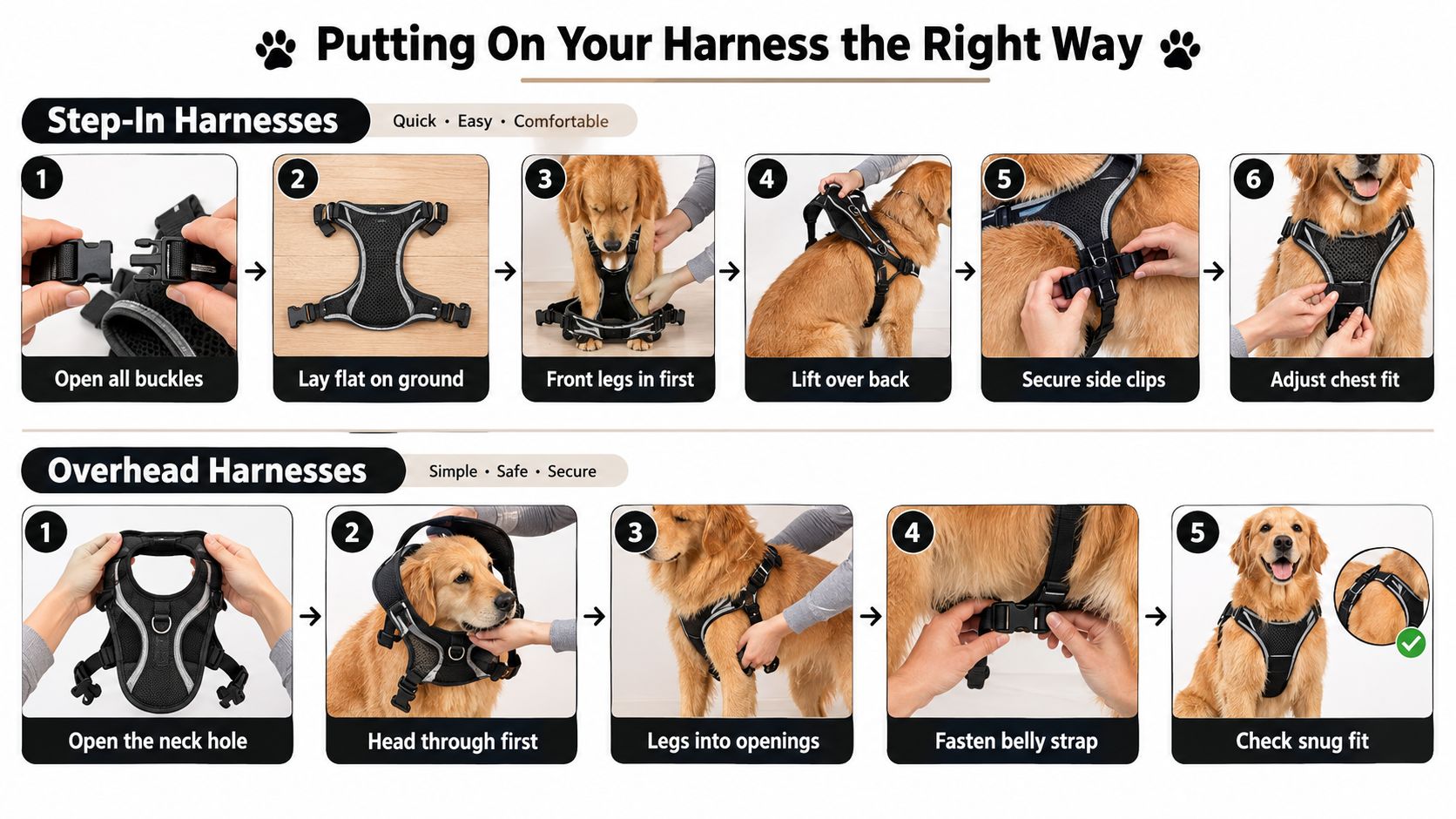
For a step-in harness, lay it flat and check that the straps aren't twisted. Guide your dog's front legs through the openings, lift the harness over their back, and fasten the side clips. Tighten the chest and girth straps a little at a time.
For an overhead harness, open the neck area and let your dog put their head through. Set the chest panel against the sternum, bring the belly strap behind the elbows, and fasten it. With a quick-clip style, find the clips before you start so you can secure the harness without holding your dog still while searching.
Check the neck and chest fit separately. Two fingers should slide beneath each strap without digging in, while the harness stays in place. With your dog standing, apply gentle sideways leash pressure and check whether the harness slides or your dog can back out. Don't yank the leash to test its strength.
A standing fit is only a starting point. Harness design can affect stride length, forelimb weight distribution, and shoulder and elbow angles. Check your dog's comfort while they move, not just while they stand.
For a puppy new to harnesses, let them sniff it and reward calm contact. Practice fastening it briefly indoors before heading out. Keep the first tries relaxed. If your dog freezes or struggles, pause and make the next attempt easier rather than wrestling the harness on.
A Movement-Based Fit Check Most Owners Skip
On a city sidewalk, a harness may look fine while your dog stands still, then shift or limit movement once they start walking. After adjusting it, take a short, quiet route and watch your dog walk, turn, and trot. Judge the fit by how your dog moves naturally.
A systematic review found that chest-strap harnesses reduced shoulder extension by as much as 8 degrees, while Y-shaped harnesses often marketed as non-restrictive reduced it by as much as 10 degrees during walking and trotting (reviewed harness evidence). Those figures show why shape alone cannot guarantee unrestricted movement. Check the harness on your dog in motion.
Use this visual checklist on a real walk
- Stride: Are your dog's steps their usual length, or do the front legs look shortened?
- Shoulder reach: Can each front leg swing freely without the chest strap pulling across the shoulder?
- Elbow clearance: Do the straps stay behind the elbows without touching or rubbing as your dog walks?
- Harness movement: Does the harness stay centered, or twist when your dog turns?
- Comfort and security: Does your dog scratch, try to back out, or change their gait once moving?
Use the check to separate three different goals. Reducing neck pressure depends on where leash force lands. Preventing escape depends on harness shape and fit. Changing pulling behavior takes training as well as suitable equipment. A harness may support more than one goal, but it will not address all three by itself.
If your dog's gait changes, rubbing persists, or they have an orthopedic history, ask a veterinarian or rehabilitation professional to assess the fit and movement. For short-nosed breeds or dogs with breathing concerns, take respiratory changes seriously and seek veterinary guidance.
Safety, Behavior, and When a Harness Is the Wrong Tool
A harness can be the right choice for keeping leash pressure away from the neck, but that doesn't make every harness low-risk. Pressure shifts to the chest, sternum, shoulders, and surrounding soft tissue. Fit and design still matter.
Veterinary guidance describes body harnesses as less likely to injure delicate neck tissue and potentially preferable for dogs with tracheal disease or neck pain. A restraint study measured an average peak neck force of 30.2 N during collar-and-leash exercise, a finding discussed in veterinary guidance on collars and harnesses. If your dog has a diagnosed condition or develops breathing changes, ask your veterinarian which style is appropriate.
Pick equipment for the actual problem
A back-clip harness can be comfortable for everyday walking and can move leash pressure away from the neck. But it may give you little mechanical help when a dog pulls. A front-clip harness can give you more ability to redirect a dog, but it can also change how they move. Use it thoughtfully, and don't treat it as a substitute for loose-leash skills.
A harness doesn't teach a dog to stop pulling. Practice in a quiet area, reward your dog for checking in and walking beside you, then add distractions gradually. If walks are already frustrating, Nandog's advice on leash training puppies offers a place to start building the skill alongside equipment.
Introduce a new harness in stages:
- Let your dog investigate it and reward relaxed behavior.
- Fasten it briefly indoors, then remove it before your dog becomes uncomfortable.
- Take a short walk in a low-distraction area and check for rubbing or twisting.
- Increase the challenge only when your dog remains comfortable and responsive.
Use a leash grip you can maintain without wrapping the leash around your hand. For car trips, use a restraint or secondary tether designed for vehicle travel rather than relying on a walking harness as a crash-safety device. Check stitching, buckles, and leash rings regularly; stop using the harness if any part is damaged or no longer holds securely.
Keep the harness clean and ready
Follow the maker's care instructions. If a washable fabric harness allows machine washing, place it in a mesh bag and air-dry it to help protect the buckles and reflective details. Wipe leather or suede with a damp cloth, and let padded areas dry fully before storing to limit odor buildup.
For common fit problems, troubleshoot the cause instead of tightening everything:
- Chafing behind the legs: Reposition the straps or try a different cut if the edges keep contacting the elbows.
- Backing out: Recheck the fit while your dog moves; if they can still reverse out, choose a more secure design.
- Straps loosening: Inspect the adjusters and hardware, then replace the harness if they won't hold.
- Buckles sticking in cold weather: Clear away dirt or moisture and check the manufacturer's care guidance.
- Odor in padding: Wash as directed and let the harness dry completely before the next walk.
Retire a harness with frayed stitching, cracked buckles, or a stretched D-ring. If your dog needs different materials for different weather, a breathable option for warm days and a warmer one for cold conditions can be useful, as long as each fits securely.
Choosing the Right Easy Harness for Your Dog
Make the choice in this order. Start with your dog's behavior at the door, then select a construction style, check whether the straps adjust to their body, and confirm the fit after they move. That sequence is more reliable than choosing by color, padding, or the promise of effortless walks.
Use this short buying check:
- Style: Choose step-in for a dog who calmly places their paws, overhead for a dog who accepts the head opening and needs a secure fit, or quick-clip for a dog who needs fast closures.
- Fit: Check the chest, neck, and girth adjustment points, then make sure the straps clear the elbows.
- Hardware: Look for closures and a leash ring suited to your dog's size and walking habits.
- Movement: Watch your dog walk and turn. Recheck for shoulder restriction, rubbing, shifting, and escape attempts.
- Care: Choose a material you can clean and dry properly for your routine.
If pulling is the main problem, don't buy a harness expecting the attachment point to train your dog. Compare suitable options, such as those discussed in Nandog's guide to no-pull dog harnesses, and pair equipment with consistent leash practice.
For most new puppy owners, one well-fitted everyday harness is the sensible starting point. Add a specialized style only when your dog's movement, escape risk, training needs, or the season gives you a clear reason.
Nandog Pet Gear offers neoprene harnesses and everyday walking accessories, including leashes and collars, for pet owners looking to build a practical walking setup. Visit Nandog Pet Gear to explore the options and choose gear that suits your dog's fit, comfort, and daily routine.