


You come home to stuffing scattered across the floor, a split seam, and a dog who looks entirely pleased with the afternoon's work. The label promised a tear-resistant dog bed, but it didn't say what kind of tearing it was designed to resist, or whether the maker had tested the seams, the fabric, or both.
That distinction matters. A bed that stands up to scratching may still fail when a dog bites its edge, and a tough cover won't help much if the zipper is easy to grab or the filling falls apart. Choosing well means matching the bed's construction to your dog's habits, then knowing what to inspect and when to stop using it.
When the Bed You Bought Lasts Three Weeks
The first reaction is often, “Why is my dog destroying this?” It's a fair question, but a more useful one is, “What kind of wear was this bed built to handle?” Scratching, nesting, daily rubbing, and focused chewing put different stresses on a bed. A product can hold up to routine pawing yet offer little protection once teeth find a seam or closure.
A tear-resistant label isn't a promise that a bed is chew-proof. It's a claim about durability that needs context: the fabric, the seams, the testing method, and the way your dog uses the bed. A dog who circles and digs before lying down needs a surface that can take repeated abrasion. A dog who grabs the zipper and pulls needs protected closures and sturdy seam construction.
Durability depends on the dog
Dogs spend substantial time resting on bedding. A veterinary sleep study reports an average of approximately 10 hours of sleep per day, while a review of earlier research estimated normal domestic-dog sleep at 8.4–12.9 hours daily (veterinary research on canine sleep). That regular use means the bed meets claws, body oils, moisture, friction, and repeated repositioning over time.
Those figures explain why construction matters, but they don't show that any particular fabric will resist damage. A bed's performance depends on its materials, stitching, care, and the individual dog's behavior. For a first-time buyer, the practical goal isn't to find one miracle fabric. It's to work out which parts of the bed need to withstand your dog's particular kind of wear.
Look beyond the label. This guide considers how to compare fabric and seams, what textile tests can tell you, how to match a bed to scratching or chewing habits, and how to inspect and care for it. The point is to choose with clear expectations, not to trust an absolute claim.
What Tear Resistance Means in a Dog Bed
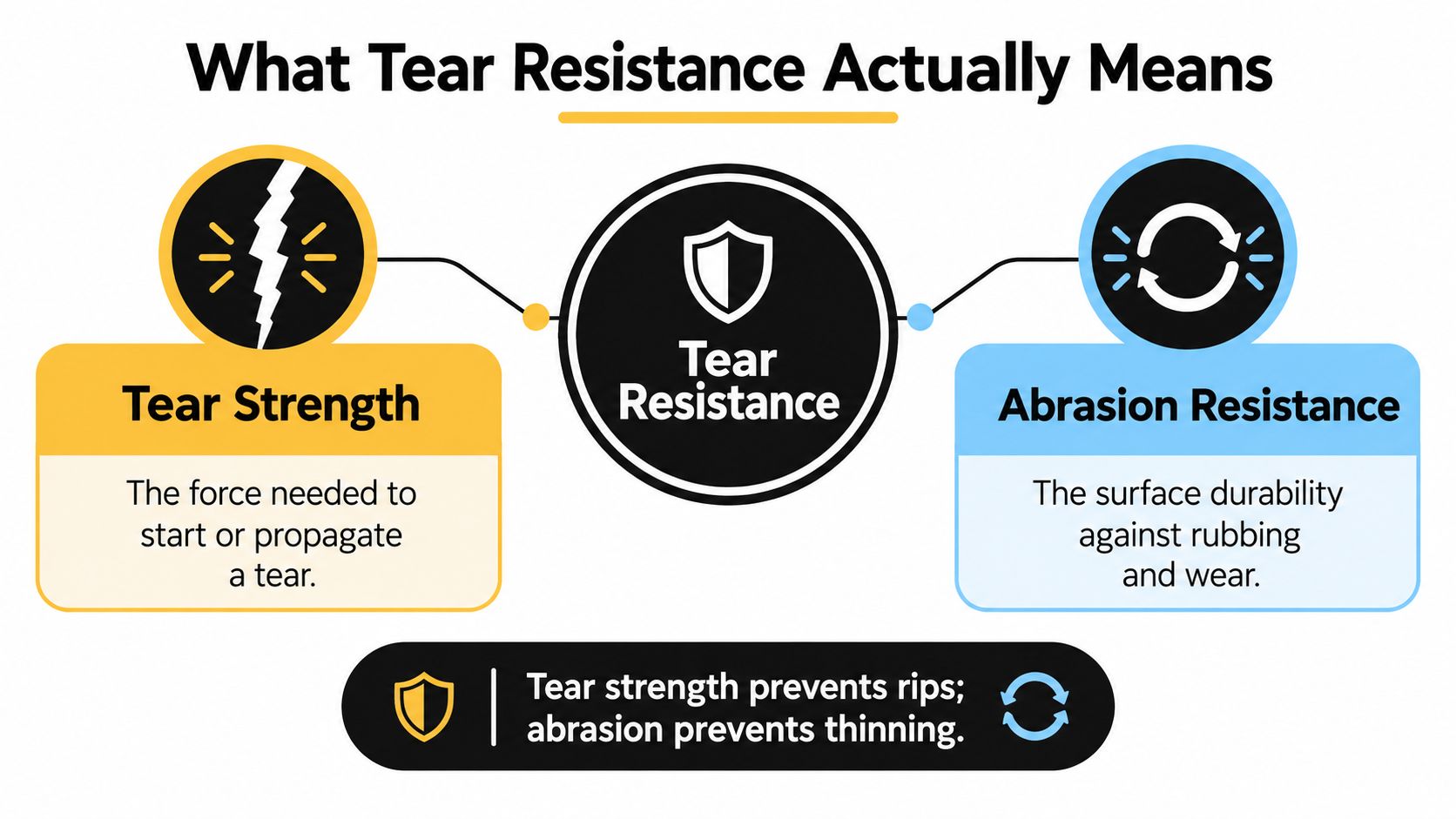
Tear strength and abrasion resistance describe different kinds of wear. Tear strength measures the force needed to start or continue a rip. Abrasion resistance describes how well a surface withstands rubbing over time. Rubbing a paper towel repeatedly can wear it thin, while a sharp pencil point can puncture it and start a tear. A fabric may resist one type of damage better than the other, so “tear resistant” alone does not show how it will hold up to your dog's habits.
Read the details behind the claim
Woven fabric has two main thread directions. The warp runs lengthwise, and the weft runs across it. A result from a tear test in one direction does not establish how the fabric performs in the other. If a brand provides test results, check which direction was tested and the conditions used.
Several related terms help clarify what a product description does, and does not, tell you:
- Seam slippage happens when threads shift or pull apart along a stitched seam. The fabric can stay intact while the seam opens.
- Bursting strength describes resistance to pressure applied across an area. It adds context but does not replace tear or abrasion testing.
- Puncture damage starts with a small hole, often caused by a claw or tooth. That opening may then grow into a larger rip.
These distinctions help explain why performance can vary across a single bed. A surface may tolerate rubbing yet be vulnerable to a puncture, while the fabric remains intact and the seam gives way. Damage can start where force is concentrated, such as around corners, seams, or zipper openings. ASTM textile standards distinguish tear testing from abrasion outcomes such as fabric rupture, mass or thickness loss, and reduced breaking strength after abrasion.
Practical rule: Treat “tear resistant” as a starting point, not a guarantee. A named test method, the tested fabric direction, and conditioning details give the claim more useful context.
Materials and Construction That Hold Up Over Time
The shell, fill, and seams all contribute to how a bed performs. A tightly woven fabric may resist routine claw contact, but a vulnerable zipper can still become the first point of failure. Likewise, a sturdy cover can't preserve comfort if the filling compresses or breaks down.
Fabric names can help narrow a search, but they don't establish a guaranteed ranking. Ballistic nylon is designed as a strong textile, while ripstop construction uses a pattern intended to help limit a tear's spread. Heavy canvas offers a firmer, textured feel. Microfiber may feel softer, and treated blends may be designed with easier cleaning in mind. For a broader look at how household textiles are chosen around pets, this guide to finding pet-friendly sofa fabrics offers useful context.
Compare the shell by its job
| Shell Material | Tear Strength | Abrasion Resistance | Comfort & Feel | Best For |
|---|---|---|---|---|
| Ballistic nylon | Depends on weave and tested direction | Depends on fabric finish and construction | Often firm | Buyers seeking a structured, durable-feeling shell |
| Ripstop fabric | Construction is intended to limit tear spread | Depends on yarns and surface | Can feel crisp or smooth | Routine wear where preventing a small rip from spreading matters |
| Heavy canvas | Depends on weight, weave, and seams | Depends on surface and finish | Textured, less plush | Dogs that scratch or nest on a firm surface |
| Microfiber | Depends on weave and test results | Depends on fabric and finish | Often soft | Comfort-focused use with routine wear |
| Treated blends | Varies by blend and treatment | Varies by surface and treatment | Varies | Buyers who want a balance of feel and cleanability |
These are material categories, not test ratings. A fabric label doesn't tell you its test result, and two fabrics with the same name can be built differently.
Check what sits beneath the fabric
Memory foam or orthopedic foam can provide a supportive resting surface, while fiber fill or polyfill can create a softer, more yielding feel. The right choice depends on your dog's comfort needs, but ask how the cover opens and whether the fill can be inspected or cleaned. A durable outer shell isn't enough if the filling is exposed through a failed seam.
Construction deserves close attention. Look for seams that are secured and finished, corners that aren't left vulnerable, and zippers that sit out of easy reach. Double stitching can add reinforcement, but the overall design still matters. Some Nandog bed styles have double-stitched seams, and the brand provides details about dog bed covers for owners comparing cover options.
A strong bed balances shell, seams, fill, and care. Choose based on the weak point your dog is most likely to find.
How Tear Resistance Is Tested
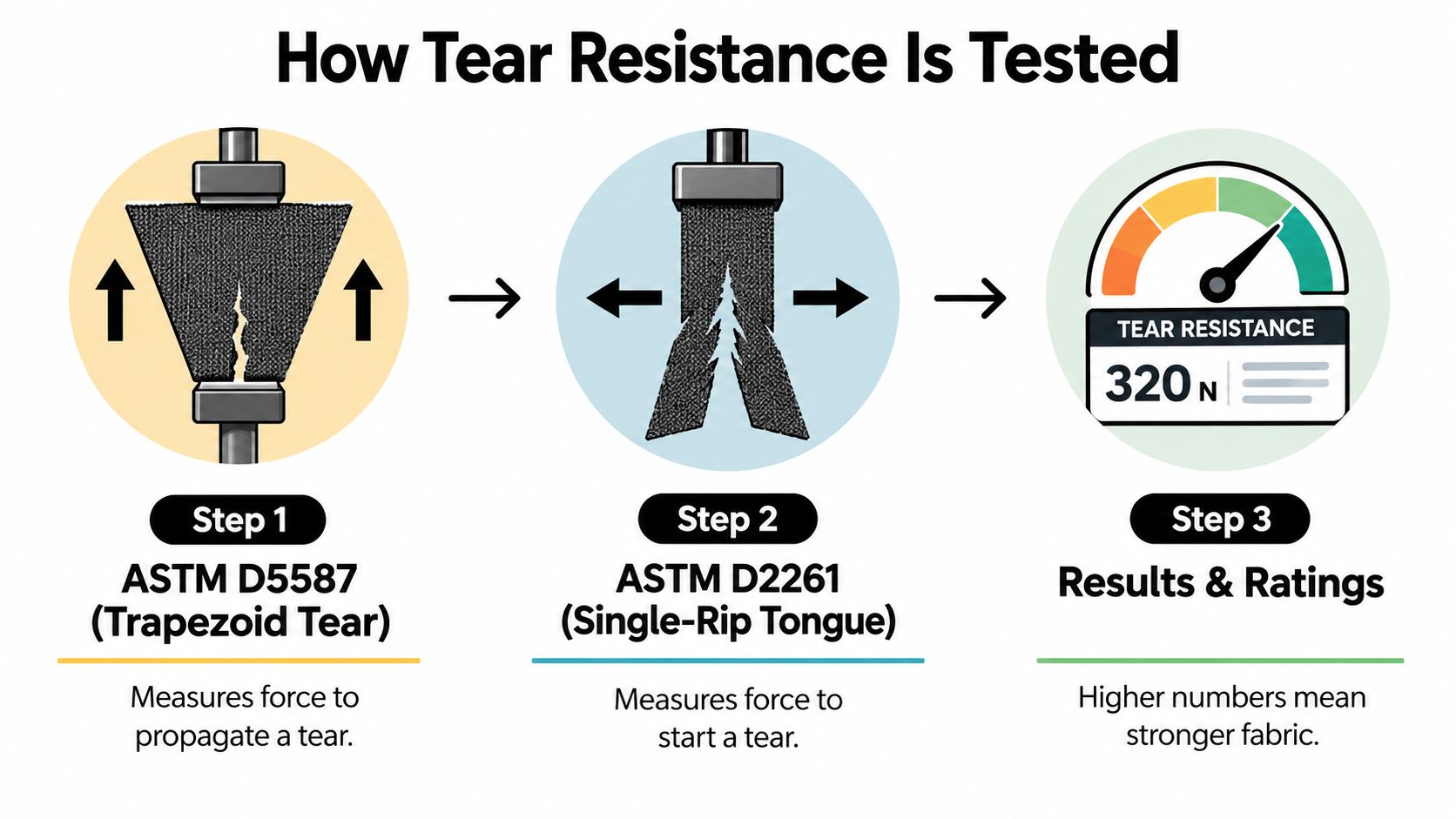
A tear-resistance result is useful only when you know the method behind it. ASTM textile methods include D5587, which measures tearing strength with a trapezoid procedure, and D2261, which measures single-rip strength using a constant-rate-of-extension tensile machine (ASTM textile testing methods). Both apply controlled force to fabric. They describe resistance under test conditions, not a promise that a dog bed cannot be damaged.
Ask for the test conditions
One number cannot represent every kind of wear. Fabric may respond differently along the thread direction, or when wet rather than dry. Washing, moisture, and repeated rubbing can also change how it performs. To understand what a result means, check whether the specification gives:
- The method, such as D5587 or D2261.
- The direction, warp, weft, or both.
- The conditioning state, such as dry or wet.
- The reported result, including the average and how the fabric failed.
The result also needs context. An initiated-tear test measures how well a tear resists spreading. It does not directly measure the force needed to create the first tear. For a dog bed, that difference matters: a puncture near a seam or zipper opening can become a starting point for further damage.
Abrasion testing adds a separate measure. Rubbing may cause visible rupture, or gradually reduce fabric mass, thickness, or breaking strength. A bed can therefore weaken before a large hole appears.
A named method and clear conditions give you something specific to compare. If a product page only calls a bed “durable” or “heavy duty,” the basis for that claim remains unknown. Ask for the test specification, and treat a missing result as uncertainty, not proof of failure or durability.
Matching the Bed to Your Dog's Behavior
Start with what your dog does to bedding, not with a label such as “heavy duty.” A dog that scratches to make a nest puts wear on the surface. A dog that chews at closures targets construction details. A senior dog may need support and easy access more than extra resistance to biting.

Choose for the behavior you see
For a dog that chews or shreds: Prioritize protected closures, firmly secured seams, and minimal loose trim or accessible components. Don't assume a heavier shell alone solves the problem. Veterinary bite-force research has measured canine bite forces from 13 to 1,394 newtons; those measurements aren't a direct rating for bed materials, but they help explain why seams and closures deserve attention alongside fabric weight (veterinary bite-force research). If your dog has focused chewing habits, this overview of fabrics that survive claws can also help you think about durable household surfaces. For play and redirection, Nandog's guide to durable dog toys for aggressive chewers provides another option to consider.
A bed won't address the reason a dog chews. If chewing is persistent or begins suddenly, look beyond the fabric and consider whether your dog needs different enrichment, training, or veterinary advice.
For a puppy: Favor a washable bed with construction you can inspect and maintain. Puppies may mouth and paw at bedding while learning household routines, so a removable cover or machine-washable design can make cleanup easier. Put less weight on long-term style or complex, hard-to-clean details while your puppy is still growing and forming habits.
For a senior or post-surgical dog: Focus on support, a comfortable surface, and an entry height your dog can manage. Durability here means a cover and seams that tolerate regular use and cleaning while the bed remains comfortable. A very firm shell or exposed platform may not suit every dog.
Think about your dog's typical interaction with the bed, too. If they circle and scratch, prioritize surface wear and secure stitching. If they settle gently, comfort and fit may matter more than a shell designed for demanding wear.
Here's a short video to help you consider different bed styles and how they may suit your dog:
The Safety Reality Behind Chew Proof Claims
“Chew-proof” can sound like a safety guarantee. It isn't. Once a dog gets through the outer layer, loose fibers, foam, stuffing, or closure parts may become accessible. Damage changes the risk, even if the bed still looks usable from across the room.
ASTM has noted that non-edible pet products have historically lacked unified durability tests, safety thresholds, and regulatory oversight. It also warns that swallowed material can lodge in the intestines and cause severe injury (ASTM on pet-product safety). That's a reason to treat product claims cautiously and pay attention to the bed's condition, not a reason to assume every damaged bed will cause harm.
Set a clear stop-use rule
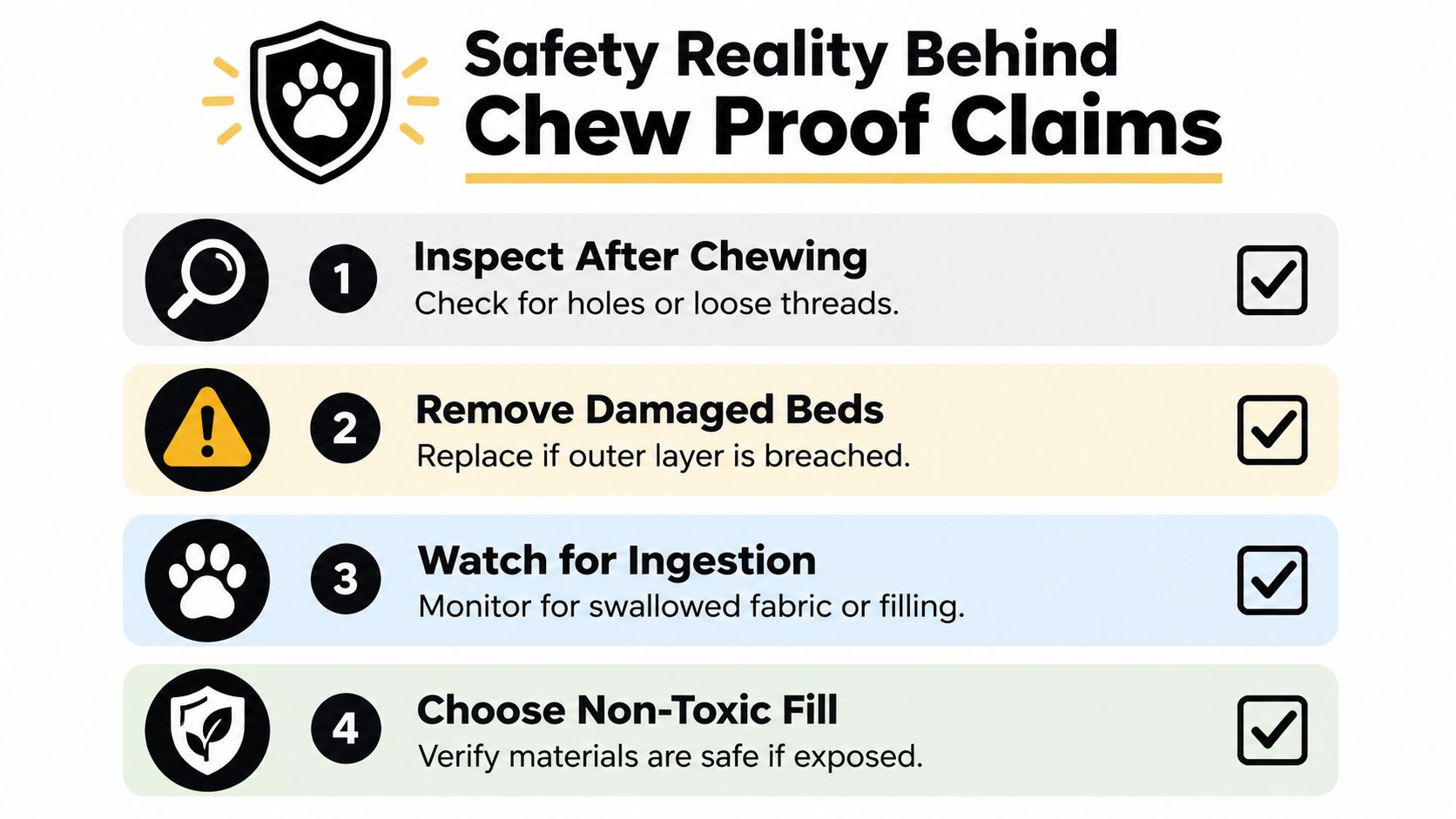
Introduce a new bed while you can watch how your dog behaves with it. Check the seams, corners, and closures after chewing or vigorous digging. Remove the bed if the outer layer is breached, the filling is exposed, a seam opens, or a component is missing or detachable.
If your dog begins swallowing fabric or filling, stop access to the bed and contact a veterinarian for advice. Don't leave the bed in place as a test of whether your dog will stop. Visible damage means the bed no longer offers the same level of protection from the contents inside.
Inspect the bed regularly, especially if your dog targets edges or openings. A well-made bed can still be damaged, so the practical safety standard is not “never fails.” It's knowing what to watch for and acting as soon as the bed becomes unsafe to use.
Care and Maintenance That Extends Bed Life
Care can help a bed stay clean and comfortable, but washing instructions vary by fabric, filling, and construction. Follow the product label rather than assuming every cover or foam insert can go through the same cycle. If the bed is machine washable, check whether the whole bed can be washed or only specific parts.
For stains, blot rather than scrub aggressively. Use cleaning products suited to the maker's instructions, and avoid harsh treatment that could affect the fabric or its finish. If the filling needs to be removed, let it dry fully before putting the bed back together. Wet bedding left folded or packed away can remain damp inside.
Make inspection part of cleaning
When you wash or freshen the bed, check the seams, corners, zipper area, and filling. Look for frayed stitching, new holes, exposed fill, or areas that have become thin or misshapen. Small damage is easier to spot when the bed is clean and the fabric is laid flat.
If the filling has shifted, follow the care label and product guidance to redistribute it. Don't assume that forceful vacuuming, bleach, or repeated high-heat drying is safe for the fabric and fill. A cleaning routine that's too rough can undermine the very construction you're trying to preserve.
Choose a bed you can realistically maintain. Nandog's information about machine-washable dog beds can help owners compare cleaning approaches; for other pet-friendly furniture ideas, Stahl Home Center's pet-proof pieces offer additional household context. Read each product's care instructions before washing, and inspect the bed again once it's dry.
Your Tear Resistant Dog Bed Buying Checklist
Before you buy, check the shell material, seam construction, fill, zipper placement, and cleaning instructions. Match those details to whether your dog scratches, nests, chews, or settles gently. Ask for the test method and conditions behind any durability claim, and make a plan to supervise and inspect the bed.
FAQ
- Is washable the same as water resistant? No. Washability describes cleaning instructions; water resistance describes how a material handles moisture.
- When should I size up? Choose a bed that lets your dog rest comfortably in their usual sleeping position.
- How long should a quality bed last? There's no universal lifespan. Use the construction, care guidance, and your dog's behavior to judge its condition.
- What if my dog starts chewing? Remove the bed if it's damaged, and seek veterinary advice if your dog swallows material.
Use the checklist to compare beds, choose one that fits your dog's behavior, and supervise its introduction. Inspect the bed regularly, and remove it as soon as damage exposes the filling or creates loose parts.
Nandog Pet Gear offers comfort-focused dog beds in styles including Cloud, Orthopedic, Signature, Crown, and Reversible, with many designs made for machine washing. Explore Nandog Pet Gear to compare bed options and choose one that fits your dog's comfort needs and your care routine.