


Does a bed that feels wonderfully soft to your hand give your dog a comfortable place to sleep? A faux fur dog bed can offer an inviting surface, but its suitability also rests on what's underneath, how easily your dog can enter it, and whether you can keep the whole bed clean and dry.
Think of the purchase as separate decisions about comfort, support, heat, and hygiene. A plush finish can't compensate for a collapsing core or a bed that stays damp after washing. Start with your dog's needs, then judge the fabric and styling.
Which Dogs Suit a Faux Fur Bed
A faux fur bed can suit seniors, short-coated adults, and dogs that enjoy nesting in cool rooms. It's a less straightforward choice for heavy chewers or dogs that already struggle to stay comfortable in warm conditions.
Use this comparison to shortlist a suitable construction rather than treating every fluffy bed as interchangeable.
Faux fur bed fit by dog type and life stage
| Dog type | Fit for a faux fur bed | Main thing to check |
|---|---|---|
| Senior dogs | Strong fit with soft padding and easy floor-level access | Thin, bony hips need a firm support core beneath the pile |
| Puppies | Good fit while chewing is supervised | Long pile can be chewed and swallowed |
| Short-coated adults in cool rooms | Strong fit | Confirm the dog remains comfortable when the room warms up |
| Thick-coated or flat-faced dogs in warm climates | Limited fit | Insulating pile may make cooling more difficult |
| Dogs with joint pain or arthritis | Good fit only with a supportive core | Plush fabric alone doesn't provide pressure relief |
| Heavy chewers | Poor fit | Pile can be pulled out and ingested |
Why a dedicated resting place matters
Sleeping arrangements change as dogs mature: a longitudinal canine sleep study reported that a kennel or crate was the most common sleeping location at 16 weeks, used by 49.1% of puppies, while a dog bed was the most common location at 12 months, used by 31.7% of dogs. The paper also discusses associations between inadequate sleep, anxiety, impaired emotional regulation, and reduced ability to cope with stressful stimuli.
That makes a suitable resting place a welfare consideration, not just a furnishing choice. However, these findings don't establish that faux fur improves sleep or treats anxiety.
Accessibility deserves particular attention for older dogs. Choose an entrance the dog can negotiate without jumping, a stable base, and padding that doesn't shift away when the dog steps onto it. A high, soft rim may look inviting but become an obstacle for a dog with limited mobility.
For households comparing plush bedding with protective throws, That Blanket Co.’s guide lets you compare pet-friendly blanket fabrics before choosing another textile to maintain. Start with your dog's age, coat, and chewing behavior, then check whether the bed's dimensions and internal construction fit that profile.
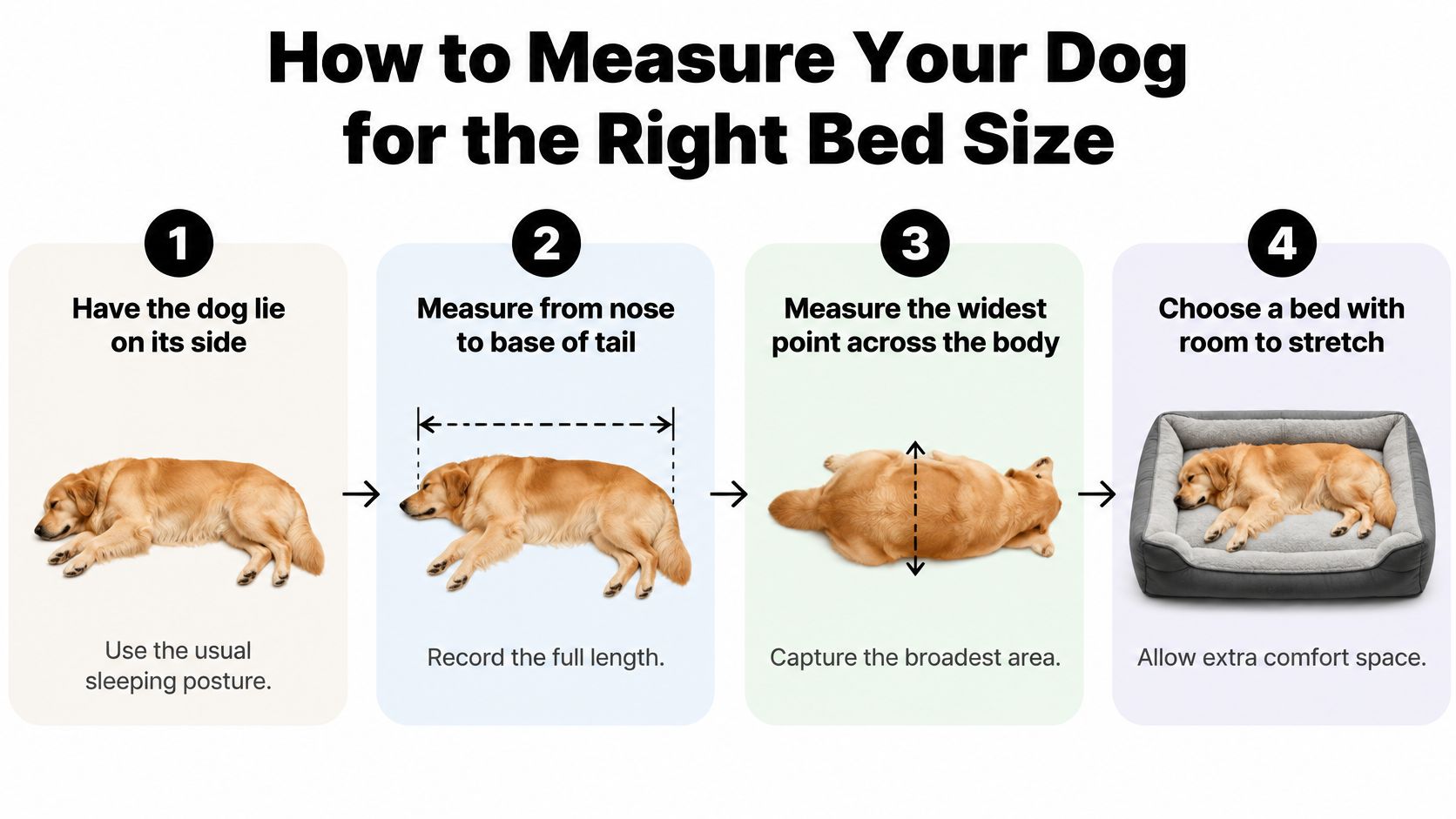
How to Measure Your Dog for the Right Bed Size
Measure your dog before consulting a size chart. Labels such as small, large, and giant aren't standardized, and a bed's outside dimensions may include thick bolsters that leave much less space inside.
- Let your dog settle on their side. Use their normal sleeping posture rather than asking them to hold a standing pose.
- Measure from the nose to the base of the tail. Use a flexible tape measure without pulling it tightly against the body.
- Measure across the widest part of the shoulders or hips. If the legs extend beyond the body during sleep, record that occupied space too.
- Allow room to stretch and turn. Compare the dog's full sleeping outline with the usable inner surface, not just the bed's advertised footprint.
- Check the maker's weight range. If your dog is near its upper limit, size up after confirming the resting dimensions.
- Check the entrance height. A short-legged dog should be able to step into the bed without climbing over a deep rim.
Use size categories as a cross-check
The table below gives selection rules rather than universal measurements. Breed labels and weight alone can't account for a long body, a broad chest, or a sprawled sleeping posture.
General bed size guidelines by dog size
| Dog size | Typical weight | Bed length guideline | Bed width guideline |
|---|---|---|---|
| Toy | Use the maker's toy-weight band | Fit the measured sleeping length plus stretching room | Fit the full side-lying outline |
| Small | Use the maker's small-weight band | Check body length rather than relying on weight | Allow turning room inside any bolster |
| Medium | Use the maker's medium-weight band | Compare the inner length with the extended sleeping posture | Accommodate shoulders, hips, and extended legs |
| Large | Use the maker's large-weight band | Choose a surface that supports the whole resting body | Keep hips and shoulders clear of the edges |
| Giant | Use the maker's giant-weight band | Verify usable dimensions and load suitability | Measure the complete sprawl rather than assuming a standard width |
A dog bed size chart by breed can help narrow the search after you've measured. For puppies, decide whether you're buying a temporary bed or one intended for their expected adult size.
Sizing rule: Buy for the space your dog occupies while asleep, not the compact shape they can squeeze into.
A bed is too small if the dog must curl tightly to remain on the cushion. A generously sized bed isn't automatically a problem, but check that its base stays put and its loose filling doesn't bunch beneath a smaller dog.
Fill Types and What Each One Supports
The faux fur pile isn't the part that supports joints. It provides tactile softness and insulation, while the core determines how the dog's weight spreads across the sleeping surface.
Look past a fluffy product photograph and identify the actual filling. A loose cushion and a structured foam mattress can feel similarly soft under your fingers while behaving very differently beneath a resting dog.
Fill types compared for faux fur dog beds
| Fill type | Support under the pile | Washing and drying | Best for |
|---|---|---|---|
| Polyester fiberfill | Soft and compressible; can shift under weight | Often washable when the label permits; dense filling needs thorough drying | Puppies and lighter dogs that don't need structured support |
| Memory foam core | Contours around hips and shoulders | Usually requires a washable cover and separately cleaned core | Seniors and dogs needing more deliberate pressure distribution |
| Orthopedic foam | Support depends on foam construction, thickness, and resilience | Check whether the foam is removable and how it can be cleaned | Dogs with joint pain when the core suits their body mass |
| Hollow or cluster fiber | Lofty cushioning with moderate support | Some designs are machine washable; drying depends on density and construction | Everyday cushioning for dogs that don't bottom it out |
| Cotton batting | Relatively flat cushioning with limited loft | Wash only as directed; inspect for clumping afterward | Light cushioning rather than substantial joint support |
What pressure mapping can tell you
A pressure-mapping comparison described in DogOrthopedic's explanation of orthopedic beds found concentrated loading around the shoulder, hip, and rib area, with pressure-relieving foam reducing loading compared with blankets and a standard mattress. That supports evaluating the whole support system, not attributing orthopedic benefits to the fabric.
It doesn't mean a particular foam bed will prevent pressure injuries or replace veterinary care. Dogs with reduced mobility also need opportunities to change position, and their care may require help beyond bedding.
Check for bottoming out
Press the center with a flat hand and feel how quickly you reach the floor beneath it. Then watch the occupied bed: the dog's hips and shoulders shouldn't sink through a thin layer while the surrounding filling bulges upward.
A hand test is only a screening tool, not a clinical pressure assessment. For a clearer comparison of construction choices, use this guide to foam dog beds alongside the product's material description.
A thick-looking cushion isn't necessarily supportive. Judge what remains beneath the dog after the filling compresses.
For heavier dogs and those with joint problems, prioritize a resilient core that holds its shape under their weight. Treat labels such as orthopedic as a starting point for questions about construction, not proof of performance.
Washing, Drying and Hygiene Response
A workable cleaning routine begins before the bed enters the washing machine. Confirm whether the label covers the whole bed, the removable cover, or only spot cleaning, then follow this sequence.
- Remove loose hair and debris. Shake the bed outdoors or vacuum it with an upholstery attachment, paying attention to seams and the base of bolsters.
- Read every care label. Covers, liners, and foam inserts may have different temperature and drying restrictions.
- Wash only the permitted components. Use mild detergent and the specified cycle; avoid fabric softener unless the manufacturer explicitly allows it.
- Rinse thoroughly. Don't overload the drum, because a tightly packed bed may not wash or rinse evenly.
- Dry by the approved method. Use low heat only when permitted, or air-dry with good circulation and turn the bed to expose its underside.
- Inspect before reuse. Feel inside seams, beneath the pile, and around the core for retained moisture rather than judging only the surface.
Match the response to the mess
Bedding collects hair, skin debris, dirt, and allergens. Home Skooling 4 Dogs' bedding guidance recommends regular laundering and includes weekly washing as a hygiene recommendation, but the bed's construction still determines which cleaning methods are safe.
Use the following risk levels as practical household triage, not a medical classification. Routine shedding calls for maintenance; body-fluid contamination calls for prompt, more thorough action.
Faux fur bed care and contamination matrix
| Situation | Risk level | Frequency | Response | Replace when |
|---|---|---|---|---|
| Loose hair and dander | Low | Daily maintenance | Shake outdoors or vacuum the pile | Replacement isn't needed for this alone |
| Routine wash of bed or cover | Low | Regularly, adjusted to use and label | Wash at the permitted temperature; dry by the approved method | Adequate cleaning is no longer possible |
| Muddy paws after walks | Low to moderate | After wet or muddy walks | Remove dirt, spot clean, and begin drying promptly | Replacement isn't needed if clean and fully dry |
| Urine | Moderate | Immediately | Blot, use a compatible enzymatic cleaner, then wash if permitted | The core retains odor after cleaning and drying |
| Vomit or diarrhea | Moderate to high | Immediately | Remove solids, clean, and use a compatible disinfecting method where permitted | Contamination has saturated an uncleanable core |
| Deep wash and seam check | Low | During scheduled maintenance | Clean washable components and inspect seams, backing, and core | The core remains damp or the structure fails |
| Mold or persistent damp odor | High | As found | Remove the bed from use and assess whether it can be safely cleaned | Mold returns or contamination can't be removed |
Drying is part of cleaning, not an optional finishing step. Long pile can feel dry at the tips while the backing or filling remains damp. Unzip removable covers, separate washable components where instructed, and don't put a dry cover back over a damp insert.
Don't assume stronger heat is better. Excessive heat can damage the backing, distort filling, or leave you with a bed that no longer supports your dog properly.
Handle contamination without overreacting
For urine, blot first rather than rubbing liquid farther into the core. Use an enzymatic product suitable for the material, follow its contact-time instructions, and keep your dog away until treatment and drying are complete.
For vomit or diarrhea, wear gloves and lift away solids before cleaning. Disinfection requires a product compatible with the textile and safe for its intended pet-area use; never mix cleaning chemicals or improvise a bleach treatment on an unlabeled fabric.
The CDC's review of zoonoses associated with pets in sleeping environments identifies close-contact exposure routes, including bed-sharing and licking, while noting that serious illness is uncommon with healthy pets. Households with young children or immunocompromised people should be particularly attentive to contaminated bedding without treating ordinary pet ownership as unsafe.
If easy maintenance is a priority, compare a machine-washable dog bed by what goes into the machine and how it dries afterward. The Sofa Cover Crafter also offers practical context on removable covers to help keep pet bedding fresh and clean.
Replacement trigger: Retire a bed you can no longer clean and dry throughout, even if its outer surface still looks presentable.
Persistent odor, recurring mold, contamination within an inaccessible core, failed seams, and permanently compacted filling are reasons to stop using it. Matting also warrants inspection: brushing the surface won't restore a collapsed support layer.
Heat, Coat Type and Climate Fit
Deep pile isn't automatically comfortable in every season. A dog may enjoy burrowing into it in a cool room and avoid the same bed when the room becomes warm or humid.
Judge the dog, room, and bed together. Coat density, face shape, health, airflow, sleeping posture, and the amount of insulating material around the body all affect whether the setup is suitable.
Watch behavior rather than guessing
Short-coated dogs and some puppies or seniors may appreciate a warmer resting surface in cool conditions. Thick-coated or flat-faced dogs in warm environments may be better served by a more open, breathable surface.
Watch for changes such as:
- Panting at rest: Investigate panting that begins or increases while the dog is settled on the bed.
- Repeated departures: Notice whether the dog lies down, gets up, and abandons the cushion repeatedly.
- Seeking cool flooring: Give the dog access to the surface they're choosing instead of continually returning them to the bed.
- Restless settling: Repeated shifting can indicate discomfort, although temperature isn't the only possible cause.
- Damp fur: Check whether moisture comes from licking, wet outdoor fur, or another source rather than assuming it proves overheating.
These observations aren't a diagnosis. Pain, anxiety, and illness can also affect settling behavior.
Adjust the setup without sacrificing support
Move the bed away from radiators, heat vents, and strong direct sun. Keep airflow around it, and offer an alternative resting place so your dog can choose a cooler surface.
A reversible design can help if its other side is less insulating. Seasonal rotation is another option, but don't replace a necessary supportive core with a thin, inadequate cushion to reduce warmth.
For example, a heavy senior dog may need the same stable support year-round while benefiting from a different cover in warmer weather. A healthy dog that prefers cool flooring may reject long pile altogether.
If panting or discomfort persists after environmental changes, contact your veterinarian. Sudden or severe breathing difficulty calls for urgent veterinary attention, not further experimentation with bedding.
Styling a Faux Fur Bed in a Modern Home
Choose the dog's usable sleeping space first, then fit that footprint into the room. A bed that matches the sofa but blocks the route to the door isn't a successful furnishing choice.

Match color to the household
Choose contrast deliberately. Cream, taupe, and soft grey can sit beside neutral upholstery, but they don't all hide every dog's hair. A pale bed may disguise a light coat while making dark shedding conspicuous.
Hold a fabric sample or similar-colored towel beside your rug and sofa. Judge it in the room's actual light, and avoid choosing a pale finish solely because it looks clean in a product photograph.
Use pile length to manage visual upkeep. Short or medium pile is easier to inspect and smooth in a busy living room. Long shag may suit a quieter corner, provided you're comfortable removing embedded debris and restoring its appearance after cleaning.
Fit the shape to the room
- Open living areas: A low rectangular or round bed preserves sight lines, but check that its edges don't project into a walkway.
- Corners beside seating: A shaped bolster can fit neatly against a wall if the entrance remains unobstructed.
- Small apartments: Mark the outer footprint with painter's tape before ordering, including the rim rather than just the sleeping area.
- Rooms with changing decor: A reversible bed offers another visible surface, though reversing it doesn't replace laundering.
Place the bed near the sofa if your dog likes resting close to the household, but away from speakers, door swings, and heat sources. Keep the approach clear so the dog doesn't have to squeeze between furniture.
A washable throw in a coordinating color can protect the surface from everyday wear. Secure it smoothly rather than leaving folds that bunch beneath the dog, and remove it if chewing or digging makes loose fabric unsuitable.
Choose the Right Bed and Test It at Home
Place the new bed where your dog already chooses to rest, and let them approach it voluntarily. Watch the first few nights for easy entry, relaxed settling, and whether they remain comfortable instead of repeatedly abandoning it.
At Nandog Pet Gear, we describe our pet beds as washable, and our Orthopedic Dog Bed uses orthopedic foam designed for dogs with joint pain and arthritis, with a removable, washable micro-plush cover. All our beds come with a 100-night sleep trial, giving you time to assess the fit at home; review the applicable trial terms and the selected bed's care instructions before ordering.
Evaluate the occupied bed
Look at the cushion while your dog is lying on it, not only after it springs back. Check whether their body stays on the usable surface, whether the rim interferes with their preferred posture, and whether the base remains stable when they stand.
Use your hand to investigate a visibly compressed area once your dog gets up. If you can readily feel the floor beneath the likely hip position, reconsider the construction rather than trying to solve the problem with another soft throw.
The best home test is voluntary use combined with comfortable movement, not a photograph of your dog placed on the bed.
Consider the surrounding furniture as part of that trial. Indian River Furniture's guide to family-friendly furniture for Florida homes provides useful context for choosing furnishings that accommodate pets and everyday household use.
Before the first wash, read the actual label attached to the bed and identify the permitted cleaning and drying method. Keep the packaging and trial information accessible while you decide whether the bed works for your dog's routine.
Nandog Pet Gear offers plush, reversible, and orthopedic bed options for different resting preferences. Visit Nandog Pet Gear to compare constructions, check your dog's measured fit, and choose a bed with care requirements you can maintain.