


You notice it when your dog jumps onto the sofa and the smell arrives first. The collar looks clean from across the room, but up close it carries a film of sweat, skin oil, dried mud, and whatever your dog rolled through outside. A quick rinse may remove the obvious dirt, yet the odor often returns because grime remains in the seams, around the buckle, or beneath the tags.
Learning how to clean a dog collar properly isn't difficult, but the safest method depends on the material and the mess. Nylon and fabric can usually handle a careful soak, leather needs a nearly water-free approach, and waterproof or coated collars require gentle wiping that protects their finish. Good cleaning also means rinsing away every trace of soap and drying the collar completely before it goes back around your dog's neck.
Why a Dirty Collar Needs More Than a Quick Rinse
A collar sits against the neck for much of the day, so it collects more than visible mud. Sweat, skin oils, damp grass, food residue, and dust work into stitching and folds where running water rarely reaches. Those residues can contribute to recurring odor, while trapped moisture and leftover detergent may irritate sensitive skin.
The problem is easy to miss. A collar can look acceptable while still holding microorganisms. A UK-related article cites a 2020 UK study in which more than 60% of tested dog collars contained potentially pathogenic microorganisms, including E. coli and Staphylococcus aureus, as reported by Pooch & Mutt's collar-cleaning guide. That doesn't mean every collar creates a health problem, but it does explain why appearance alone isn't a reliable cleaning trigger.
Practical rule: Clean the places your fingers can feel, not just the surfaces your eyes can see.
Consider a dog who swims, then wears the same collar home. The webbing may dry on the outside while the area beneath the buckle stays damp. Later, the owner notices a sour smell and scrubs harder, but aggressive brushing won't solve residue trapped in a seam. A measured soak, focused brushing, complete rinsing, and full drying work more reliably because they address both the dirt and the moisture causing the smell.
A clean collar should feel free of slickness, smell neutral rather than perfumed, and have dry seams and hardware. If the collar still feels soapy or cool and damp after cleaning, it isn't ready to wear. The material also matters. Leather can crack or stiffen when saturated, while coatings, reflective details, and hardware finishes may suffer from heat or abrasive treatment.
What to Check Before You Wash Any Collar
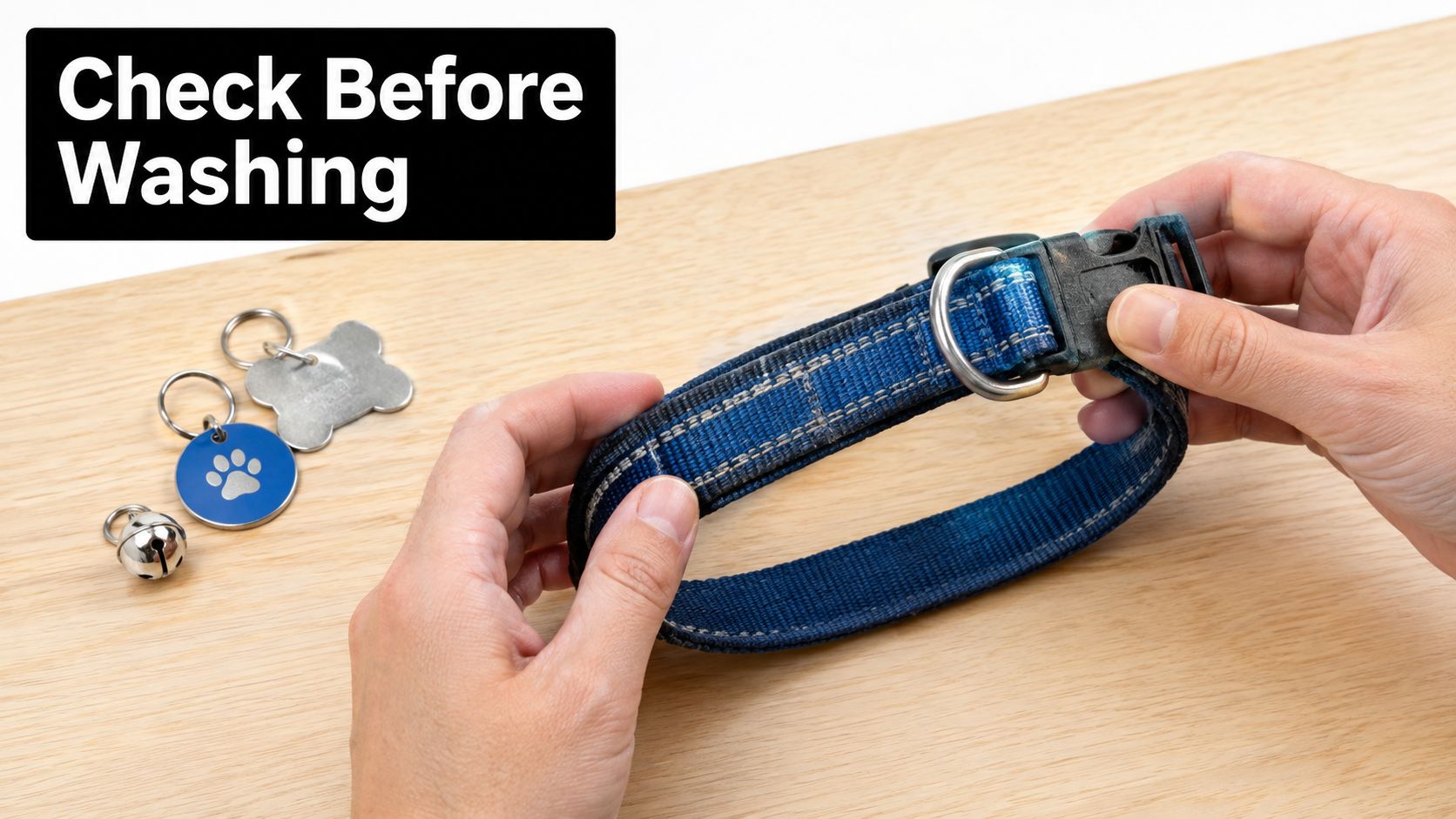
Start with the collar off the dog and remove every tag, charm, bell, and accessory. Tags can trap water against the strap, and some finishes may discolor or tarnish during washing. Place the identification pieces somewhere safe, then check the collar before choosing between a quick spot treatment and a full wash.
Inspect the strap and stitching
Run your fingers along the webbing and inspect the edges under bright light. Look for:
- Fraying: Loose fibers can catch on a brush and worsen during washing.
- Loose stitching: Pay close attention to the areas joining the D-ring, buckle, and adjustment loop.
- Cracked leather: Splits, deep dryness, or stiff sections may signal that cleaning won't restore safe flexibility.
- Rust or sticking hardware: Corroded rings and buckles deserve attention before the collar gets wet.
- Stretched material: A collar that no longer holds its shape may not stay secure, even if it looks attractive.
If you find serious wear, don't treat cleaning as a repair. A weakened collar should be replaced rather than returned to daily use.
Prepare the right supplies
For most washable collars, gather warm water, a small amount of mild pet-safe soap or dog shampoo, a soft brush or old toothbrush, and a clean towel. A mesh laundry bag is useful if the care instructions allow gentle machine washing. Keep a separate damp cloth available for coated surfaces and leather.
Avoid scented or chemical-heavy detergents. The different types of dog collars guide can help you identify the construction before you choose a cleaning method, especially if you're unsure whether the collar is leather, neoprene, coated, or woven fabric. Don't assume a waterproof label means the collar should be treated like ordinary nylon. Water resistance may protect the surface, but it doesn't make every finish, stitch, or metal component immune to heat and abrasion.
How to Hand Wash Your Dog Collar the Right Way
For nylon, polyester, and many fabric collars, hand washing gives you the best control. It lets you clean the strap without forcing the buckle, rubbing reflective details unnecessarily, or exposing the collar to more heat and movement than it needs.
Use a controlled soak
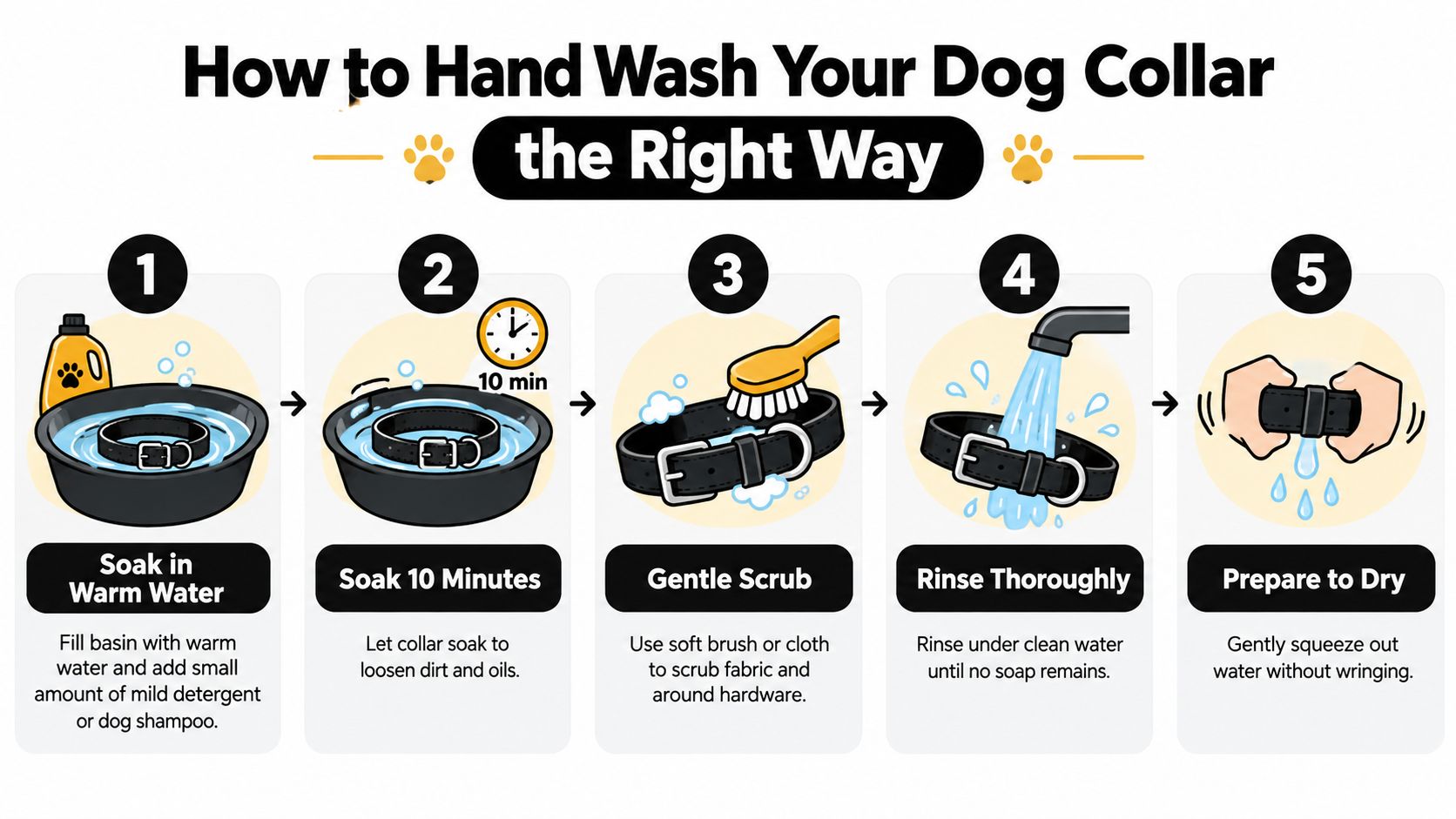
Fill a basin with warm water and add a small amount of mild detergent or dog shampoo. The water should feel warm, not hot. Place the collar in the solution for about 10 to 20 minutes, following the widely repeated care approach described in this dog collar cleaning guide.
Use the shorter end of the range when the collar has light grime or a little surface oil. Move toward 20 minutes when mud, sweat, or buildup has worked into seams. The soak loosens contamination so you don't have to compensate with harsh scrubbing.
Scrub the areas that hold grime
After soaking, use a soft brush or old toothbrush. Work along the stitching, folded edges, buckle interfaces, D-ring, adjustment holes, and any perforations. These points collect dirt faster than broad, exposed sections of webbing.
Brush with short, light strokes rather than forcing the bristles into the material. A soft toothbrush is especially useful around metal components because it can reach hinges and narrow gaps without scratching a coated surface. If the collar has a printed or reflective section, use a soft cloth there and reduce pressure.
A practical cleaning routine looks like this:
- Soak: Loosen oils and dirt in warm, mildly soapy water.
- Brush: Focus on seams and hardware rather than scrubbing every section equally.
- Rinse: Flush the collar under clean water until the water runs clear and the strap no longer feels slick.
- Press out water: Use a towel to absorb moisture. Don't wring or twist the collar.
- Air-dry: Lay it flat or hang it in a well-ventilated place until every seam is dry.
The Orvis collar-washing guidance also emphasizes towel drying followed by complete air drying for nylon and polyester collars. That final stage isn't cosmetic. Trapped detergent can contribute to irritation and odor, while retained moisture can affect hardware over time.
Don't use a clothes dryer, radiator, or other direct heat source. Heat can warp webbing and damage fasteners, and twisting can distort the collar or stress already-worn stitching.
For readers who like careful maintenance routines for household gear, Aroma Warehouse diffuser care offers a useful reminder that cleaning isn't finished until residue is removed and components are dry. The same discipline applies here.
Cleaning by Material and When to Use Machine Wash or Spot Treatment
The safest answer to how to clean a dog collar changes with the strap. A woven collar and a leather collar may both look dirty, but immersing them in the same basin can protect one and damage the other.
Nylon and polyester are the most forgiving choices for a full hand wash. They generally tolerate the warm-water soak described above, followed by gentle brushing and thorough air drying. Fabric collars can often be soaked as well, and some can go through a gentle machine-wash cycle inside a mesh bag when the manufacturer's care instructions permit it.
Leather needs a different approach. Don't submerge it. Wipe the surface with a damp cloth, then use a leather-safe cleaner or saddle soap sparingly. Excess water can change the leather's texture, encourage stiffness, or contribute to cracking as it dries.
Waterproof, coated, reflective, and neoprene collars deserve restraint. A wipe-down with warm water and mild soap is usually a better starting point than aggressive soaking or machine agitation. For more context on neoprene's construction and handling, consult this guide to what neoprene material is. Reflective prints and coated finishes may lose appearance when repeatedly attacked with abrasive brushes, concentrated cleaners, or heat.
| Collar Material | Best Method | What to Avoid |
|---|---|---|
| Nylon or polyester | Hand soak, soft-brush cleaning, thorough rinse, and air drying | Hot water, harsh detergent, wringing, and heat drying |
| Woven fabric | Hand wash or a permitted gentle machine cycle in a mesh bag | High heat, strong agitation, and detergent residue |
| Leather | Damp-cloth wipe with leather-safe cleaner or saddle soap | Submerging, soaking, and radiator drying |
| Waterproof or coated | Damp cloth or soft brush with mild soap, then careful rinsing | Abrasive pads, harsh chemicals, and prolonged heat |
| Reflective material | Spot-clean with a soft cloth and minimal pressure | Scrubbing directly over reflective details |
| Neoprene | Gentle surface cleaning with mild soap and controlled moisture | High heat, aggressive brushing, and chemical-heavy products |
Spot treatment is enough for a collar with one muddy patch or a small food mark. Wet the affected area, apply a tiny amount of mild soap, brush lightly, and rinse that section completely. Deep cleaning makes more sense when the entire strap smells, feels greasy, or has absorbed grime along multiple seams.
Hardware needs its own pass. Use an old toothbrush around the buckle, D-ring, rivets, and tag attachment point, then towel-dry those parts directly. Don't flood a moving buckle with oil or heavy lubricant, because residue attracts more dirt and can transfer back onto the strap.
Removing Odor and Stains and How Often to Clean
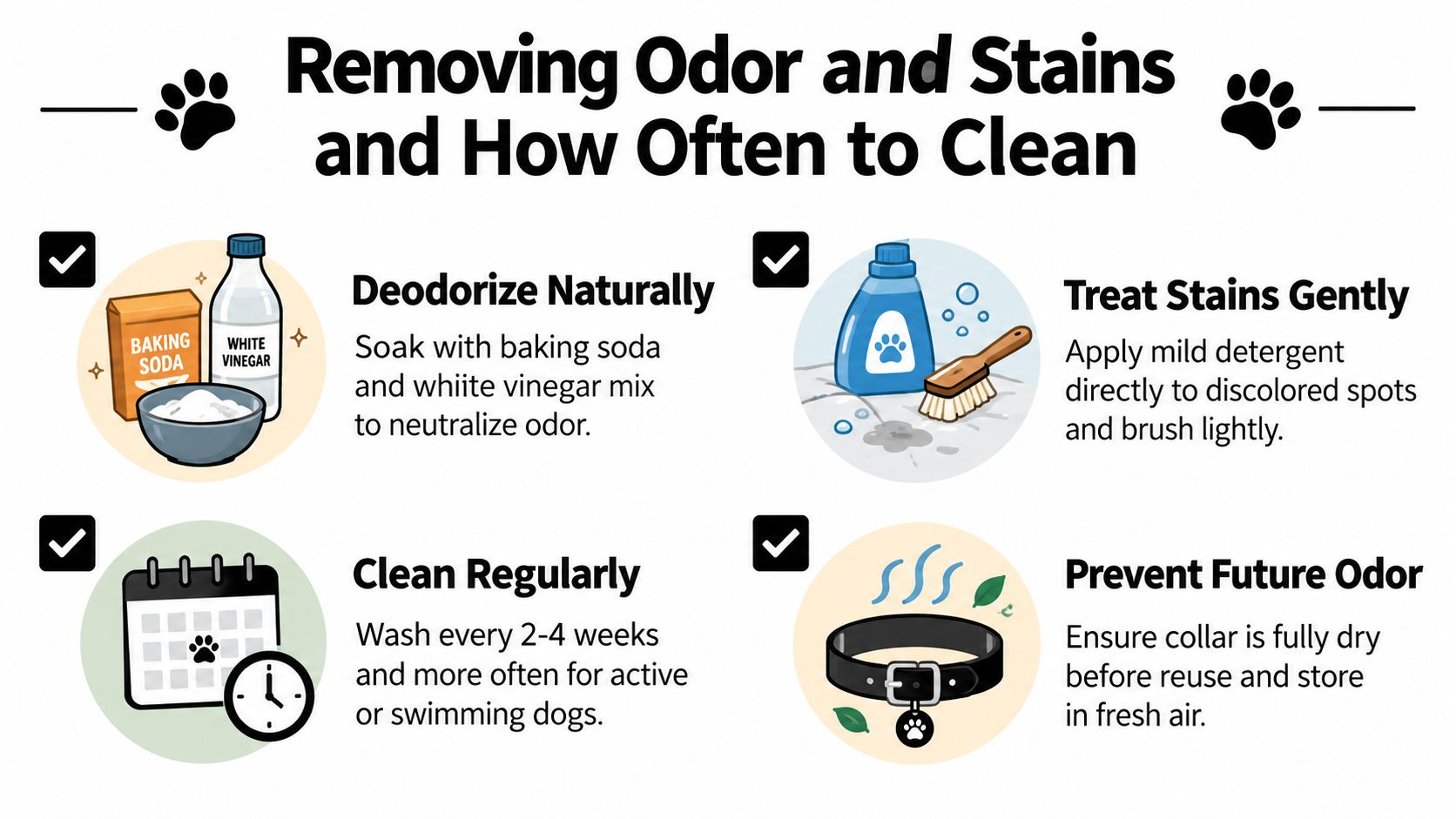
Odor usually has a source. The collar may still smell because soap remains in the webbing, because a seam is damp, or because oils weren't loosened before scrubbing. Adding fragrance masks the problem and may leave another residue against the neck.
For a light stain, treat only the discolored area with mild detergent and a soft brush. Rinse that spot longer than you think you need to, then press it with a towel. Skip bleach, solvents, abrasive pads, and concentrated household cleaners unless the manufacturer gives specific instructions for that material.
Set the schedule by exposure
A collar doesn't need to wait for visible mud. A UK-related care source recommends freshening collars about every 4 weeks to help reduce skin irritation, while also noting the microbial findings described earlier. Use that as a practical baseline, then adjust it for your dog's habits.
Clean sooner when your dog swims, plays in wet grass, rolls in soil, or wears the collar for long outdoor sessions. Puppies, dogs with sensitive skin or allergies, and dogs that spend substantial time outside may need closer observation and more frequent washing. A collar that stays indoors and dry may need less intervention than one exposed to water and mud, but it still deserves a regular inspection.
A clean-looking collar can still need cleaning. Use wear, moisture, skin sensitivity, and odor as signals, not color alone.
Keep a simple trigger list:
- After swimming: Rinse away waterborne residue and dry the hardware.
- After heavy mud: Remove grit before it dries into seams.
- At the first recurring odor: Check for soap residue or damp stitching.
- When the neck looks irritated: Stop using the collar until it's cleaned and fully dry, and seek veterinary guidance if irritation continues.
- At the routine refresh: Wash around the four-week mark when that schedule suits your dog's lifestyle.
If odor remains after correct washing and drying, consider whether the smell comes from the hardware, tags, or a lining rather than the strap itself. For broader household odor-management ideas, buy pet odor spray 2026 provides another resource, but don't use a household product directly on a collar unless its label says it's suitable for that material and for contact with pets.
Drying Inspecting and Knowing When to Replace Your Collar
Drying is part of cleaning, not an optional finishing touch. Press the washed collar in a clean towel to remove excess water, then lay it flat or hang it where air can move around the strap. Check beneath folded sections, inside adjustment holes, and around the buckle before putting it back on your dog.
The care guidance from Sprenger on maintaining dog equipment warns against heat drying and distinguishes leather care from washable fabric care. That distinction matters after every wash. A collar that feels dry on top may still hold moisture beside a metal ring or inside dense stitching.
Make a final safety check
Before reuse, flex the collar gently and inspect the webbing, stitches, buckle, and D-ring. Replace it if the strap has stretched significantly, the stitching is separating, leather remains cracked or rigid, or the buckle no longer closes and releases smoothly. Persistent odor after proper washing can also signal contamination or material breakdown that cleaning won't solve.
A collar is safety equipment as well as an accessory. If the hardware sticks, the ring has serious corrosion, or the fabric tears under light handling, don't keep testing it on the dog. Choose a replacement suited to the same use, whether that's a washable everyday collar, a coated option for wet conditions, or a chew-proof dog collar for a dog that targets its own gear.
Store the clean collar dry, away from trapped moisture and unnecessary heat. Reattach tags only after the collar passes the inspection, then make sure it fits securely without pressing damp material against the neck.
Nandog Pet Gear offers design-focused collars, leashes, harnesses, and other washable pet accessories for owners who want everyday gear that balances comfort, function, and style. Visit Nandog Pet Gear to find a collar and matching essentials that fit your dog's routine and are practical to keep clean.