


The most popular advice about indestructible plush squeaky dog toys is also the least useful: buy the toughest-looking toy and expect it to survive anything. No plush toy can make that promise in good faith. The smarter question is whether its construction delays the failure your dog causes most often, and whether you'll use it in a way that keeps stuffing, squeakers, and loose fabric away from an unsupervised mouth.
A plush toy can still be an excellent purchase. Dogs carry them, shake them, cuddle them, and respond to the sound and texture in ways a hard chew often can't reproduce. But plush squeaky toys are usually interactive enrichment products, not permanent chew tools. Choose one for your dog's specific play pattern, inspect it before and after use, and accept that a successful toy may eventually need replacing.
The Myth of the Indestructible Plush Toy
“Indestructible” is the wrong standard for a plush squeaky dog toy. Strong chewers can dismantle standard plush toys in under 15 minutes, and the squeaker may become exposed before the rest of the toy fails. The durability comparison of squeaky dog balls and plush designs makes the practical point clearly: soft construction has limits, regardless of what the product name promises.
Treat indestructible as a marketing ambition, not a safety guarantee. A dog that carries a plush rabbit, gives it occasional squeezes, and naps beside it puts far less stress on the toy than a dog that isolates one ear and attacks it with the back molars. The same toy can remain a companion for one dog and become scrap fabric for another.
For context on how plush construction differs from other formats, see this guide to dog plush toy durability and safety.
Replace permanence with delayed failure
The useful engineering target is delayed failure. A well-built toy should provide more safe play cycles before a seam opens, the squeaker escapes, or stuffing becomes accessible. That extra time has value, but it does not turn a plush toy into a chew-proof object. Construction should delay the failure your dog causes most often, not promise permanent use.
Practical rule: Treat “durable plush” as “more resistant than basic plush,” never as “safe for every dog without supervision.”
Plush toys remain popular for good reasons. Soft fabric offers comfort, a squeak gives immediate feedback, and a character shape provides something satisfying to carry and shake. These features support interactive enrichment products, not the structural resilience of solid rubber or nylon chews. Choose plush for carrying, fetching, tugging, and short play sessions, rather than asking it to perform as a permanent chewing tool.
Match the purchase to the dog's actual behavior. A gentle carrier may get meaningful use from a soft toy, especially when the toy is inspected regularly. A squeaker hunter will usually defeat another similar purchase quickly. Replacing the same design without changing the play setup wastes money and leaves the same failure risk in place.
The supervision question matters most
Aggressive chewers require a stricter standard. Product guidance warns that no plush toy is fully indestructible and that plush construction tears more easily than rubber or nylon. The product guidance for a plush squeaky bunny supports the buying question that matters: can this dog use this toy safely in this setting?
For a gentle dog, supervised play or brief independent access may be appropriate after inspection. For a dog that immediately searches for the squeaker, use the toy for supervised fetch or tug, then store it out of reach. Remove it as soon as fabric, stitching, stuffing, or the squeaker becomes exposed. A plush toy succeeds when it delivers engaging play and fails slowly enough for you to retire it before that failure becomes a safety problem.
Where Plush Toys Actually Fail
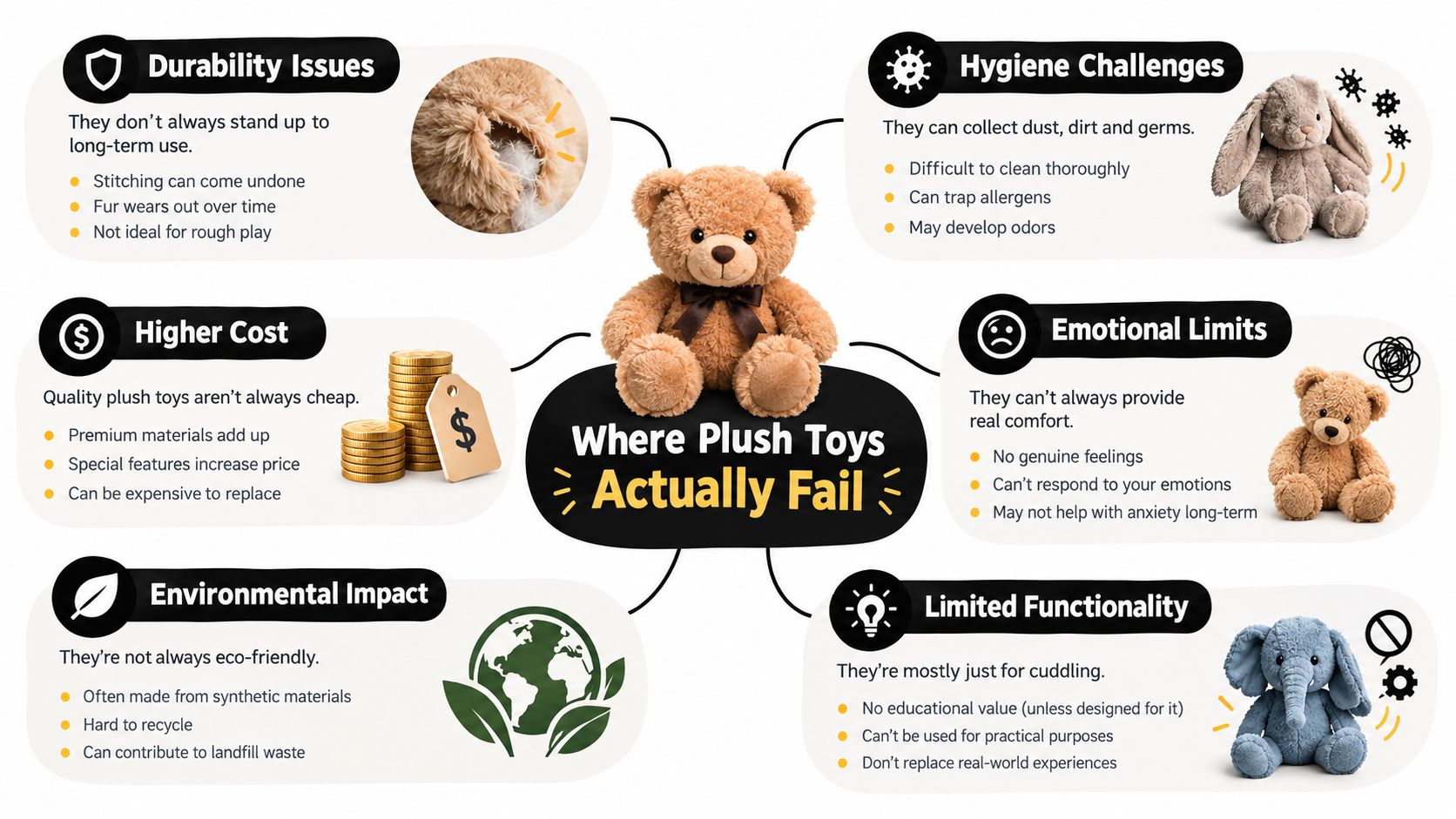
“Indestructible” is the wrong buying standard. Plush toys rarely fail across the whole fabric surface at once. They fail at one concentrated stress point, where your dog grips a limb, ear, tail, corner, or stitched joint and repeats the same biting or pulling motion until the fibers and thread give way. The useful question is how long the toy delays that failure, and whether you can spot the problem before it becomes dangerous.
The squeaker often draws the first attack because it provides immediate feedback. Each bite produces sound, encouraging a dog to keep working on the same area. Once the outer fabric or surrounding seam opens, the squeaker is no longer a contained feature. It becomes a loose object that your dog may carry, chew, or swallow.
Seam rupture beats fabric exhaustion
The stitched joint usually deserves more scrutiny than the broad face of the toy. Construction guidance for pet plush toys identifies seams as a common first failure point because stitching concentrates bite forces along a narrow line. This construction and safety guidance for pet plush toys explains why reinforcement belongs at joints and attachment points, not only in the visible outer fabric.
A single stitch row gives a determined chewer a clear line to pry apart. Thin fabric may fray first, but the serious failure is often the seam separating the panels. A toy can look fine from across the room while a small opening near an ear, belly, or limb has already exposed its interior. For options designed for stronger jaws, compare plush dog toys for strong chewers and prioritize reinforced seams and attachment points.
Read the toy like an autopsy
Inspect four areas before buying:
- Squeaker housing: Check whether the squeaker sits inside a reinforced compartment or directly beneath a thin outer panel.
- Attachment points: Ears, tails, legs, and handles create concentrated stress and need visible reinforcement.
- Panel seams: Look for multiple stitch lines or layered construction instead of one exposed row.
- High-wear surfaces: Check corners and narrow appendages, where a dog can establish a focused grip.
Stuffing creates another failure consequence. Once the outer shell opens, the problem is more than cosmetic. Loose filling can spread across the floor, and swallowing pieces creates a different safety risk from just disabling the squeaker.
Judge the toy by contained failure versus exposed failure. A muffled squeaker may remain usable during supervised play while the shell stays intact. A visible squeaker, loose thread, or open seam means the toy should leave the play area immediately. Choose designs that fail gradually, inspect the known stress points, and retire the toy before delayed failure becomes an injury risk.
Construction Features That Extend Playtime
Ignore the word “indestructible.” Buy for delayed failure instead. The right plush toy does not defeat every chewing style. It keeps seams closed, contains damaged components, and gives you enough usable playtime to match the toy to your dog's habits.
Start with the seams
If the packaging or display allows it, examine the toy from every angle and turn it inside out. Look for double-stitched or triple-stitched seams around the belly, neck, limbs, and any compartment holding a squeaker. Extra stitching cannot make plush indestructible, but it spreads pulling force across more thread and can postpone separation at the joints.
Bar-tack reinforcement strengthens concentrated stress points. Look for dense stitches where an ear, tail, limb, or handle joins the body. A narrow appendage without visible reinforcement gives a determined chewer an easy grip and a clear starting point.
Inner mesh or ripstop-style layers create a second barrier beneath the plush. They distribute bite force across more fibers, so one puncture is less likely to become an immediate, spreading tear. Multi-layer designs can extend playtime, but they remain a delay mechanism, not a guarantee. Independent material comparisons show that reinforcement may provide only limited extra life for aggressive chewers. The material and construction comparison for squeaky dog toys supports the practical conclusion: reinforcement slows damage, it does not cancel it.
Judge materials by the job
A plush toy needs a surface that feels comfortable to carry, squeeze, and mouth. Rubber or nylon chews resist force differently. Do not reject a soft toy because it lacks the hardness of a dedicated chew. Judge whether its construction suits the work you expect it to perform.
Check whether the outer fabric has support where your dog attacks first. A broad, layered body may resist tearing better than a thin single layer, while long limbs still invite focused chewing. Shape matters as much as textile choice.
Before buying, ask:
- Where will my dog bite first? Put reinforcement at that location.
- Can my dog isolate a small appendage? Choose a compact shape with fewer vulnerable projections.
- What happens after the outer fabric tears? Prefer an inner barrier that helps contain stuffing or squeaker components.
- Can I inspect and clean it easily? Poor access reduces the toy's practical value.
For a crate or sleep area purchased alongside play items, Kong crate bed sizing and materials offers a useful comparison between comfort-product construction and chew-oriented design. Match each product to its job instead of trusting one “durable” label across every use.
For squeaker-focused shopping, review plush dog toys with squeakers for attachment and internal-structure details. Use those features as inspection points, not proof of unsupervised safety. A well-built toy earns a supervised trial. Your dog's actual behavior decides whether it stays in rotation.
Balancing Durability with Sensory Enrichment
A toy that survives but never interests your dog is a poor purchase. Plush products earn their place through sensory engagement, and the right format depends on whether your dog wants sound, texture, comfort, movement, or a combination of those experiences.
Traditional stuffed plush toys deliver softness and a familiar companion shape. They work well for dogs that carry, cuddle, and gently squeeze their toys. Their weakness is obvious: once the outer shell opens, stuffing creates cleanup and safety problems.
Stuffingless toys remove much of that mess. They can still include squeakers or crinkle layers, so dogs get sound and texture without a large volume of loose filling. They aren't automatically indestructible, because the fabric and seams can still fail, but they can be a more practical format for households that want softer play with simpler cleanup.
Crinkle layers provide a different reward from a squeaker. The sound comes from manipulating the material, so the dog may remain interested in shaking and folding the toy rather than locating one small internal component. Character-driven designs add carrying and social-play appeal, particularly for dogs that treat a plush object as a companion rather than a chew target.
The market reflects that broader appeal. The global squeaky dog toys market was valued at $3.2 billion in 2025 and is projected to reach $5.6 billion by 2034, while plush squeaky toys are expected to remain a leading segment through that projection period. The market overview for squeaky dog toys attributes the category's staying power to design innovation, licensing, and pet-birthday gifting, not toughness alone.
Plush toy formats compared
| Toy Format | Durability Profile | Mess Factor | Best For |
|---|---|---|---|
| Stuffed plush with squeaker | Softest construction, with seams and stuffing as primary failure concerns | High after shell damage | Gentle carriers, cuddlers, and supervised interactive play |
| Stuffingless squeaky plush | Fewer loose filling concerns, but fabric and seams can still tear | Lower than stuffed plush | Indoor dogs and owners who want easier cleanup |
| Crinkle-layer character toy | Engaging texture and sound, with durability determined by layers and stitching | Usually moderate | Dogs that enjoy shaking, carrying, and sensory novelty |
| Reinforced multi-layer plush | Better resistance at common stress points, but not a chew guarantee | Moderate if the shell fails | Enthusiastic players under supervision |
| Solid rubber enrichment toy | More suitable for focused chewing than soft plush | Low, though damaged pieces still require removal | Determined chewers that need a durable chewing outlet |
Use the video below as a visual reference for how interactive play differs from passive access.
My buying preference is simple. Choose stuffed plush when comfort and gentle interaction matter most. Choose stuffingless or crinkle formats when cleanup and sensory variety matter more. Choose rubber, nylon, or a treat-dispensing design when your dog is trying to work through the toy rather than play with you.
Matching the Toy to the Chewer
A toy isn't “tough” in isolation. It is tough relative to a dog's mouth, focus, size, and purpose. A gentle senior that carries a toy can use plush very differently from a young dog that locks onto one seam and keeps working until it reaches the interior.
Identify the play pattern first
Gentle nibblers and comfort-seekers usually benefit from soft plush with secure seams, moderate squeak volume, and a shape that can be carried without isolated thin parts. Give these dogs access during calm periods, but still remove a toy when the fabric begins to split.
Enthusiastic players may carry, shake, fetch, and tug without immediately trying to open the toy. Choose reinforced construction, a size that can't be swallowed, and use the toy for active sessions rather than leaving it available as a permanent chew.
Squeaker hunters go straight for the sound. They bite the housing, find the source, and keep going. For these dogs, plush squeaky toys belong in short, supervised play sessions. Once the game ends, swap in a solid rubber or food-dispensing toy that can handle more focused jaw work.
Destroyers and consumers are the strictest category. If your dog tears off pieces and swallows them, don't test a new plush toy through unsupervised access. Plush may not be an appropriate solo-play format at all, regardless of the label.
A toy's size, shape, and intended use matter more than the word “indestructible” printed on its tag.
Age and dental condition also change the decision. Puppies may explore with their mouths and can turn a soft appendage into a focused project as they develop. Older dogs or dogs with dental sensitivity may need softer interactive materials, while a dog with a strong, sustained chew drive may need a separate chew product instead of a more heavily marketed plush item.
Size deserves a direct inspection. A toy that folds easily into the back of a large dog's mouth gives the dog more control over one point. Pick a size that suits the dog's body and jaw, but don't assume a bigger toy is safe if the dog can still remove and swallow its components.
Use the right rotation
Give a determined dog plush for a supervised fetch or tug session, then put it away. Offer a dedicated chew, a puzzle, or a treat-dispensing toy for the period when you can't watch closely. This separates interactive play from independent chewing, two jobs that many buyers mistakenly assign to one product.
A rotation also reveals useful information. If your dog ignores a plush toy but works calmly on a rubber enrichment toy, the issue isn't a lack of durability. You bought the wrong sensory format. If the dog only attacks appendages, select simpler shapes next time and inspect those attachment points first.
Care Maintenance and Safety Thresholds
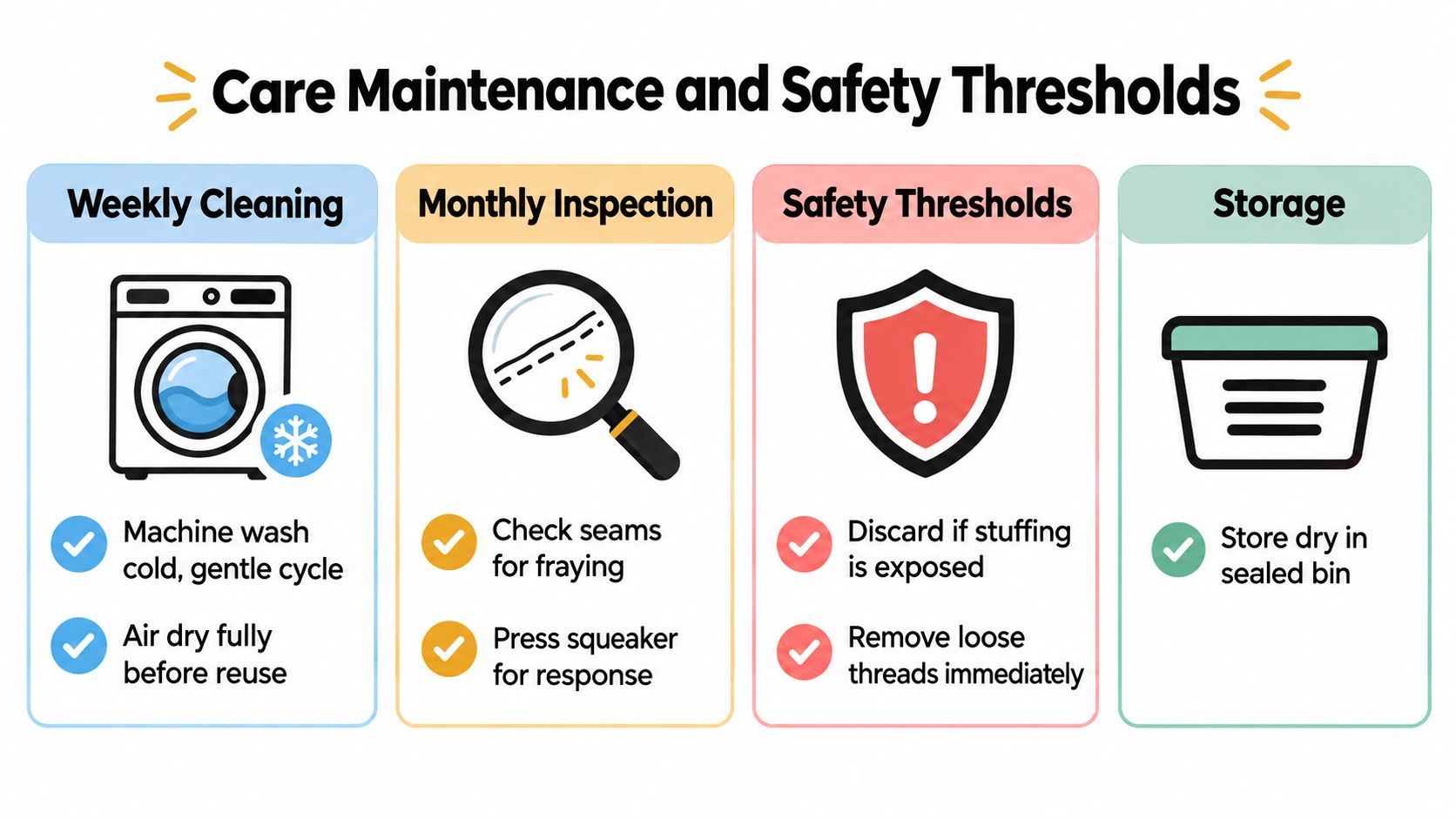
Maintenance isn't a cosmetic routine. It gives you a chance to find the small defect that will become a detached squeaker or an open seam during the next play session. Check a plush toy in good light, run your fingers over the seams, and inspect every limb, ear, tail, label, and opening.
Clean without weakening the toy
Follow the manufacturer's care instructions before washing. If the toy is machine washable, use a gentle cycle and a mild pet-safe detergent, then let it dry fully before returning it to the dog. Damp stuffing and hidden moisture can make a toy unpleasant to use and harder to inspect.
Avoid returning a toy while the inside is still damp. Don't assume a clean surface means a sound structure, either. Washing can reveal fraying, loosen a weak stitch, or make a damaged seam easier for a dog to open.
Use a simple inspection routine:
- Before first use: Check for loose threads, open stitching, detached parts, and a squeaker that moves freely inside the toy.
- After active play: Look at the exact area your dog targeted, especially an ear, tail, limb, belly, or squeaker pocket.
- After washing: Confirm that the seams remain closed and that the toy has dried completely.
- Before storage: Remove damaged items from the toy basket instead of putting them back into rotation.
Know the retirement signals
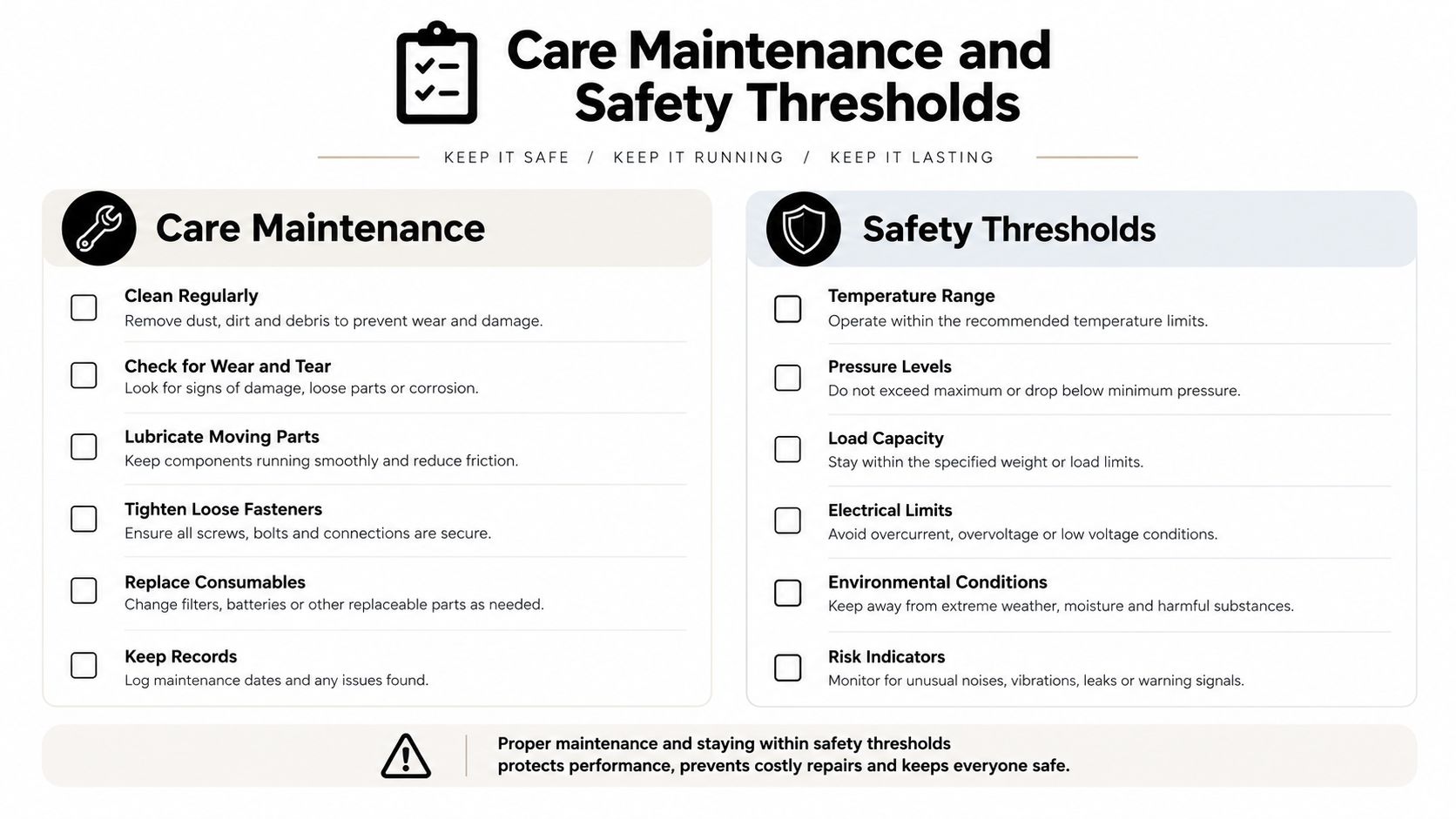
Retire the toy immediately if you see exposed stuffing, a loose squeaker, a separated seam, sharp internal material, or long threads. Don't wait for a dramatic tear. A small opening near a dog's preferred bite point can expand quickly once the dog has found it.
A muffled or missing squeak isn't automatically a safety failure if the toy remains structurally sealed, but it tells you the internal component may have shifted or broken. Inspect the housing carefully. If the squeaker has escaped, remove both the squeaker and toy from access until you can dispose of or replace them safely.
Store sound toys dry, away from moisture and direct damage. A sealed bin keeps the rotation organized and prevents a dog from choosing a damaged item when you're not looking. The best maintenance system is the one you can follow consistently, so keep the inspection at the same place where you store the toys.
Building a Smart Toy Rotation Strategy
A rotation turns toy buying into a management system. Keep a small selection available for the dog's current activity, store the rest, and bring out different textures or formats when interest drops. A plush squeaker can serve as the social-play option, while a rubber enrichment toy handles focused chewing and a puzzle format supports food-driven problem solving.
Suppose your dog carries a soft character toy during a supervised evening game, then starts biting the same seam instead of engaging with you. Put that toy away at once. The next choice shouldn't be another plush toy with a different face. Offer a format that redirects the same need, such as a durable chew or a food-filled activity, and reserve plush for moments when you can watch.
Buy for the dog in front of you, not the promise on the label.
Keep replacement planning practical. If your household regularly reorders pet essentials, a pet product Subscribe & Save app can help organize recurring purchases, but automation shouldn't decide when a toy remains safe. Retire based on condition and behavior, not on a calendar or a replacement reminder.
The best strategy combines construction, matching, supervision, inspection, and enrichment. That approach gives your dog soft comfort and interactive fun without pretending that fabric can withstand every chewing style forever.
Nandog Pet Gear offers My BFF™ plush toys with built-in squeakers and crinkle paper, plus Cuddle Comfort plush squeaky designs for interactive play, so browse the Nandog Pet Gear collection and choose a style that fits your dog's supervised play routine. Pair any plush toy with a regular inspection habit and a more durable solo enrichment option when your dog likes to chew.