


Cute pet car accessories aren't automatically safe. A quilted booster seat can protect upholstery, a plush liner can make a back seat more comfortable, and a tether can stop a dog from climbing into the front. None of those features proves that the product can manage crash forces.
The right approach to pet travel accessories for cars starts with a hard distinction. Convenience products improve comfort, cleanliness, or daily control. Safety systems are engineered to restrain an animal during sudden deceleration and should be evaluated through credible, independent testing. You can have a polished interior and proper protection, but you won't get there by treating every attractive accessory as a restraint.
The Hidden Safety Gap in Pet Car Gear
Many owners buy a product labeled “secure,” “heavy-duty,” or “car-safe” and assume those words carry a technical meaning. They usually don't. A stylish tether may be useful for limiting movement during an ordinary drive, but unless the tether, attachment points, harness, and vehicle connection have been evaluated under crash conditions, you don't know how the system will behave during impact.
The distinction matters because a seat cover and a restraint solve different problems. A waterproof hammock manages mud and spills. A plush booster gives a small dog a higher view. A crash-tested harness is designed to distribute force and limit forward movement. Combining the first two with an untested strap doesn't create the third.
Convenience is not containment
A loose dog can climb under the pedals, press against the driver, or move through the cabin during a hard stop. A cover may keep the animal on the rear bench for a while, but it doesn't necessarily prevent forward motion. A barrier can reduce distraction, but it isn't a substitute for a crash-worthy restraint.
The education gap is significant. One source citing University of Adelaide research says only 19% of U.S. dog owners properly restrain pets in vehicles, which points to a problem with correct use and product selection, not merely a lack of available gear. Cornell's guidance on traveling safely with dogs makes the practical issue clear: owners need to understand how a restraint works and what happens when they use equipment that hasn't been tested for crashes.
Find the weak point before the road does
Inspect the entire chain, not just the visible seat. Ask where the tether attaches, whether it connects to a harness rather than a collar, how the product connects to the vehicle, and whether the attachment points can spread force across the pet's body.
A product can look sturdy while relying on a narrow strap, a plastic clip, a long extension, or a connection that attaches only to a soft bed. Those details become failure points when force arrives suddenly.
Practical rule: Treat “cute,” “secure,” and “heavy-duty” as marketing descriptions until the manufacturer provides clear evidence of independent crash testing.
The best-looking car interior is still a poor investment if the restraint fails. Start with the safety system, then add the aesthetic and protective layers around it.
Core Categories of Car Travel Accessories
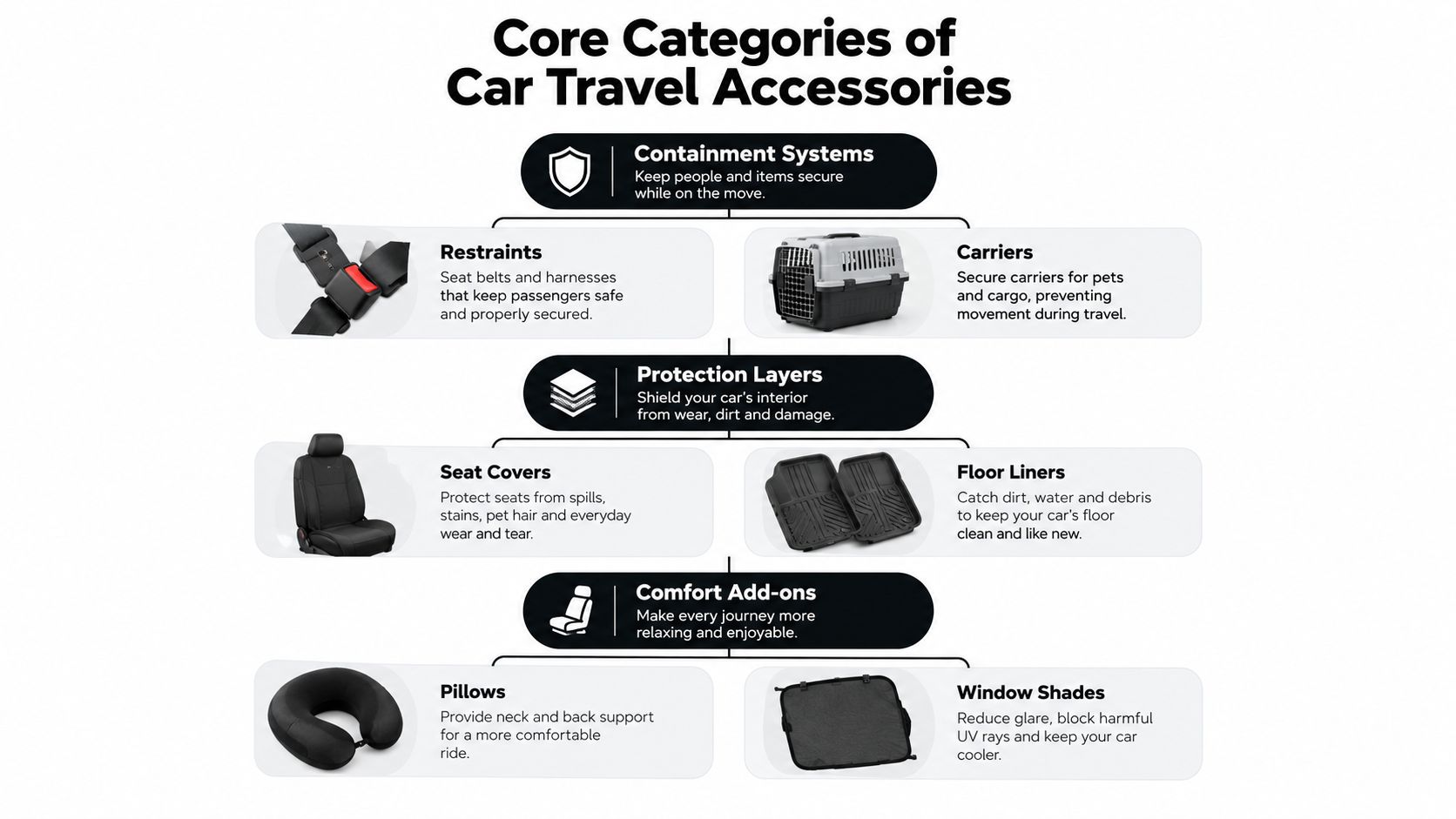
A sensible setup begins by assigning each accessory one job. Containment systems control the pet's movement. Protection layers defend the vehicle. Comfort add-ons make the ride more pleasant. Confusing these roles is how owners end up relying on a seat cover or cushion for protection it was never designed to provide.
Containment systems come first
A crash-tested harness is the usual starting point for a medium or large dog that rides on the rear seat. It should connect to the vehicle's seat-belt system and hold the dog through the chest, not the neck. A secured crate or carrier can suit a small dog, cat, or animal that settles better in an enclosed space.
Carriers, crates, and related containment products remain the largest vehicle-travel subcategory. One industry estimate assigns 38.0% of the market to carriers and bags, while another places carriers and crates at 32.5% of share. Market data from Global Market Insights supports what owners see in stores: containment is the foundation of the category because it addresses movement, transport, and everyday handling in one product family.
For international or cross-border journeys, safety equipment is only one part of preparation. Owners should also check documentation, transport rules, and destination requirements with a practical cross-border pet travel checklist.
Protection layers preserve the cabin
Seat covers, hammocks, floor liners, door protectors, and cargo mats protect against fur, wet paws, claws, and accidents. A fitted cover can also reduce gaps where a pet may try to wedge itself, but it remains a surface layer. It doesn't replace a harness, carrier, or crate.
Choose waterproof materials for muddy walks and washable construction for regular commuting. A cover with firm anchors and openings for seat belts is more useful than a loose blanket because it stays in position while the safety system remains accessible.
Comfort add-ons support calmer travel
Boosters, cushions, pillows, and window shades help a pet settle, particularly when the animal becomes anxious or wants to see outside. They should be added around a properly installed restraint, not used as its replacement.
A small dog may ride more calmly in a raised booster, while a cat may prefer a covered carrier with limited visual stimulation. The correct order is simple: restrain first, protect the interior second, improve comfort third.
Crash Testing and Restraint Integrity Standards
Vehicle safety is governed by force, not by the softness of a cushion. During sudden deceleration, a pet continues moving until a restraint stops that motion. The restraint must absorb and distribute the load without allowing excessive forward travel, slipping around the body, or separating from the vehicle.
Evaluate the entire restraint path
Independent testing should examine more than whether a buckle closes. The Center for Pet Safety reports that, in a pilot study, a test dog became fully unrestrained when an anchor strap failed under impact. Consumer guidance around these evaluations focuses on excursion distance, strap movement, and whether the harness legs remain secured during a 30 mph crash simulation. The Center for Pet Safety's pilot study shows why a product's weakest connection matters as much as its shell or padding.
Use this checklist when reading a product description:
- Look for independent testing: A manufacturer's claim that a product is “tested” isn't the same as a clearly described evaluation by an independent safety organization.
- Check the anchor: The restraint should connect to the vehicle seat-belt system or another structurally appropriate vehicle point specified by the manufacturer.
- Inspect the body geometry: Force should spread across the chest and torso, not concentrate at the neck.
- Limit extension length: Long, weak tether extensions can increase forward travel and create another failure point.
- Keep the pet in the rear seat: Front airbags are designed for human passengers and can create a serious hazard for animals.
A car seat can be attractive and comfortable while still failing the central safety test. This explanation of whether dog car seats are safe is useful because it separates elevation and comfort from actual restraint performance.
Installation affects test results
A tested harness won't protect a pet if the owner clips it to a collar, routes the belt incorrectly, leaves slack in the system, or attaches it to a weak point. Fit also matters. The harness should sit securely across the chest, allow normal breathing and movement, and prevent the dog from backing out or twisting free.
Don't add a homemade connector because the supplied tether feels short. Don't attach a restraint to a seat cover, headrest loop, or decorative handle unless the product instructions explicitly identify that component as a load-bearing anchor. The restraint should be as direct and stable as possible.
Safety standard: If you can't identify what part of the system takes the crash load, you haven't finished evaluating the product.
Choosing the Right Setup by Pet Size and Behavior
There isn't one universal car accessory for every animal. A calm small dog may settle in a secured booster, while an anxious dog that spins, paws, or tries to climb needs more restrictive containment. A cat that panics when exposed may travel better in a stable carrier placed low behind a front seat.
Cornell and other safety guidance recommend a crash-tested harness, seat belt, or travel crate. The same guidance notes that a secured carrier on the floor behind a front seat can offer extra protection when a crash-tested option isn't available. PetSafe's travel safety guidance also supports keeping the setup stable and away from front-airbag exposure.
Match the system to the animal
Use behavior as seriously as size. Weight determines whether a booster or carrier can support the pet, but behavior determines whether the animal will remain inside it and whether the driver can stay focused.
| Pet Profile | Primary Safety Need | Recommended Accessory Setup |
|---|---|---|
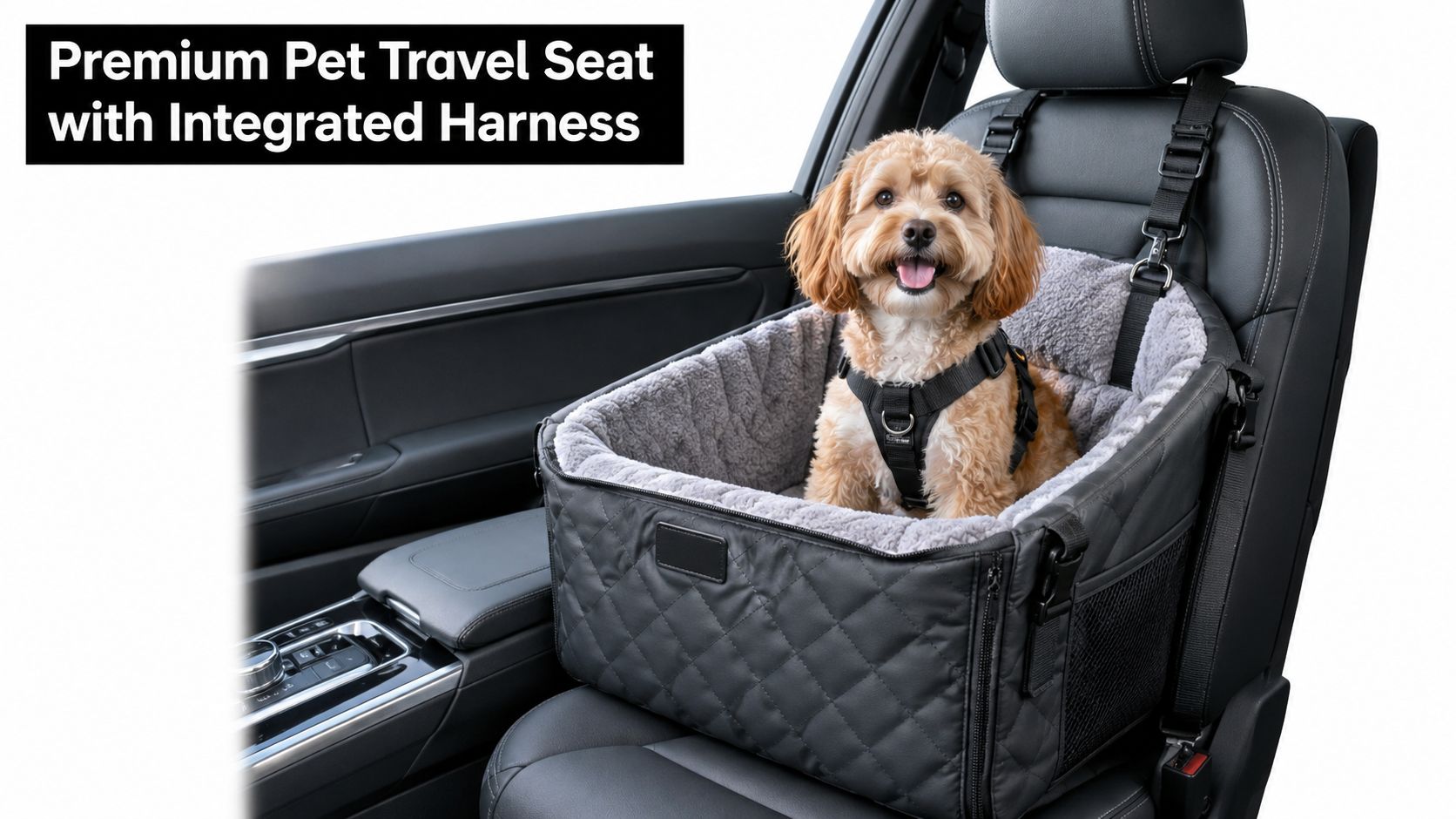
| Small dog that wants to see outside | Stable elevation and controlled movement | A properly secured booster with an internal tether attached to a harness |
| Small dog that spins or paces | Enclosed containment | A secured carrier or crate sized for the dog to sit, turn, and lie down |
| Medium dog that settles calmly | Chest-supported restraint | A crash-tested harness connected directly to the vehicle seat-belt system |
| Large or active dog | Strong movement control and separation from the driver | A crash-tested harness, or a properly anchored crate where the vehicle allows it |
| Cat or nervous small pet | Low stimulation and stable placement | A secured carrier on the rear floor behind a front seat |
| Dog returning from a muddy outing | Containment plus upholstery protection | A proper restraint combined with a waterproof, washable rear-seat cover |
A booster is not automatically the right choice for a small dog. If the pet climbs out, tangles in the tether, or leans toward the driver, an enclosed carrier is the better solution. If a medium dog dislikes confinement but remains calm, a well-fitted harness may provide more usable freedom without allowing cabin-wide movement.
For owners comparing dimensions and support for a medium-sized dog, this guide to a medium dog car seat can help frame the decision around fit rather than appearance.
Let the trip shape the purchase
Short daily drives may call for a fast, repeatable system that is easy to install correctly. Longer trips demand more attention to ventilation, hydration, posture, and the pet's ability to rest. A dog that is safe but constantly stressed won't travel well, so pair the restraint with familiar bedding and a predictable routine.
Balancing Premium Aesthetics with Vehicle Protection
Safety gear doesn't need to make the car look like a utility vehicle. The trick is to stop asking one accessory to perform every job. A restraint handles crash protection. A cover handles dirt and moisture. A refined cushion or booster handles comfort. When each component has a defined role, the whole setup can look intentional.
Choose materials that earn their place
Quilted micro plush interiors create a softer surface for the pet, but the value depends on what surrounds the padding. Look for firm anchoring, accessible seat-belt paths, durable stitching, and fabrics that can withstand claws and repeated cleaning. A reversible design can refresh the appearance and make it easier to separate a clean side from a used side during a trip.
Antimicrobial or quick-drying materials can be helpful for hygiene, but they don't make a product a safety system. Product research identifies smart sensors, temperature regulation, modular barrier systems, antimicrobial materials, and real-time app alerts as emerging features in integrated car accessories. The design opportunity is useful, but buyers still need to ask what protects the pet during impact.
Seat covers also have a meaningful place in the market. One estimate places them at 16.1% share and USD 773 million in 2025, while harness and seat-belt systems account for 14.7% and USD 706 million. These figures come from market research on car accessories for pets, and they reinforce an important distinction: owners buy both protection layers and restraint systems, but the two categories shouldn't be judged by the same standard.
Build a coordinated cabin
A polished setup usually needs only a few deliberate choices:
- Use one visual palette: Black, charcoal, cream, or a restrained pattern can coordinate with modern upholstery without making the pet area look improvised.
- Keep the restraint visible: Don't bury buckles and seat-belt paths under a thick cover. Safety hardware should be easy to inspect before every drive.
- Choose washable construction: A beautiful cover that requires complicated disassembly will eventually stay dirty. Simple care protects both appearance and hygiene.
- Add comfort after anchoring: A cushion, blanket, or plush insert should fit inside the secured system without blocking its attachment points.
Style is not the enemy. False confidence is. A clean, well-designed interior can coexist with serious safety standards when the decorative layer never disguises the structural one.
Installation and Maintenance Best Practices
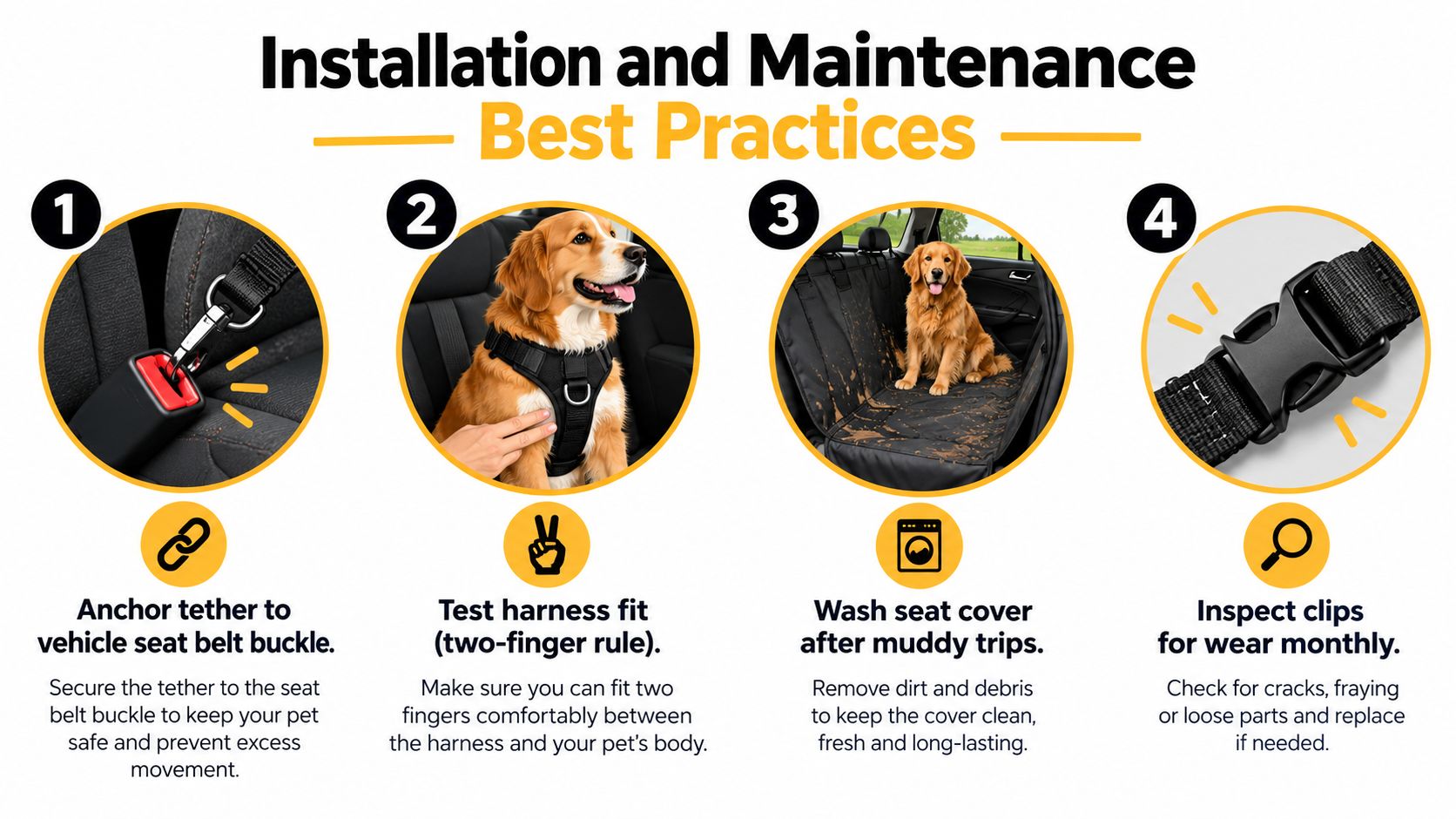
A crash-tested accessory only performs as intended when the owner installs it correctly. Read the product instructions before placing the pet inside, identify every anchor point, and test the setup with firm hand pressure. If the carrier tips, the booster shifts, or the harness rotates around the body, stop and correct the installation.
Install the safety system
- Position the accessory in the rear seat: Choose the flattest, most stable location and keep the pet away from front airbags.
- Route the vehicle belt correctly: Thread it through the carrier or seat according to the manufacturer's instructions, then remove slack.
- Attach the tether to a harness: Never use a collar as the primary crash connection. Adjust the tether so the pet can sit and lie down without climbing toward the front.
- Check the fit: The harness should stay close to the chest without restricting breathing or allowing the pet to back out.
- Test for movement: Push the seat or carrier from multiple directions. It shouldn't slide, tip, or rotate excessively.
A strap can look intact and still be unsafe if a dog has chewed through the webbing. If vehicle-belt material has been damaged, consult a qualified service such as auto seatbelt repair for dog damage before relying on it.
Keep the gear clean and serviceable
Wash covers after muddy trips and clean hard surfaces according to the material instructions. Remove hair before it works into buckles, hook-and-loop fasteners, or adjustment points. Fully machine-washable designs are easier to maintain because owners don't have to wrestle with complicated removable covers.
Inspect clips, webbing, stitching, tether hooks, and anchor loops regularly. Replace any component that is frayed, cracked, stretched, or no longer locks securely. A helpful reference for maintaining and replacing worn connections is this guide to a dog car seat strap.
The following video demonstrates the kind of installation detail owners should look for before using a car accessory:
Do a final check every time the setup changes. Repositioning a seat, switching vehicles, washing a cover, or adjusting the harness can introduce slack or misrouting. The safest routine is the one you can repeat without improvisation.
Real-World Scenarios for Everyday Pet Travel
Pet travel isn't limited to road vacations. A recent survey found that 27% of pet parents usually or always travel with their pet, while 41% do so sometimes or as needed. More than 85% of trips are under 25 miles, and 68% are 10 miles or shorter, according to survey findings on driving safely with pets. Short distance doesn't remove the need for a proper restraint. It just creates more opportunities to use one.
The quick veterinary visit
A small dog that climbs, shakes, or tries to sit on the driver's lap needs a defined place before the engine starts. A secured booster with a harness connection can provide visibility without giving the dog access to the center console. If the dog can't settle in an open seat, use a carrier instead and place it securely in the rear passenger area.
The aesthetic layer should stay simple for these trips. A washable liner catches shedding and accidents, while a familiar blanket can reduce stress without interfering with the restraint.
The muddy trail return
After a park or hiking trip, the vehicle's immediate threat is often dirt rather than impact. Put the dog into its established restraint, then use a waterproof cover or hammock beneath it. Keep a towel in the car, and clean the cover before moisture and grit damage the upholstery.
For stubborn shedding after the trip, a dedicated guide to pet hair removal strategies can help you maintain the cabin without replacing the entire interior protection system.
The longer journey
A longer drive exposes weaknesses in comfort and routine. An anxious dog may need an enclosed carrier, while a relaxed larger dog may prefer a harness that allows sitting and lying down. Pack water, a familiar item, and cleaning supplies, and plan stops around the animal's needs rather than waiting for restlessness to become a driving distraction.
The strongest setup is not the one with the most accessories. It's the one the pet accepts, the driver can operate without reaching into the cabin, and the owner can inspect and clean consistently. Build around a genuine restraint, then make it comfortable and attractive with washable, well-fitted layers.
Nandog Pet Gear offers design-focused car seats for small and medium dogs with quilted micro plush interiors, safety hooks, and installation that works with seat-belt straps and a harness. Visit Nandog Pet Gear to choose a polished travel setup that adds comfort and interior protection without confusing style with crash protection.