


You notice the problem when your dog gets up. The bed smells faintly of wet fur, loose hair covers the surface, and one corner has begun to flatten. Your dog still chooses it because the familiar spot feels safe, but the same softness that once looked inviting may no longer provide steady support.
That's the central challenge with an orthopedic dog bed washable design. A bed must cushion pressure points and support joints, yet it also needs to handle hair, dander, muddy paws, accidents, and repeated cleaning. A removable cover helps, but it doesn't answer the larger question: can the cover, liner, and support core work together over time without sacrificing comfort?
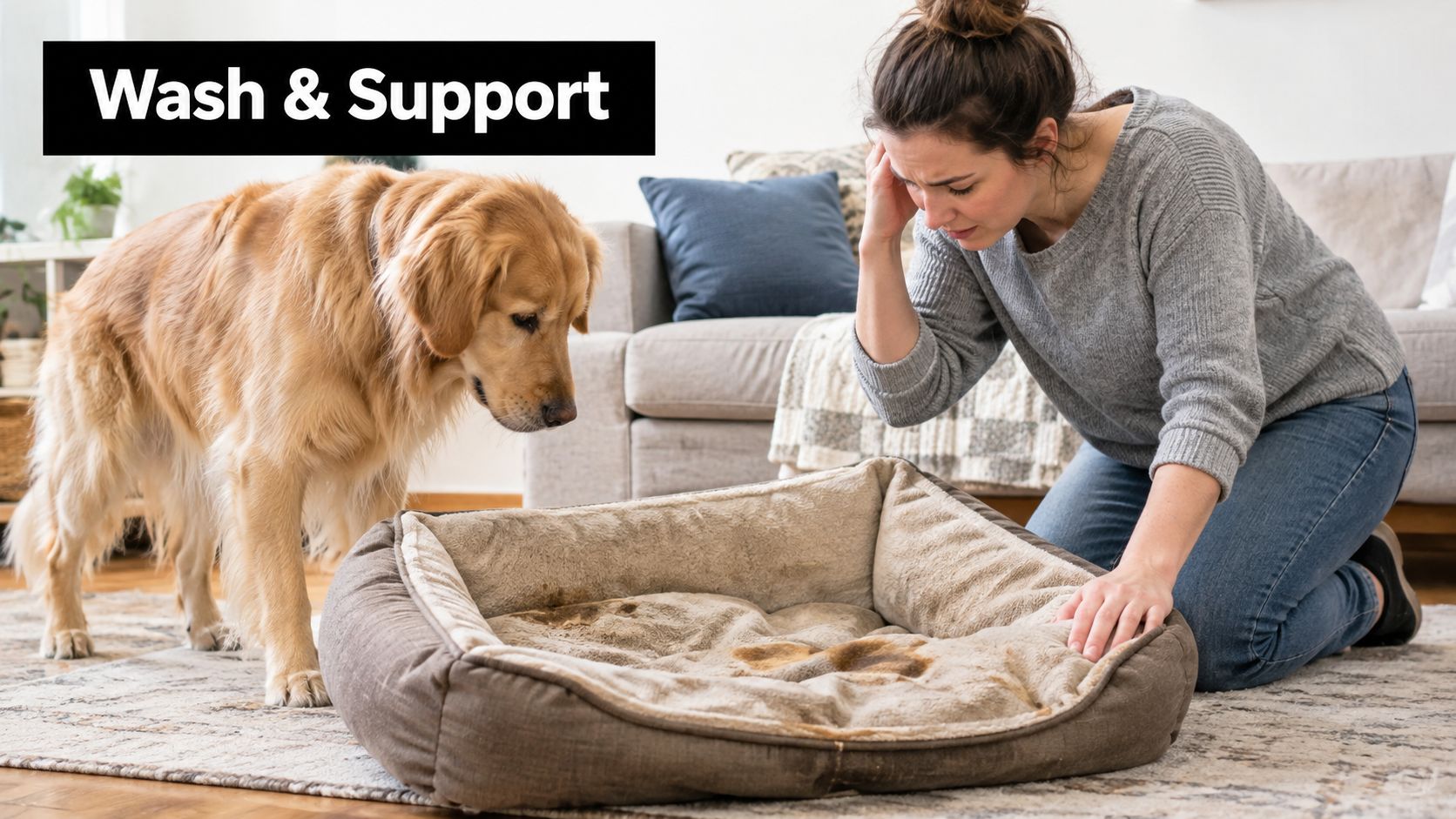
For Nandog Pet Gear, the idea fits the Dream Better philosophy. Better rest starts with a comfortable place to settle, and practical care makes that place easier to keep fresh. The right bed can support an older dog's body, make daily life easier for the household, and still look at home in a carefully designed room.
Introduction to Washable Comfort and Support
Washability and orthopedic support aren't competing features. They solve different problems that meet in the same sleeping space. Foam provides the stable foundation, while the textile layers manage the dirt and moisture that arrive with everyday use.
The distinction matters because “washable” can mean several things. Sometimes it means only that the outer cover comes off and can go into a washing machine. Sometimes the bed has a water-resistant barrier beneath the cover. In a stronger system, every layer has a clear job, and the construction makes regular cleaning possible without forcing the support material through a damaging wash cycle.
Orthopedic beds have become commercially important within washable pet bedding. One industry report estimates that orthopedic beds represented 28.5% of the global washable pet bed market in 2025, with about $799 million in revenue, and projects a 7.1% CAGR from 2026 to 2034 for the segment. The same report connects demand with aging pets and joint-support needs, while placing average orthopedic washable-bed prices at roughly $250 to $400, a premium tier within pet bedding. (MarketIntelo's washable pet bed market report)
The practical test: Don't ask only whether a dog bed is washable. Ask which parts can be cleaned, how they're protected, and whether the structure is designed for repeated care.
A comfortable bed should make it easier for a dog to rest, not create a fragile object that owners avoid washing. This guide breaks down what orthopedic support means, how the three-layer construction works, how to clean it safely, and which buying details reveal whether “washable” describes a durable system or just a removable fabric shell.
What Makes a Dog Bed Truly Orthopedic
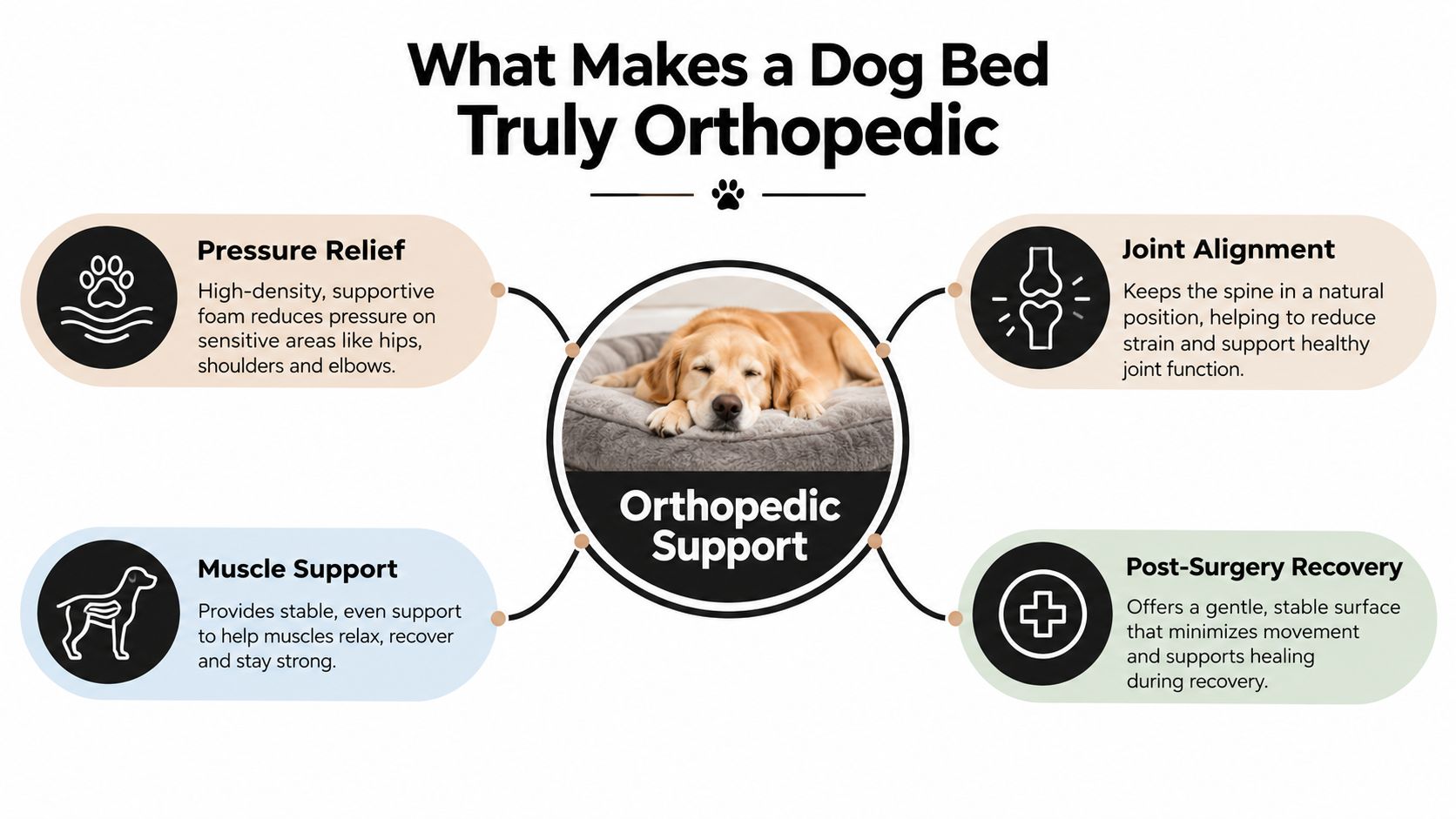
A plush bed feels soft when your hand presses into it. An orthopedic bed does something more useful: it distributes a dog's weight and resists collapsing completely beneath pressure. Think of the difference between a pillow and a supportive mattress. A pillow may feel pleasant for a moment, but it won't necessarily keep the body evenly supported through a long sleep.
Foam creates this effect by compressing under the dog and then recovering its shape. Pressure relief reduces the concentration of weight around elbows, hips, and shoulders. A stable surface can also help a dog settle without constantly shifting to find a less painful position.
Support starts with the dog's body
The right amount of firmness depends on the individual animal. A large dog places more load on the sleeping surface than a small dog. An older dog, a dog with arthritis, or a dog recovering from surgery may also need a more stable base than a young dog that happily sleeps on a folded blanket.
That doesn't mean the bed should feel hard. Good support combines a resilient foundation with enough cushioning at the surface to make lying down inviting. Excessively soft filling can allow the body to sink unevenly, while a firm foam structure helps preserve a more consistent sleeping platform.
If your dog struggles with stairs, rising, jumping, or maintaining a steady gait, a bed is only one part of the care plan. A helpful overview of the causes of dog mobility problems can help you recognize when changes in movement deserve veterinary attention.
Washability made orthopedic support practical
Foam support becomes much more useful in daily life when owners can keep the surrounding bedding clean. Modern orthopedic beds usually separate the washable textile component from the foam core because memory foam shouldn't be submerged or machine washed. Water and agitation can damage its structure, while a cover can be cleaned on a gentle cycle.
That separation helped make orthopedic support practical for ordinary households. The bed can provide a stable sleeping surface, and the cover can address the hair, dander, odor, and surface contamination that build up around a pet. The result isn't just a softer place to sleep. It's a care system that balances body support with household hygiene.
Materials and Construction Behind Washable Orthopedic Beds
A washable orthopedic bed works like a small building. The inner material carries the load, the protective layer shields the foundation, and the outer textile handles contact with the dog. If one layer is poorly designed, the other layers have to work harder.
The memory foam core
The foam core supplies the main pressure-relief function. It compresses where the dog lies and helps maintain a more even base than loose stuffing. Because foam has a specific cellular structure, it's vulnerable to excess water and mechanical agitation. Machine washing can break down the material, distort its shape, or leave moisture trapped inside.
For that reason, the core usually stays out of the washing machine. Owners should inspect the care label and treat the foam as a spot-cleaning component unless the manufacturer clearly states otherwise. A useful explanation of how memory foam functions in pet bedding appears in Nandog's guide to memory foam pet beds.
The water-resistant liner
The liner sits between the foam and the cover. Its job is to slow or stop liquids from reaching the support layer, especially after spills, wet paws, or accidents. A water-resistant liner gives the outer cover a chance to contain most contamination before it reaches the foam.
A waterproof or water-resistant barrier also protects compression recovery. If liquid repeatedly penetrates the foam, drying becomes more difficult and odors can remain inside the bed. Independent guidance on machine-washable dog beds with protective covers identifies this cover-and-barrier configuration as a practical choice for households dealing with dirt or accidents.
The removable or washable cover
The cover is the layer that meets fur, paws, skin, and household dust. A tightly woven fabric can make it harder for debris to work deep into the textile, while strong stitching helps the cover retain its shape around the foam. Zippers, seams, handles, and corners deserve attention because repeated laundering places stress on each one.
The most useful question isn't “Is the cover machine washable?” It's “What happens after repeated washing?” Look for clear instructions about cycle settings, drying, liner protection, and reassembly. A cover that washes well but shrinks, twists, or strains the seams can make the entire bed harder to use.
Construction rule: The cover manages routine contamination, the liner protects the foam, and the foam provides support. A washable orthopedic bed needs all three layers to perform their separate jobs.
How to Wash an Orthopedic Dog Bed Without Damaging Support
After a muddy walk, a spilled drink, or an accident, the washable part of an orthopedic bed is not automatically the whole bed. Washability is a system test: the cover, liner, and foam must each withstand their own kind of care while preserving the support beneath your dog.
A careful cleaning sequence
- Remove loose debris. Shake the cover outdoors or vacuum away hair, crumbs, and grit. Dry debris is easier to remove before water turns it into residue inside the fabric.
- Check stains and the foam. Inspect the exposed core for marks, dampness, or odor. Spot-clean visible stains with a lightly damp cloth and a small amount of cleaner approved for that foam. Don't soak the core, scrub aggressively, or fold it while wet. For foam-specific care, follow Nandog's guide to cleaning a memory foam dog bed, since foam needs different handling from washable textiles.
- Wash the textile layers gently. Follow the care label and use a gentle cycle with mild, fragrance-free detergent. Households managing sensitive skin may prefer dye and fragrance free laundry detergent. An extra rinse can help remove remaining residue.
- Skip fabric softener. It can coat the textile and affect how the fabric handles moisture. Fragrance or detergent residue may also bother sensitive skin, so use only products allowed by the care instructions.
- Dry every layer completely. Air-dry the cover and washable liner fully before reassembly. Moisture trapped in seams or beneath a fitted liner can create odor and support microbial growth. Foam also needs time to air out before it returns to the bed.
- Reassemble without forcing the foam. Confirm that the core has returned to its intended shape and that the liner lies flat. A twisted liner can form ridges, changing how your dog distributes weight across the support surface.
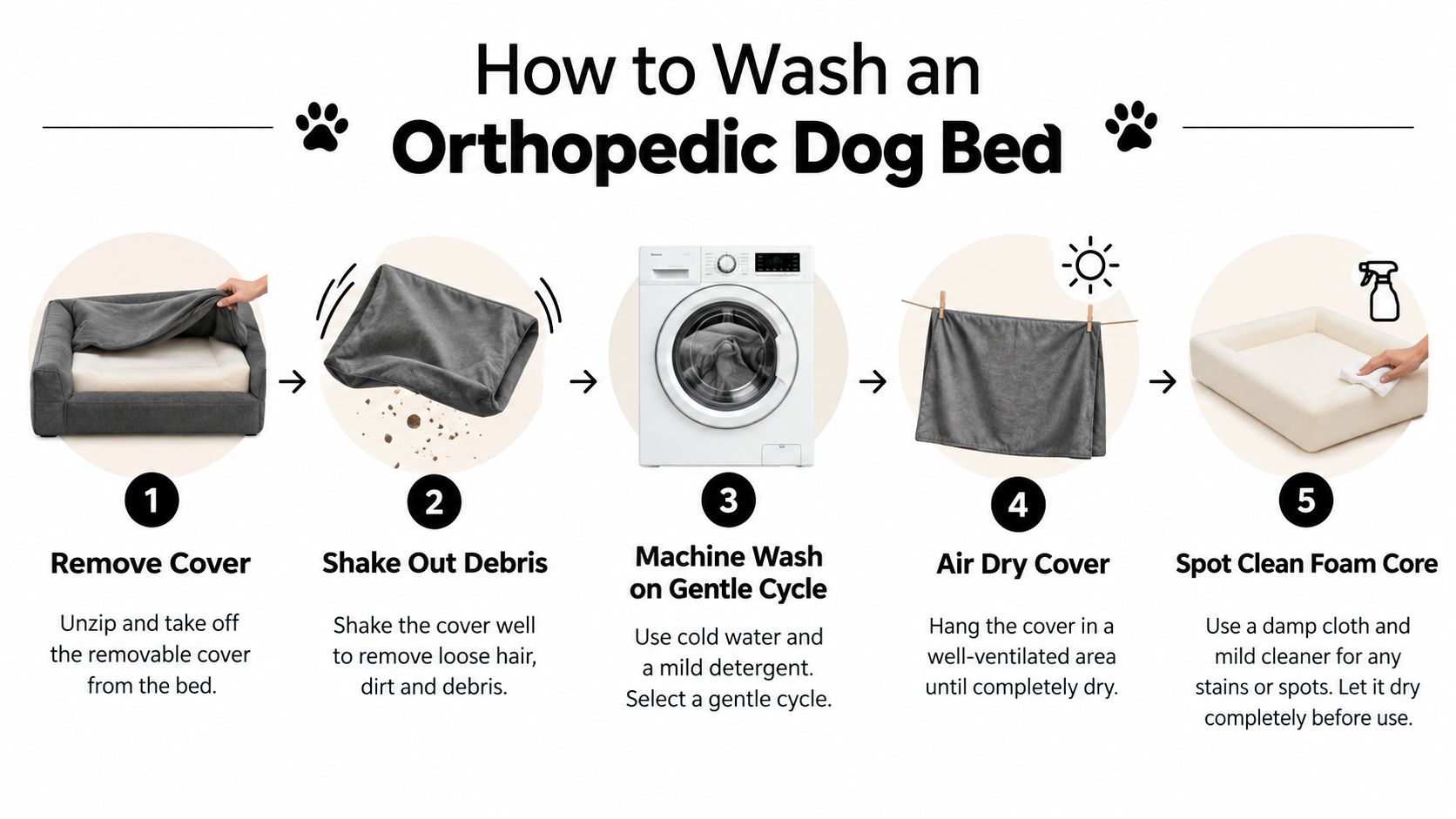
Cleaning frequency depends on your dog and household. Practical guidance commonly suggests washing the cover every 2 to 4 weeks, while allergies, heavy shedding, or frequent messes may call for more frequent care. Other bedding guidance recommends washing at least every 1 to 2 weeks, and weekly for allergy-prone households or heavy shedders. (GauGau Pet's orthopedic dog bed cleaning guidance)
The foam follows a slower rhythm. Spot-clean it when needed, let it air out, and place it in a machine only when the manufacturer explicitly permits that method. A cover that survives washing cannot compensate for foam that stays wet, folds out of shape, or loses its recovery.
How to Choose the Right Washable Orthopedic Dog Bed
Shopping becomes easier when you treat the bed as a system instead of a single feature. A product page may highlight a removable cover, but your dog's comfort and your cleaning routine depend on the foam, liner, fabric, seams, and care instructions working together.
Start with your dog's body and habits. A large or aging dog may need a generous sleeping area and a stable foam base. A dog that circles, digs, or sleeps on the edge needs construction that resists shifting. A puppy or accident-prone dog makes liquid protection more important than a decorative surface alone.
Compare the decisions that affect daily use
| Decision Factor | What to Look For | Why It Matters |
|---|---|---|
| Support | Resilient foam and a base that doesn't collapse easily | Helps distribute pressure across the sleeping surface |
| Size and shape | Enough room to stretch, turn, and rise without stepping over a high edge | Supports natural movement and easier access |
| Liner | Water-resistant or waterproof protection over the foam | Limits liquid exposure to the support layer |
| Cover fabric | Durable, tightly woven textile with reinforced seams | Helps manage hair, dust, and repeated handling |
| Cleaning instructions | Specific guidance for washing, drying, and spot-cleaning | Shows whether “washable” has been clearly defined |
| Repeated-use durability | Information about shape retention and construction after care | Helps you judge long-term performance instead of relying on a label |
| Skin sensitivity | Fragrance-free care compatibility and thorough rinsing | Reduces avoidable residue that may irritate some dogs |
| Home fit | Reversible design, restrained colors, or a profile suited to the room | Makes regular use easier to live with |
Read beyond the word washable
Ask whether the liner can be removed, whether it's washable or only wipe-clean, and whether the cover can be dried without high heat. If the product page doesn't explain these points, contact the maker before buying.
Allergen-sensitive households should also look beyond machine access. Guidance on cleaning dog bedding emphasizes washing, thorough drying, fragrance-free detergent, and residue removal, while noting that material choice and routine both influence hygiene. (Animal Start's dog bedding hygiene guidance)
A washable cover is valuable, but it isn't a guarantee of durability. The strongest choice gives you a clear answer for every layer, including what happens when the bed needs care again and again.
How Nandog Meets Washable Orthopedic Needs
Nandog Pet Gear applies the system idea through beds designed around comfort, care, and the visual language of a contemporary home. Its Los Angeles design-forward approach treats a pet bed as part of the living space, not an item that needs to be hidden after use. That matters for owners who want joint-supportive bedding without giving up a considered interior.
Most Nandog beds are designed to be fully machine washable without requiring a removable cover, according to the provided brand information. Many are also reversible, which gives owners another way to refresh the sleeping surface and extend practical use between deeper cleaning sessions.
The relevance to orthopedic care is straightforward. A comfort-first structure can provide the supportive base a dog needs, while an easy-care outer construction reduces the friction involved in keeping the bed fresh. For a household with shedding, damp paws, or occasional accidents, the value comes from connecting those functions rather than choosing one over the other.
A useful design lens: Style matters because owners are more likely to keep a bed in the right place and maintain it consistently when it fits naturally into the home.
Bed hygiene also belongs to a broader environment. Regular laundering addresses the sleeping surface, while ventilation and an appropriate EcoQuest Purifiers pet filter may be considered by households focused on managing airborne particles. These tools serve different purposes and shouldn't be treated as substitutes for cleaning the bed itself.
For a concrete example of how support and care features come together, review the Nandog Gray Orthopedic Medium Dog Bed. The useful evaluation points remain the same as with any bed: check the fit, construction, care instructions, and whether the design matches your dog's sleeping habits.
Final Takeaways for Better Sleep and Easier Care
A useful orthopedic dog bed does more than feel soft on the first day. It gives the dog a stable place to rest, protects the support layer from moisture, and lets the owner clean the parts that collect hair, dander, dirt, and odor.
The phrase orthopedic dog bed washable should therefore prompt a systems check. The cover must tolerate regular care, the liner must protect the foam, and the foam must retain its supportive shape when it's kept dry and spot-cleaned correctly. If a product explains only that the cover is washable, you still need more information before deciding whether it suits your household.
Use this short checklist before buying:
- Measure your dog at rest: Include the space needed to stretch, turn, and rise comfortably.
- Match support to the dog: Consider age, size, mobility, sleeping position, and veterinary guidance.
- Inspect the layers: Look for a resilient core, a protective liner, and durable outer construction.
- Read the care label: Confirm which parts can be machine washed, which must be spot-cleaned, and how each part should dry.
- Plan the routine: Set a regular cover-washing schedule and increase it when shedding, allergies, or accidents require more frequent care.
- Protect sensitive skin: Choose mild, fragrance-free detergent, rinse thoroughly, and avoid fabric softener.
- Check shape after cleaning: Don't reassemble the bed until every layer is fully dry and properly aligned.
- Choose a design you'll use: A bed that fits your space is easier to keep accessible, clean, and inviting.
Your dog doesn't need a complicated sleeping arrangement. They need dependable support, a clean surface, and a bed that can keep doing its job after ordinary life happens. Choose the construction carefully, follow the care instructions, and treat washability as durability rather than decoration.
Nandog Pet Gear offers design-conscious orthopedic beds and other comfort-focused essentials built around easier care and better rest. Visit Nandog Pet Gear to compare styles and find a washable sleeping solution that fits your dog, your cleaning routine, and your home.