

It's raining, you're late for a walk, and you're digging through a basket for the coat that fits. Under a Halloween costume you find a damp jacket, a sweater with one sleeve stretched long, and a shirt missing its fastener. Nothing is ruined, exactly. It's just impossible to tell what's clean, what still fits, and what your pet will tolerate wearing. That's the moment pet clothes hangers stop sounding decorative and start sounding practical.
Why Pet Clothes Deserve a Real Hanger
You pull the damp coat out first. It was folded while it was still cool from yesterday's walk, so the lining smells faintly musty and the chest panel has creased where it sat under a heavier sweater. The knit underneath has slipped off its fold. One leg hole is stretched, the other is tucked inside the body, and you can't tell without trying it on whether your dog has outgrown it.
A basket works for toys. It works less well for clothes you expect to use again next week, next month, and next winter. Once a garment has a job beyond a single photo, it needs to dry, keep its shape, and stay visible enough that you grab it before the weather turns.
When clothes become a rotation, not a costume
That pattern is now common. A 2022 industry survey reported that pet-clothing sales increased 21% between 2019 and 2021, while average spending on pet clothes rose 9%. The same survey estimated average annual spending at USD 68 per pet owner, with dog owners generating 60% of pet-clothing sales compared with 30% for cat owners, as reported in that survey summary. Those figures describe repeat purchases, not one costume in a drawer.
The reason matters too. Weather protection was the leading purchase reason at 40%, followed by style at 30% and comfort at 10% in that survey. Coats and jackets accounted for 46% of dog-clothing sales and 34% of cat-clothing sales in the same reporting.
If a coat exists to protect your pet from cold or wet weather, storing it crumpled and damp works against the reason you bought it.
Protective garments get rotated. You wear the waterproof coat on wet mornings, the fleece on dry cold ones, and nothing on mild afternoons. Between uses, each piece needs air and a shape to return to. Hanging keeps the neckline from collapsing, lets a lining dry, and puts size and season in front of you at a glance.
Think of the hanger as the first care step, not the finishing touch. Browse a typical range of dog apparel built for repeated wear and you'll see why. Coats, sweaters, and shirts have different weights, closures, and leg openings, and they don't all fold to the same neat square. A hanger that fits the garment preserves the fit you chose for your pet.
You'll get more from what you already own if you can see it, reach it, and put it back clean and dry. The rest of this guide follows that logic, from hanger shape and surface grip to strength, small-space layout, and the safety check that should happen before any garment goes back on your pet.
What Sets Pet Clothes Hangers Apart
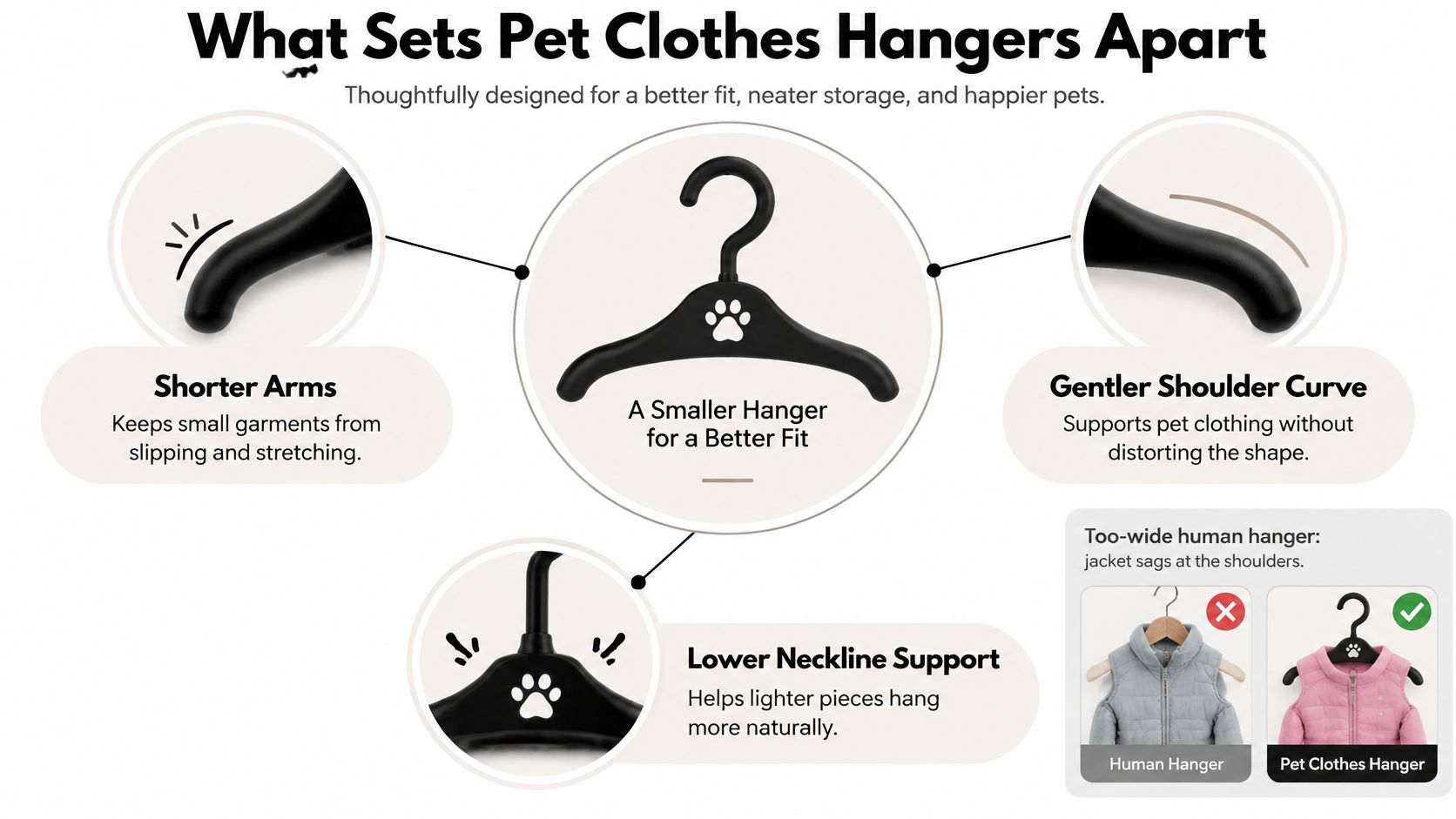
Try putting a small dog jacket on a standard human hanger. The arms push past the shoulders, the body sags in the middle, and the neckline stretches to reach a hook that's too high for the garment's proportions. The jacket doesn't hang. It drapes, slips, and slowly takes the shape of the hanger instead of the shape of your dog.
Pet clothes hangers solve a scale problem first. Their arms are shorter, so they end near the garment's shoulder instead of poking into a sleeve. Their shoulder curve is gentler and lower, which matches a small chest and a wide, shallow neckline. Some add a lower bar or a small clip for pieces with no real shoulder, such as a skirted dress or a two-piece set.
The four jobs a small hanger has to do
- Hold the neckline open: A supported neck opening keeps collars and hoods from folding flat and creasing.
- Spread weight across the shoulder: Even support stops one seam from carrying the whole garment.
- Stop sliding: Short arms and a slight texture keep a light shirt from ending up on the closet floor.
- Keep size and season visible: Hanging pieces side by side makes a puppy size and an adult size obviously different.
That last job matters in shops as much as at home. Pet apparel is a substantial category, although estimates vary widely by definition. One estimate valued the global pet-clothing market at approximately USD 2.2 billion in 2025 and projected growth to USD 3.2 billion by 2033, a 4.6% compound annual growth rate from 2026 through 2033. A separate analysis estimated 2023 revenue at about USD 5.7 billion and forecast a 5.3% compound annual growth rate through 2032, with dogs at about 66% of the market in 2023 and projected to approach 70% by 2032, according to that same market reporting context.
Don't plan around one global number. Plan around your assortment. A boutique that stocks coats, sweaters, dresses, and shirts needs coordinated hanging so customers can compare sizes quickly beside collars, leashes, beds, and travel products. A home closet needs the same visibility on a smaller scale.
Proportion also explains why borrowing hardware from human wardrobes only helps up to a point. Guidance on sturdy hangers for suits and coats is useful when you're thinking about shoulder support for heavy human outerwear. For pet garments, you keep the principle of a shaped shoulder and shrink everything else, because excess width is itself a source of stretching.
Compare Hanger Types Materials and Grip
Grip is where good intentions meet real fabric. A satin-like dress on smooth plastic slides a little every time the closet door moves. A lightweight knit on polished metal does the same. By morning, both are hanging by one armhole, which is exactly how necklines warp.
The physics is simple. Smooth fabric on a smooth hanger has few contact points, so it moves easily. A textured coating or elastomeric surface adds microscopic contact points and resists that sideways movement, a principle described in patent and product literature on roughened hanger arms and silicone-based films that prevent suspended garments from slipping. More friction isn't always better, though. A surface that's too rough can snag a loose knit when you lift the garment off.
How common types behave on pet fabrics
Pet Clothes Hanger Types at a Glance
| Hanger type | Best for | Grip | Main risk |
|---|---|---|---|
| Slim plastic | Sturdy cotton shirts | Low | Slippery fabrics slide off |
| Velvet or flocked | Knits, fleece, satin-like pieces | High | Can grip lint and loose yarns |
| Metal or wire | Temporary retail display | Low | Narrow support creases shoulders |
| Clamp or clip | Pieces with no shoulder shape | Medium | Pinch marks at clip points |
| Cascading multi-garment | Light shirts in tight spaces | Varies | Hides damage, loads one hook |
For premium apparel, aim for a soft, continuous, non-abrasive shoulder coating that runs across the shoulder radius and the lower bar. Those are the two places pet garments migrate during handling. Broad contoured shoulders usually suit small pet clothes better than clamps because they spread pressure instead of concentrating it at two pinch points. Save clips, ideally with resilient friction pads, for garments that can't hang from a shoulder.
Test before you commit. Hang four representative pieces, a stretch knit, a fleece, a satin-like polyester, and a waterproof coated fabric, then tilt the hanger slightly. Note when each one starts to slide and check for pressure marks afterward. A hanger that holds the satin but dents the knit hasn't passed.
Practical rule: Choose the gentlest surface that still stops your slipperiest garment from moving.
Space planning follows the same test-first logic. If you're fitting pet storage into a larger dressing area, checking minimum aisle widths for walk-in wardrobes helps you avoid a rod you can't reach. And when you weigh flocked, plastic, or metal options, the material story matters beyond grip. Reading about sustainable pet products and material choices can help you judge durability claims before you buy a full set.
Check Strength Before You Buy in Bulk
A dry T-shirt weighs almost nothing, so static weight is a misleading spec. The load arrives when a coat comes home damp, when a fleece is layered over a shirt on one hanger, or when a clip holds a garment by its hem day after day. Hangers fail from repeated use, not from one heroic lift.
Think in cycles. You lift the hanger, slide it along the rod, pull the garment off, and put it back. Each movement tugs the hook, the shoulder joint, and any clip assembly. A hanger that survives a single heavy coat may still crack at the neck after a season of that routine.
A conservative benchmark, used honestly
One technical textile standard for apparel loops cycles specimens between zero and 2.27 kgf (5 lbf) for loose-fitting comfort-stretch fabrics, or zero and 4.54 kgf (10 lbf) for form-fitting semi-support fabrics, completing four cycles per specimen. That standard evaluates garment loops, not hangers. Don't treat it as a hanger pass or fail label.
Use those force levels as a conservative planning benchmark instead. Ask whether the hook, shoulder, and clips can handle repeated loads above the expected weight of a wet or layered pet garment without trouble. You're looking for a clearly defined safe working load, not an unsupported maximum capacity printed on a listing.
- No cracking: Check the hook base and shoulder joints after repeated loading.
- No permanent bend: A shoulder that stays flexed will keep distorting garments.
- No sharp edges: A stressed clip or cracked arm can expose an edge that snags fabric.
- No clip slip: Test clips on both dry and damp hems, since moisture changes friction.
Moisture changes two things at once. It adds mass, and it changes how fabric grips the hanger surface. That's why a damp-weather coat deserves its own test rather than an assumption based on a dry sweater. Temperature and humidity matter as well, because polymer stiffness and coating adhesion can shift during shipping or in a warm closet.
Shape is a strength issue too. Wide curved shoulders spread force over a larger textile area, which reduces localized stretching at necklines and armholes. Narrow wire supports concentrate that same force on a thin line of fabric.
If you're buying for a boutique or a multi-pet household, write the criteria down before you order a case. Ask for cycle testing, dimensional inspection, and coating adhesion checks. A reusable premium hanger should be able to describe how it was tested. A disposable one usually can't.
Set Up a Small Closet That Stays Usable
You don't need a dedicated pet closet. You need one short stretch of rod that stays uncrowded enough to use. A section of a hall closet, an over-door bar, or a small garment rack can hold a working rotation if you divide it by how often things get worn.
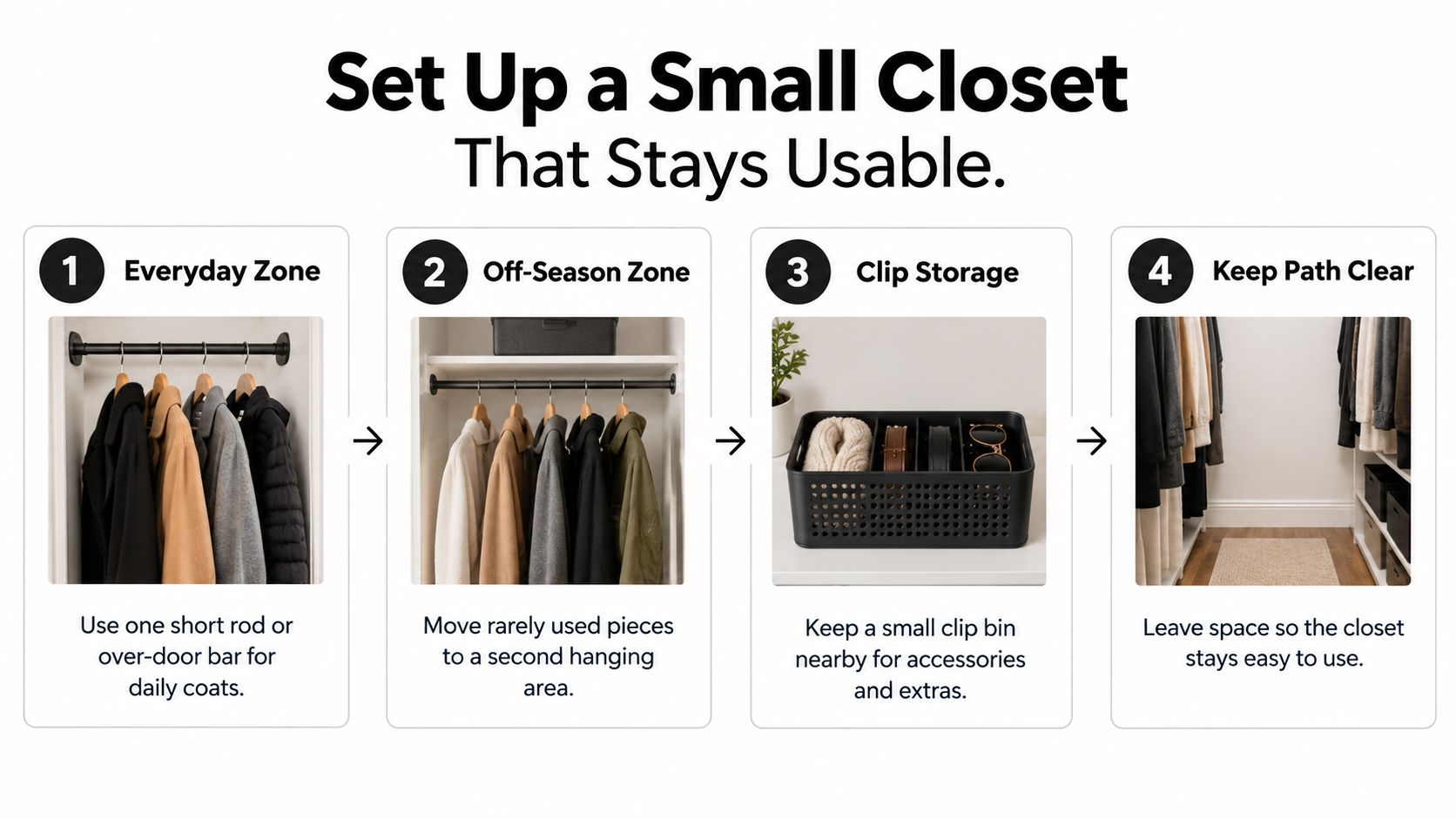
Start with the everyday zone. Keep current-season coats and the fleece you reach for most on one short rod or over-door bar at easy height. These pieces should hang with a little air between them so linings dry and you can read each silhouette without pulling everything out.
A simple three-zone layout
- Everyday zone: This week's outerwear, hung by pet if you have more than one.
- Off-season zone: A second area, higher or farther back, for pieces waiting for colder or warmer weather.
- Clip group: A small set of clip hangers only for items with no shoulder shape, kept together so clips don't spread through the whole rail.
Label by pet, size, and season. A simple tag on the hanger hook works. Labels pay off most with a growing puppy, because an outgrown sweater looks fine on a hanger long after it stops fitting the dog. When the size is written where you can see it, you stop rediscovering the same too-small piece every month.
Cascading hangers save vertical space by dropping one garment below another. Use them for light shirts, and stop before the stack gets deep. Too many pieces on one cascade hide a torn seam, trap damp air between layers, and put the combined load on a single hook.
Now add an inventory rule with three outcomes. Every hanging piece is either wear often, repair, or donate or repurpose. There's no fourth category for keeping something because it was cute once. A visible rail makes that decision easier, because unworn items stay unworn in plain sight.
A hanger system earns its space when it helps you keep fewer garments in better condition, not when it displays everything you've ever bought.
Finish with air and light. Don't push damp coats into a closed, crowded corner and expect them to stay fresh. Leave gaps for airflow, let wet pieces dry before they join the rail, and keep enough light in the space that you can spot a stain or a loose fastener. A closet you can maintain is a closet you'll keep in good order.
Store Clothes With Pet Safety in Mind
Here's a question worth sitting with. Should better storage encourage you to dress your pet more often? A tidy rail of outfits can suggest that every walk needs a look. Your pet's comfort should make that decision, not your closet.
Veterinary reporting identifies overheating, reduced ventilation, skin irritation, restricted movement, and psychological distress as risks associated with inappropriate pet clothing. Those concerns deserve extra care with brachycephalic breeds, thick-coated animals, elderly pets, and anxious pets. A garment that's harmless for a short outing can become a problem when it's warm, snug, or left on too long.
Most furry pets don't need routine clothing. A coat can help a hairless, small, lean, older, or weather-sensitive animal in cold or wet conditions. That distinction is the point. A good hanger system may reduce outfit use, because it keeps the few useful pieces ready and makes the purely decorative ones easier to retire.
Hygiene starts on the hanger
Store garments clean, dry, and odor-free. A coat hung while damp keeps moisture against its lining, and that lining goes back against your pet's skin next time. Let pieces dry fully, keep air moving around them, and wash each item according to its own fabric needs rather than running everything on one cycle.
Remove loose or chewable decorations before a garment goes back on the rail. A dangling charm or a half-attached button is easy to miss in a basket and easier to spot on a hanger. If a decoration can't be secured, it shouldn't go back on your pet.
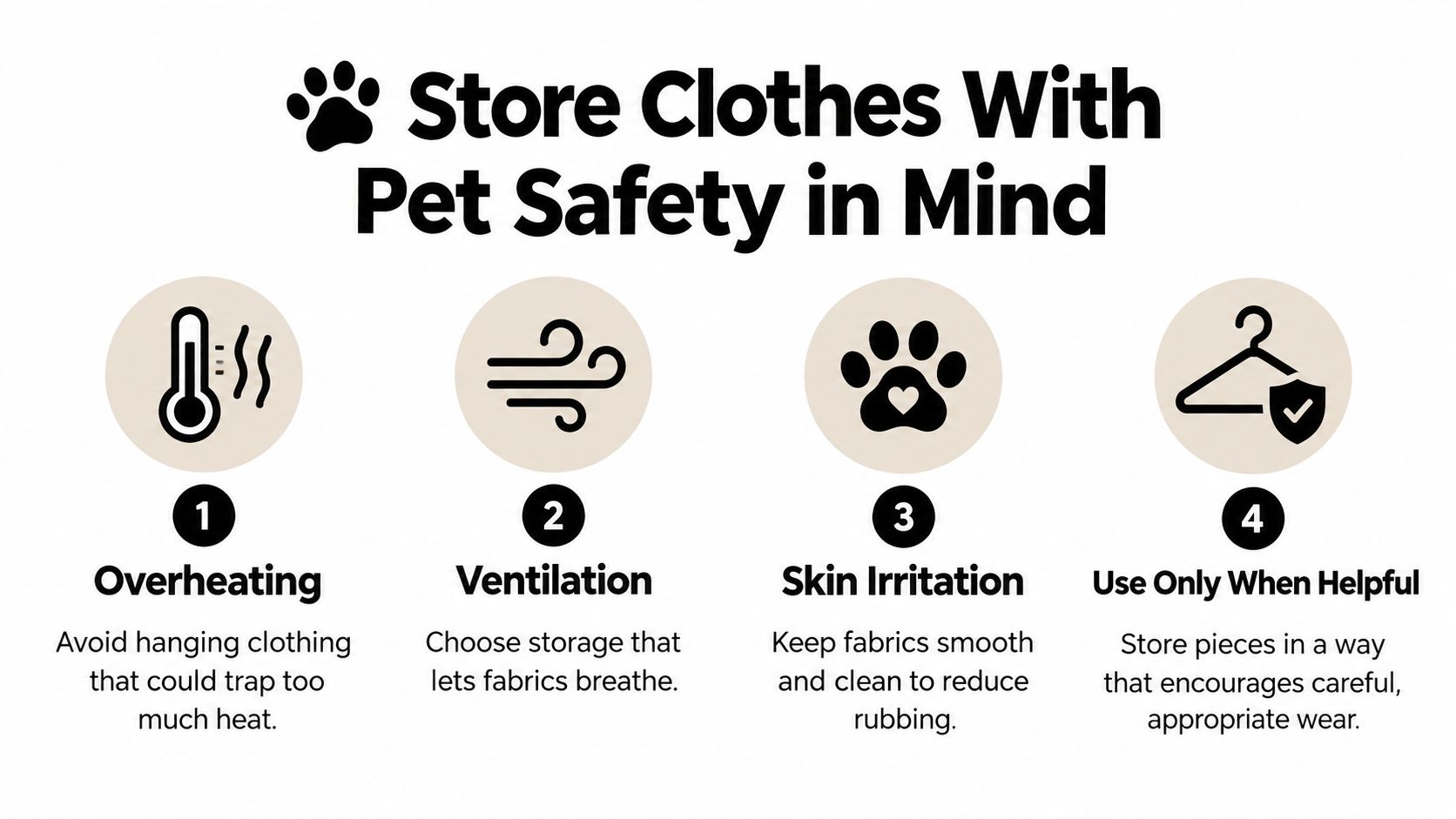
Use a short wearing checklist at the moment a garment leaves the hanger.
- Inspect seams and fasteners: Look for loose threads, weak snaps, and worn hook-and-loop closures.
- Check for chewable extras: Remove anything your pet could pull off and swallow.
- Confirm free movement: Your pet should walk, turn, and settle without the garment pulling.
- Watch after dressing: Remove the garment if you see panting, scratching, freezing, or attempts to escape it.
For a broader grounding in everyday precautions, these pet safety tips for home and outings pair well with a storage routine. Attractive organization and animal welfare aren't in conflict. The rail should make it easier to choose the right garment, and just as easy to choose no garment at all.
Pick a System and Put It to Work
Start with the clothes on your rail, not with a product page. Lay out what you own and match the hanger to it. Knits and fleece want non-slip contoured shoulders that won't snag. A piece with no shoulder gets a careful clip with padded contact points. A coat that comes home wet needs enough strength for its damp weight, not its dry weight.
That matching exercise is the whole system in miniature. Grip, shoulder shape, and load capacity aren't separate shopping criteria. They're three answers to one question, which is whether this specific garment will come off the hanger in the same condition it went on.
Where a design-forward wardrobe fits
Nandog Pet Gear is useful context here as an apparel and lifestyle brand, not as a hanger manufacturer. The Los Angeles brand builds around a Dream Better mission and a comfort-first approach across beds, car seats, apparel, collars, leashes, harnesses, and toys. A hanger's job with garments like those is modest. Present them cleanly, don't stretch them, and don't use a pretty rail as a reason to buy more than your pet will wear.
Sustainability claims need the same restraint. Industry reporting indicates that 84% of pet owners surveyed believe companies should act on climate change. A separate 2025 survey of 1,000 U.S. pet owners found sustainability influenced purchases for 28% of respondents, slightly below price at 30%, according to that reporting. Owners care, and price still edges out principle at checkout.
A hanger isn't lower-impact because its packaging says so. It's lower-impact if it lasts, and if it helps you rotate, repair, and pass along garments instead of replacing them. Extending the life of fewer pieces matters more than the material story of any single accessory.
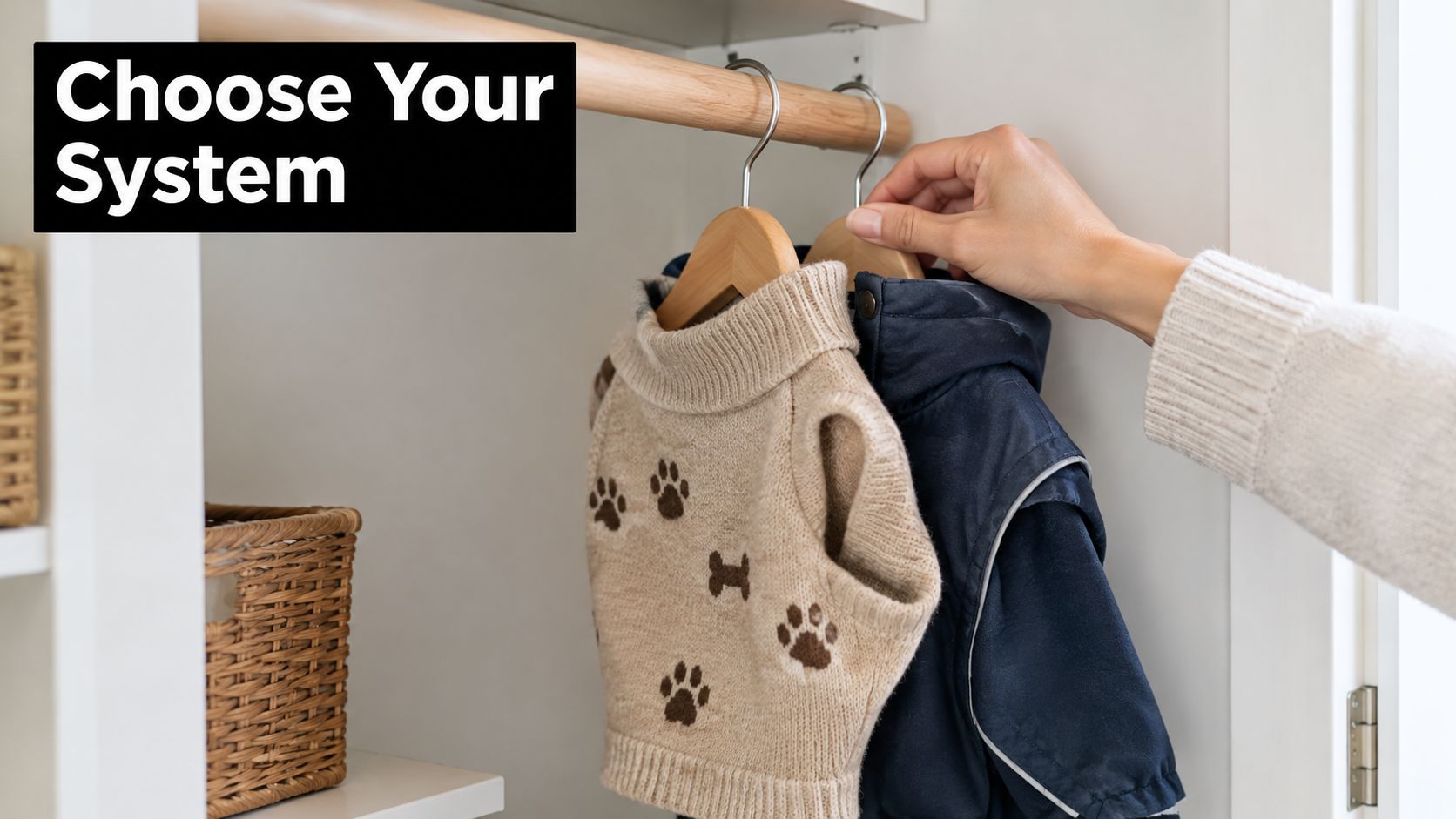
Do the audit today. Empty your current pet-clothes storage onto a bed. Hang only what fits now and gets worn, set aside anything that needs a seam or fastener repaired, and donate or repurpose the rest. Count the garments that remain, then buy hangers for that number and no more.
When you're ready to build a smaller, better rotation around comfort, explore apparel, beds, car seats, collars, leashes, harnesses, and toys at Nandog Pet Gear. Choose pieces your pet will wear and rest in, hang them so they stay clean and in shape, and let the empty hangers go.