


You notice the problem at the exact moment your home stops looking intentional. Dog hair is worked into the linen duvet, a foam insert has developed a faint musty smell, and the old pet bed clashes with the rug you recently chose for the living room. Your pet is comfortable, but the room is telling you that comfort alone isn't enough.
That's the buying moment for pet friendly bedding. You're not shopping for a decorative accessory. You're choosing a surface that must handle claws, fur, moisture, repeated laundering, allergens, and the visual demands of a modern home. The best choice treats the bed as a long-term hygiene-and-design contract, not a soft object you replace when it collapses.
The Moment You Start Shopping for Pet Friendly Bedding
The first bed usually arrives with the puppy, kitten, or adoption paperwork. It is chosen quickly, guided by a cute shape and a plush surface. The second bed earns closer inspection. By then, you know where your pet sleeps, how much fur reaches the seams, and whether the cover can survive a genuine laundry cycle.
In a small apartment, those trade-offs show up fast. A dog can drag outdoor grit onto a pale cushion, then circle until the fabric pills. A cat can knead a loose weave until threads pull free. The photogenic bed beside your sofa may soon become bulky, difficult to wash, and prone to holding odor.
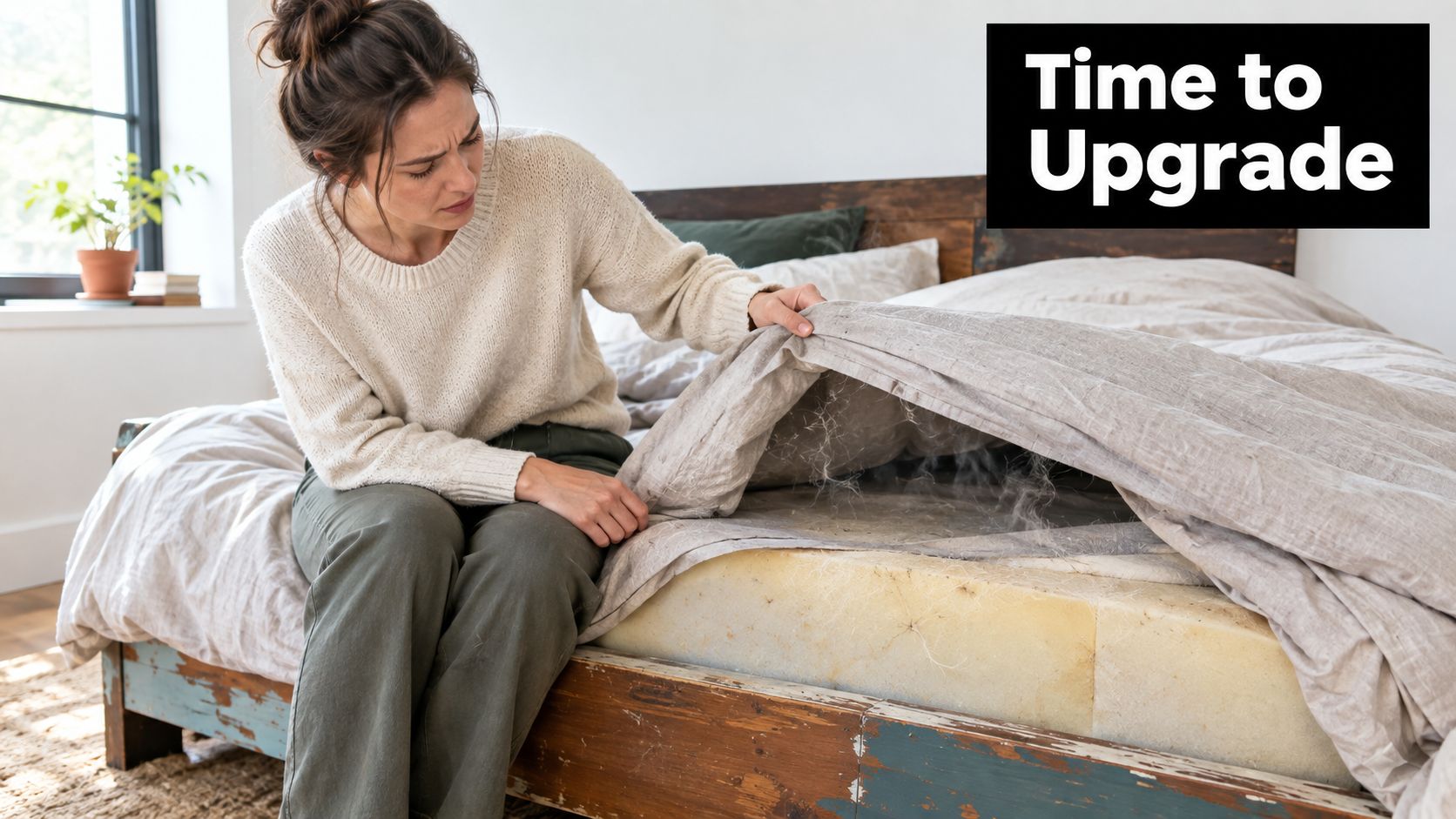
That is the point where pet friendly bedding becomes a household decision rather than a quick accessory purchase. Assess the cover, fill, seams, and drying requirements together. Wash-temperature performance matters because a bed that only tolerates a cool refresh may leave behind allergens and odor. Reversible construction also deserves attention. One side can handle daily contact while the other preserves a cleaner look, extending useful wear without adding another bulky item to the room.
Pets have long shared human sleep spaces, which helps explain the demand for bedding designed around everyday use. A CDC-published review reported that the estimated share of owners allowing dogs and cats on beds ranged from 14% to 62%. It also cited surveys covering dogs sleeping nearby or on the bed, older cats regularly sleeping on owners' beds, and adult women participants sharing beds with dogs or cats (CDC review of human and pet sleeping arrangements).
The buying standard has shifted accordingly. Choose a bed that can withstand repeated washing, control contact with fur and dander, and still suit the room after months of use. Market estimates place the pet beds category at different values and forecast continued growth, reflecting demand for products that combine animal comfort with household practicality. A soft arrival is easy to sell. Washability, hygiene, and a deliberate silhouette determine whether the bed deserves its place at home.
What Pet Friendly Bedding Actually Means
“Pet friendly” should describe performance, not mood. A bed can be plush, photogenic, and completely unsuitable for a home where an animal sleeps on it every day.
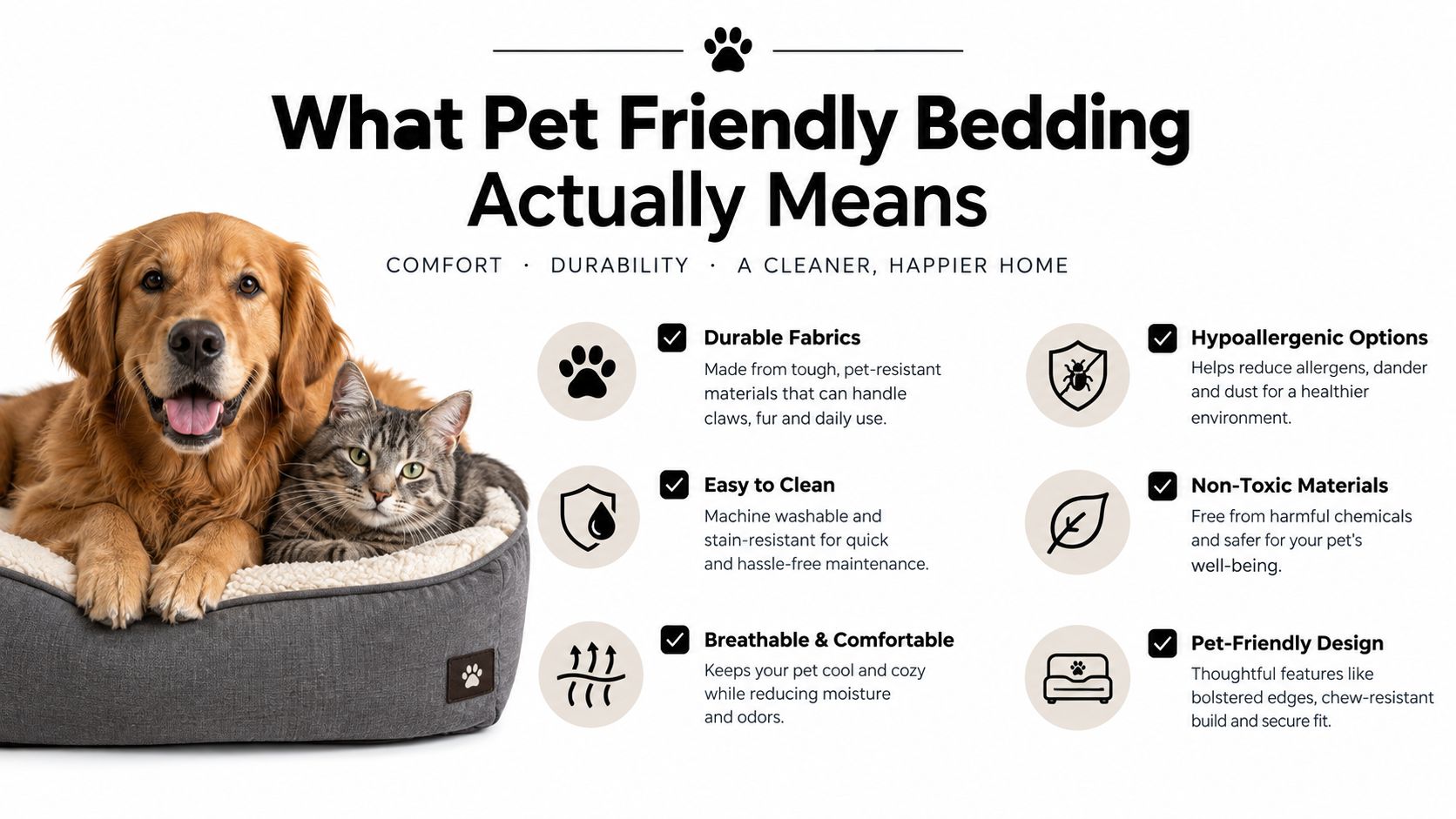
Use this five-point checklist before you buy:
- Hot-wash construction: The cover, liner, and washable fill should tolerate the temperature recommended for allergen reduction, not merely a cool refresh cycle.
- Tight, durable fabric: Dense weaves reduce claw snags and keep hair, dander, and saliva residue closer to the surface.
- A hygienic fill: Choose an insert that won't turn into a lumpy, damp reservoir after repeated cleaning.
- Safe detailing: Zippers need protection, buttons should be avoided where chewing is likely, and loose threads should never remain accessible.
- Interior compatibility: The bed should complement your room's palette, silhouette, and texture rather than look like temporary pet equipment.
The second point matters more than many buyers realize. A smooth microfiber or firm cotton canvas may look less luxurious than bouclé, but it can be easier to brush, vacuum, and wash. “Natural” also doesn't automatically mean hypoallergenic. Linen can feel breathable and refined, yet a loose texture may catch fur and snag under claws more readily than a dense synthetic weave.
Buying rule: If a bed performs well in only one category, it isn't genuinely pet friendly. Plushness without washability is a short-term luxury.
Safety belongs in the same conversation as style. Check the underside for exposed closures, inspect stitching at the corners, and avoid decorative attachments that can become chew targets. For broader upholstery decisions, this guide to cleaning pet friendly sofa fabrics offers useful context on choosing and maintaining textiles around animals.
A bed also needs to fit your cleaning reality. If you live in an apartment with shared laundry, a fully washable, quick-drying design may be more valuable than an oversized cushion with a fixed inner core.
Materials That Hold Up to Pets and Hot Washes
Choose the cleaning temperature before you choose the texture. Washing guidance for allergen control recommends 55 to 60°C, while detergent washing at 25°C for at least five minutes can extract most cat and mite allergen from bedding dust. Hotter cycles can improve removal and allergen denaturation, so the care label must support the routine you can maintain (washing temperature and allergen control guidance).
| Material | Softness | Wash Tolerance at 55–60°C | Allergen Behavior | Visual Texture |
|---|---|---|---|---|
| Tightly woven microfiber | Smooth and soft | Usually practical, check label | Keeps debris near the surface | Clean, contemporary |
| Cotton canvas | Firm at first, softens with use | Strong when preshrunk and properly finished | Dense structure limits penetration | Matte, tailored |
| Sherpa | Very plush | Variable, may flatten or shed | Textured pile can retain fur | Cozy, casual |
| Fleece | Warm and soft | Often easy to wash, but can hold hair | Fibers attract fur and residue | Informal, fuzzy |
| Memory foam | Supportive, dense | Core usually should not be hot-washed | Can retain moisture if enclosed | Structured, sometimes clinical |
| Polyester fiberfill | Springy and lightweight | More washable when fully enclosed | Easier to clean than fixed foam | Soft, rounded |
| Allergen-impermeable lining | Not intended as the primary comfort layer | Depends on product specification | Creates a barrier around fill | Invisible under the cover |
Microfiber and cotton canvas are my first choices for homes with heavy shedding. Their dense surfaces give fur fewer places to disappear, and they usually dry more predictably than thick pile. Canvas suits an architectural room. Microfiber gives you a softer hand without adding a visibly fuzzy finish.
Sherpa and fleece work for pets that seek warmth, though both require more maintenance. Raised fibers make the bed inviting, while also trapping loose fur and dust. Choose either only when the cover removes completely and the care label supports your washing temperature. A removable cover is useful, but its value depends on whether you will wash it often enough.
The fill decides whether the bed remains hygienic. Fixed foam can provide reliable support, yet an enclosed core is difficult to clean thoroughly and should not be treated like washable fabric. Fully enclosed polyester fiberfill is less sculptural, but it can be the smarter choice for a pet sleeping on the bed every day.
Allergen-impermeable inner layers add a separate barrier around the fill. Allergy research reports that impermeable encasings and frequent washing can reduce house-dust-mite exposure by 10-fold or more, while detergent washing lowers cat and dog allergens in fabrics (PubMed review of allergen control measures). Inspect the liner rather than trusting a marketing label. Treat GSM as a comparison clue, not a performance guarantee. Weave quality, seam construction, drying behavior, and the full care label matter more than fabric weight alone.
The surrounding room matters too. A pet bed sits on a rug, and that rug collects the same hair, dust, and moisture. This Birmingham rug care guide offers practical context for keeping the wider sleep area manageable. Choose bedding that works with the whole room's cleaning routine, not just the surface your pet sleeps on.
Why Washable Construction Beats Surface Softness
A “machine washable” cover is only the starting line. The question is whether the entire hygiene system can be cleaned, dried, and reassembled without creating a damp core.
Three parts have to work together. The outer fabric needs a sufficiently tight weave to keep dander and saliva residue from sinking in. The fill must survive repeated warm or hot laundering without clumping or losing structure. The construction must let you reach every component, including bolsters, liners, and interior panels.
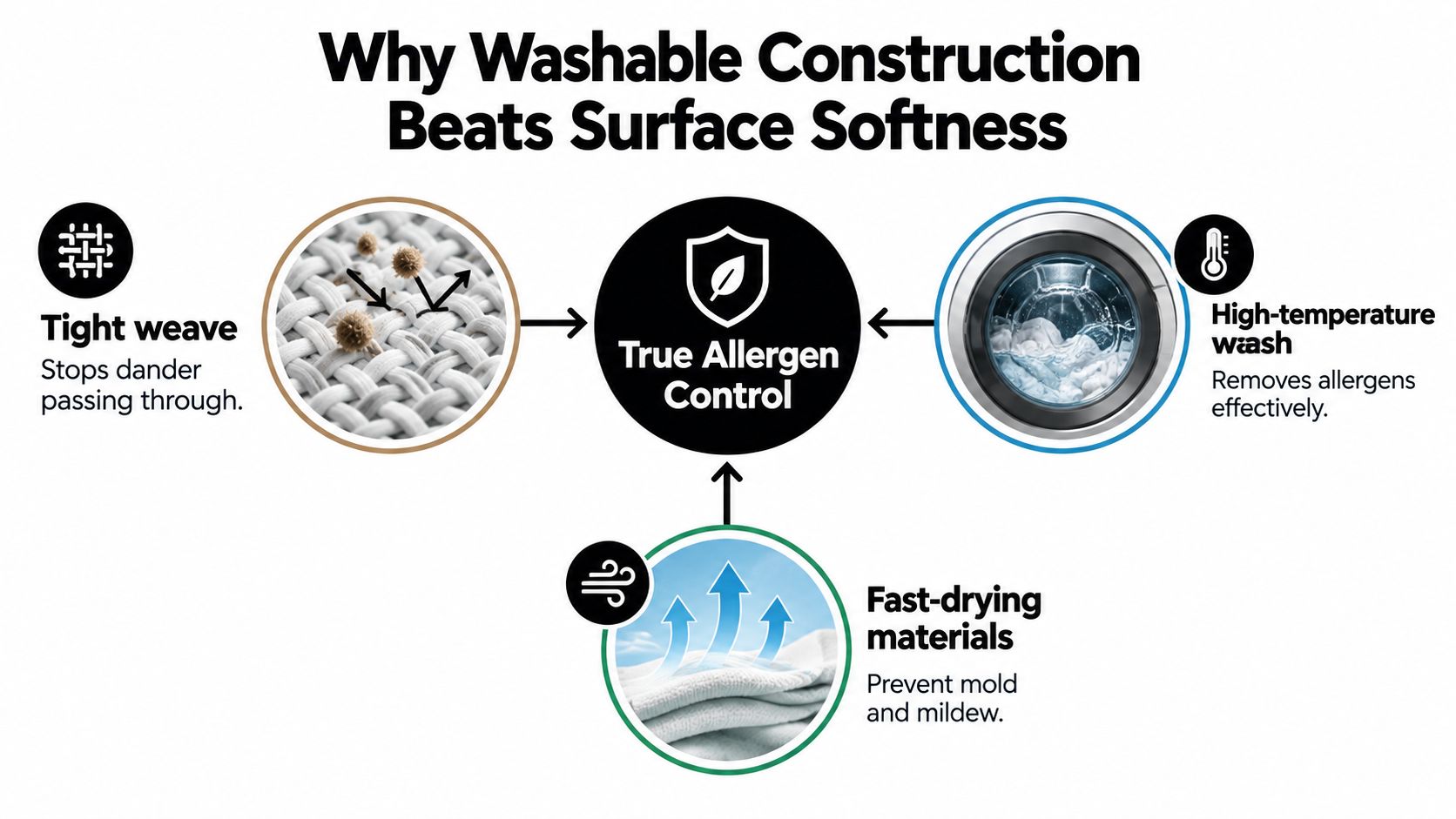
A beautiful bouclé cover over a non-removable foam core is the classic trap. It feels refined during the first month, but moisture and odor can remain inside the insert after surface cleaning. The cover looks clean while the part that needs attention most stays untouched.
The construction test
Before buying, unzip the cover and look at the internal architecture. Ask whether the bed can be separated into pieces, whether the bolster is permanently attached, and whether the care label addresses the insert rather than only the shell.
A reversible design can extend useful life by giving you two sleeping surfaces, but reversibility doesn't automatically make a bed washable. A removable cover improves access, but it doesn't solve the problem if the inner fill absorbs moisture and takes too long to dry.
For practical examples of what to inspect in a washable design, compare the construction details in this guide to best machine-washable dog beds. The useful principle is simple: washability must include the parts that hold odor, not just the fabric you can see.
Softness is a first impression. Construction determines whether the bed still belongs in your home after repeated cleaning.
Design the laundry routine before you design the room. If the bed can't fit your washer, dryer, drying rack, or storage space, you won't clean it often enough. That's not a failure of discipline. It's a predictable result of poor product design.
Matching the Bed to Your Pet and Your Home
Start with the bed's interior dimensions, not its exterior footprint. A thick bolster can make a generously sized bed feel cramped, especially for a dog that stretches rather than curls. Measure your pet in its preferred sleeping position and leave room for turning without forcing the animal against the sides.
Four decisions that prevent expensive mistakes
- Size comes first. A cat that likes to perch may prefer a contained edge, while a long-bodied dog needs usable length. Check the sleeping surface after accounting for bolsters and seams.
- Then assess age and joints. Senior animals often need a low entry point and stable support. A low-profile washable bolster bed can suit a senior greyhound in a minimalist room because it offers an edge without creating a high step.
- Match the material to shedding and drool. A heavy shedder is easier to manage on a reversible quilted mat than on deep pile. A dog that drools or returns from wet walks needs a surface that dries quickly and doesn't hide moisture.
- Only then choose the visual language. In a neutral-toned bedroom, a muted quilted mat can look deliberate. In a warm family room, a structured orthopedic bed with a removable cover can add a clear, useful layer without competing with the sofa.
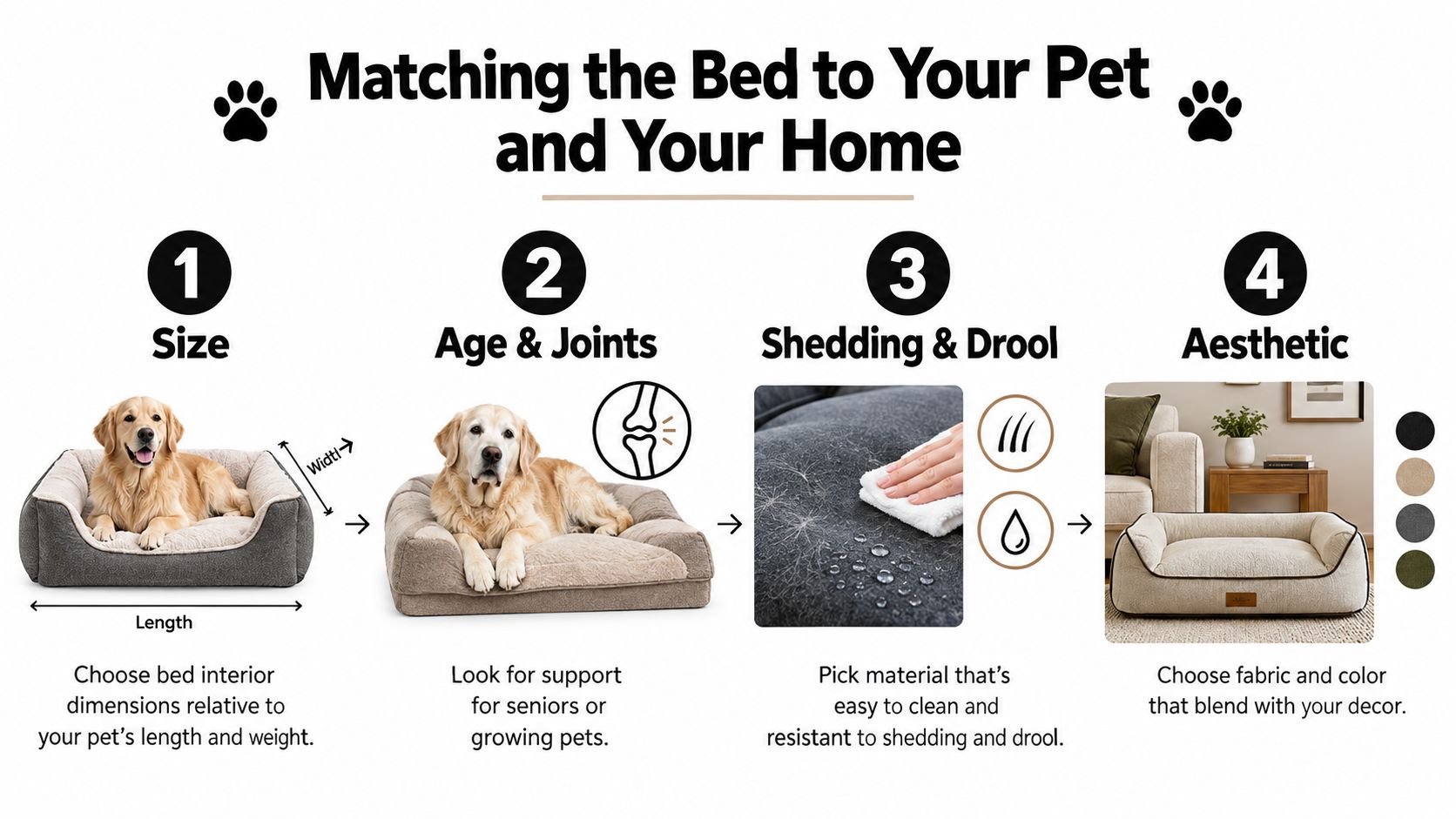
Color is a maintenance decision as much as a styling decision. Mid-tone neutrals tend to disguise a mixture of light and dark hair better than stark contrasts. That doesn't mean every home needs gray. It means you should choose a color that tolerates the interval between cleaning sessions.
The room's temperature matters too. Thick plush can make a warm living room feel visually and physically heavy, while a breathable mat may suit a sunlit corner better. A pet bed should earn its place among existing textiles, not create a separate decorative vocabulary.
For readers prioritizing a stronger fashion-led silhouette, this guide to the fashion dog bed shows how shape and upholstery-style detailing can influence the room. Keep the practical checklist in view while judging the look.
Plush, Orthopedic, and Reversible Side by Side
Different constructions solve different problems. The mistake is buying according to the most attractive photograph instead of deciding which trade-off your pet and laundry routine can tolerate.
| Construction | Softness | Joint Support | 55–60°C Wash Tolerance | Allergen Control | Visual Fit |
|---|---|---|---|---|---|
| Plush | Highest initial softness | Variable | Often limited by pile and fill | Can retain fur in raised fibers | Cozy and informal |
| Orthopedic foam | Moderate surface softness | Strong when correctly designed | Core may require restricted care | Good only when enclosed and fully managed | Structured, sometimes clinical |
| Reversible | Depends on both surfaces | Moderate, varies by fill | Useful if both sides and insert are washable | Better rotation, not automatically a barrier | Versatile and easy to refresh |
| Fully washable | Can range from soft to firm | Depends on construction | Strongest practical option when label supports it | Best potential for complete cleaning | Usually simpler, intentionally functional |
Plush beds win the arrival test. Pets often take to them quickly, and they photograph beautifully. Their weakness is maintenance. Deep pile and fixed cushioning can hold fur, saliva proteins, and moisture where a vacuum can't reach.
Orthopedic foam is the support choice for pets that need a stable sleeping surface, but the cover and core must be treated as separate care problems. A removable cover is helpful; it isn't enough if the foam itself absorbs contamination.
Reversible beds offer a useful middle path. Rotation lets you change the sleeping surface and refresh the appearance without buying a new silhouette. The construction details still matter, which is why a guide to a reversible dog bed is worth consulting before assuming both sides perform identically.
Fully washable designs lead on hygiene when the fill, seams, and closures all tolerate the stated wash routine. Their shapes may look less extravagant, but a simpler silhouette often ages better in a carefully styled room.
Choose plush for a low-maintenance pet and a cool, dry home. Choose orthopedic support for joint needs. Choose reversible or fully washable construction when hygiene is the priority.
A Realistic Wash and Care Routine
A pet bed earns its place in an urban home when its care routine fits real laundry days. Build that routine around removable parts, complete drying, and the amount of fur and moisture your household produces. Washability is part of the bed's design contract, not a chore added afterward.
A workable rhythm
- Daily: Remove visible fur, blot small spills, and check seams for moisture or loose threads.
- Weekly: Strip and wash the cover. In allergy-sensitive or heavily shedding homes, hot-water washing is a practical baseline. Independent allergy guidance recommends 55 to 60°C laundering for removing allergens and killing mites, as noted earlier.
- Monthly: Launder the full bed when the care label permits it. If the insert cannot be washed, vacuum it thoroughly and place it in moving air until completely dry.
- Between cycles: Use a soft upholstery attachment or rubber grooming glove to lift loose hair. Choose a mild, pet-safe deodorizing method instead of covering odors with heavy fragrance.
- Quarterly: Inspect the liner, zipper, seams, and underside. Clean the areas that routine washing misses.
Use mild, fragrance-free detergent, and skip fabric softener on technical or water-resistant fabrics. Residue can change absorbency and affect the finish. Do not use bleach on coated liners unless the manufacturer explicitly permits it.
Drying determines whether cleaning has worked. Tumble drying may preserve the shape of fabrics designed for it, while line drying can protect delicate surfaces and coatings. Do not overload foam inserts in a washer, and never return any component to the bed while its center remains damp.
Laundry access can decide whether a good plan survives past the first wash. If your building makes regular washing difficult, an islandwide pickup laundry service can make the routine more realistic.
Clean the dryer vent and lint filter after heavy pet-hair loads. Fur collects quickly, restricted airflow slows drying, and hidden dampness can leave odors inside the bed. The care routine protects both hygiene and appearance. Ignore it, and even well-chosen materials age badly.
Choosing Bedding That Lasts Beyond the First Season
A bed that lasts earns its space through repeated washing, not first-day softness. Choose a replaceable cover, an insert you can wash or isolate, protected seams, and a shape that still suits the room after the novelty fades. Pet bedding is a long-term hygiene-and-design contract with your home.
Pressure-test every contender
- Wash: Can each component tolerate the temperature your hygiene routine requires?
- Contain: Does the lining keep dander, saliva, and moisture away from the fill?
- Dry: Can the bed dry fully, including its center and hidden layers?
- Repair: Can you replace a cover, reverse a surface, or refresh one damaged layer?
- Age: Will the color, texture, and shape remain compatible with the room after repeated laundering?
The best construction balances wash-temperature performance, allergen control, and reversible use. A cover that survives hot washing is more valuable than a plush surface that loses its shape after a few cycles. Sealed or protected liners also help keep moisture and allergens from settling into the fill, while reversible designs extend use between full replacements.
Plushness still matters, especially for pets that curl or seek warmth, but it should not dictate the purchase. A bed that pills, sags, or traps odor becomes costly in time and cleaning effort. Layered construction lets you refresh one surface or replace one component instead of discarding the entire bed.
Return to the apartment with the new rug. The right bed handles loose hair, offers a realistic wash path, dries completely, resists odor, and looks deliberate beside the furniture. That is the standard for pet friendly bedding: comfortable for the animal, manageable for the household, and visually at home in the room.
Nandog Pet Gear offers design-forward dog and cat beds, including orthopedic, reversible, plush, and fully machine-washable options. Visit Nandog Pet Gear to compare a bed with your pet's sleeping needs and your home's cleaning routine.