

A waterproof dog harness should handle 0.62 kilogram-force of median maximum leash tension and 0.28 kilogram-force of median mean tension under pull, while staying comfortable enough to wear, move in, and dry out properly after weather hits. That means you're not buying a coated strap, you're choosing a weather-resistant walking system that depends on material, fit, hardware, and care working together.
The wrong harness feels fine in the store and then turns complicated after the first rainy walk. Water gets into seams, stitch holes, webbing, foam, buckles, and lining, so the critical question isn't whether the outer fabric sheds rain, it's whether the whole build still fits, flexes, and cleans up well when your dog comes back damp, muddy, or salty.
Why a Waterproof Harness Is a System, Not a Strap
You've probably seen the scene. A quick shower turns into a full downpour halfway through the walk, and your dog comes home with wet fur, a damp chest, and a harness that feels heavier than it looked in the morning. That's where the word waterproof starts to get misleading, because a harness is never just one material.
The shell is only the first layer
A coated outer fabric can repel rain, but it doesn't seal every path water can take. Stitching, webbing, buckles, foam, and lining can all hold moisture or let it creep inward, even when the top layer looks dry. A good harness has to work as a complete wet-weather system, not a single promise printed on the package.
The practical takeaway is simple. Buy for the full experience, not the label. Ask yourself whether the harness still looks easy to use after it's been wet, flexed, rubbed against a coat, and taken on and off a few times.
Practical rule: if the harness only performs when it's dry, it isn't really a weather harness.
Four parts decide whether it actually works
Think in four buckets. Material decides how much water the outside sheds. Fit geometry decides how pressure spreads across the body. Hardware decides whether the load-bearing pieces stay secure. Care decides whether the harness still feels good after repeated wet walks.
That framework keeps you from making the most common mistake, which is shopping on the word waterproof alone. A strong design can still be uncomfortable if the chest panel is stiff, too narrow, or positioned badly. A soft design can still fail if the hardware corrodes or the harness takes forever to dry.
How Waterproof Materials Actually Work
A wet walk can make the material choices inside a harness matter very quickly. The shell may shed rain, but the core question is how the fabric, seams, lining, and hardware behave once they are flexed, rubbed, and soaked repeatedly.
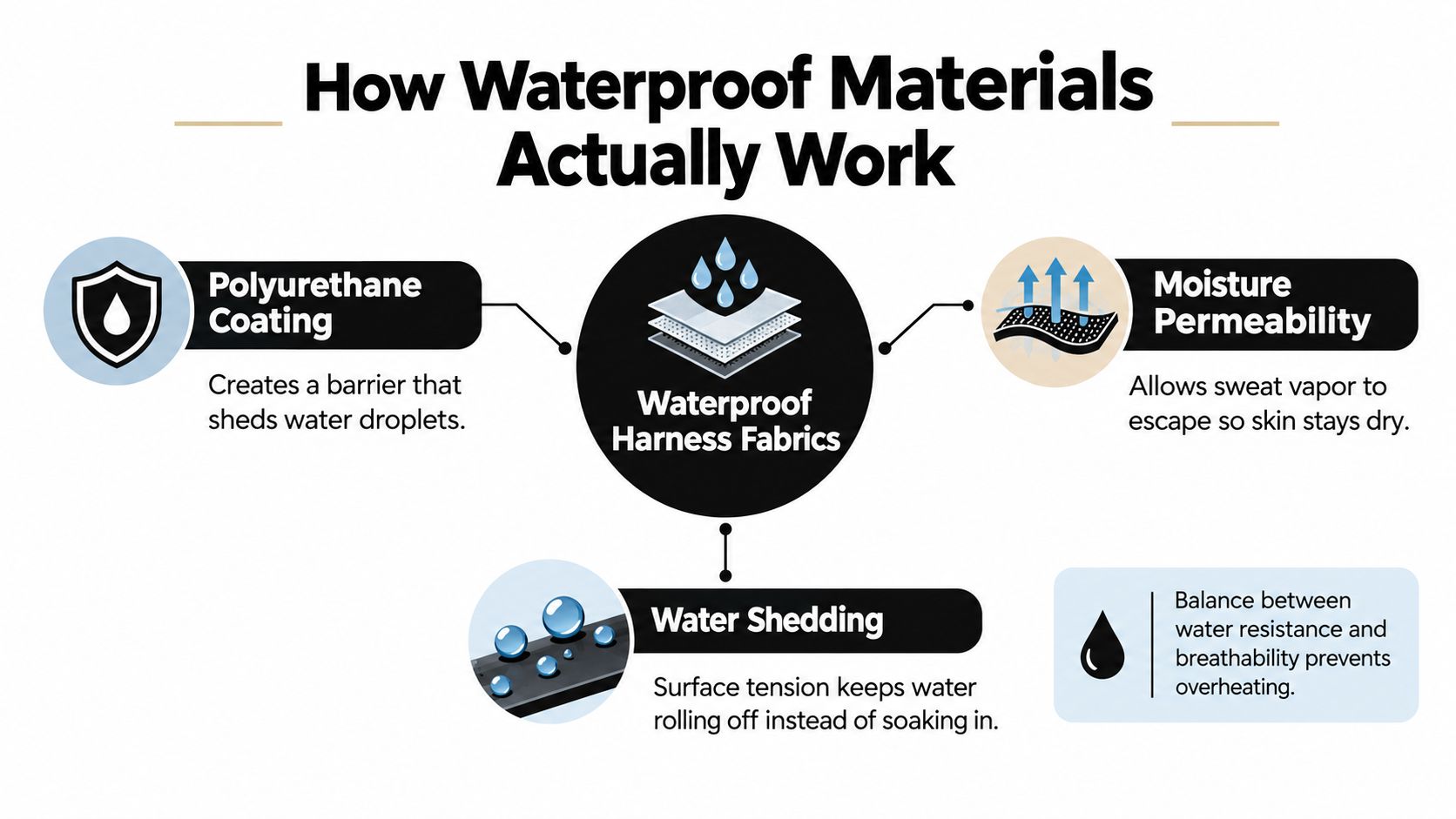
The material story starts with coated technical textiles, especially polyurethane, or PU, coatings. PU has a long history in weather-resistant products because it can combine water repellency with moisture permeability, so the same coating logic appears in rainwear, sports footwear, and performance outerwear, not just pet gear. Coated fabrics are an established industrial material, which is why the same basic idea also shows up in products built for regular outdoor exposure.
The vocabulary that matters
A few terms make spec sheets easier to read. Hydrostatic head describes how much water pressure a fabric can resist before leaking, and recognized test methods include ISO 811 and AATCC 127. PU coating refers to the treated layer that helps water bead up instead of soaking in. Seam-sealing matters because seams are common leak paths even when the fabric itself resists water.
You do not need a textile engineering degree here. The goal is to read specs well enough to separate tested performance from copywriting. A harness can have a water-shedding shell and still be vulnerable at the attachment points, edges, and stitched zones.
Fabric logic is not finished product proof
That distinction matters because a harness is a built object, not a flat swatch. A coated fabric may shed rain, but the finished item still has seams, buckles, rings, webbing, and padding that can trap water or stiffen when wet. If a brand says the shell is waterproof, that tells you something useful, but not everything.
A washable harness should also be treated as a wear-and-care item. Detergent, heat, flexing, and rough handling can change coating performance over time, so the best products are the ones that keep their shape and comfort after real use, not just in a lab-style photo shoot. For readers comparing fabric families, Nandog's neoprene material guide is a useful companion read because it shows how material choice affects comfort and performance.
Waterproof vs Water-Repellent vs Quick-Dry
These three labels get mixed together constantly, but they're not interchangeable. Waterproof should mean the material or construction is designed for more sustained exposure. Water-repellent or water-resistant usually means it sheds light rain and splashes. Quick-dry means it may still get wet, but it's built to lose moisture faster afterward.
Match the label to the outing
A city stroll in drizzle doesn't need the same build as a lake day. A harness for wet grass and commuting through rain can prioritize splash resistance and easy drying. A harness for swimming or repeated shoreline use needs a much stronger answer to seams, hardware, and drying time.
A product can be comfortable, water-shedding, and fast-drying without being fully waterproof in every part.
What to ask before you buy
Ask which part is tested. Ask whether the rating applies to the fabric only or the assembled harness. Ask whether the seams are sealed, how long the piece takes to dry after being saturated, and whether the material stiffens after washing. Those questions do a better job of separating real performance from copywriting than the word waterproof ever will.
| Harness Tier | Best For | Limitations |
|---|---|---|
| Waterproof | Wet walks, rain-heavy climates, prolonged exposure | Can trap heat if breathability is poor |
| Water-Repellent | Drizzle, splashes, short errands, light moisture | May soak through during extended rain |
| Quick-Dry | Active dogs, mixed weather, frequent washing | Doesn't always block water from entering |
The best match is the one that fits how your dog really lives. A dog that mostly walks city blocks in damp weather needs a different build than a dog that swims, rolls, and runs through brush.
Fit and Adjustment That Actually Protects Your Dog
A great fabric can't fix a bad fit. Veterinary evidence shows that harness pressure tends to concentrate at the sternum, not spread evenly across the body, and that's why a stiff or narrow chest panel can turn wet weather into a chafing problem. The risk goes up if the harness slides, shifts sideways, or stays damp against the coat for too long.
Start with the finger test, then keep moving
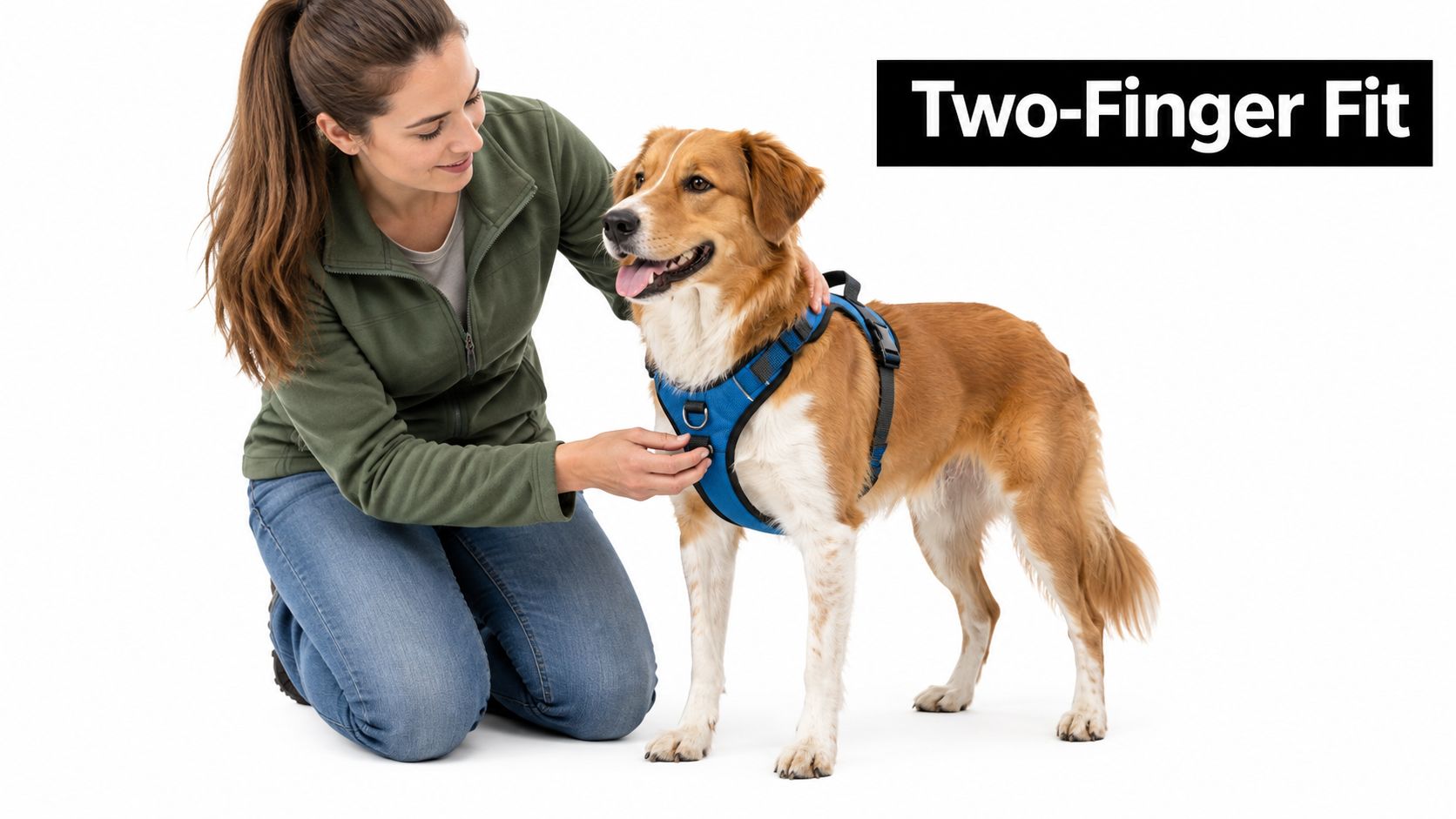
A solid starting point is enough room for one or two fingers between the harness and the body. That's tight enough to reduce sliding, but not so tight that the chest can't expand naturally. If the harness only seems correct while the dog is standing still, keep going, because walking changes everything.
Look for comfort during turning, sitting, and stepping forward. A harness that feels fine in the hallway can rub at the shoulder once your dog starts pulling, changing direction, or climbing stairs. That's where dynamic fit matters more than a mirror check.
The fitting checklist should include the chest panel width, not just the straps. Short-coated dogs, broad-chested breeds, and dogs with prominent sternums are more likely to feel pressure from a panel that's too narrow, too rigid, or too low.
Recheck fit when the dog changes
Puppies grow. Adult dogs gain or lose condition. Coats change by season. All of that changes how a harness sits, especially once wet fabric starts clinging differently to the body. A harness that fit in spring may slide in winter or feel tight after a body-shape change.
For a practical home routine, Nandog's dog harness fitting guide is a useful reference point, especially if you're trying to confirm chest coverage and strap placement before a wet-weather season starts.
Good fit feels boring. You notice the harness only when it's missing, not because it's rubbing.
Choosing Hardware and Leash Attachment Points
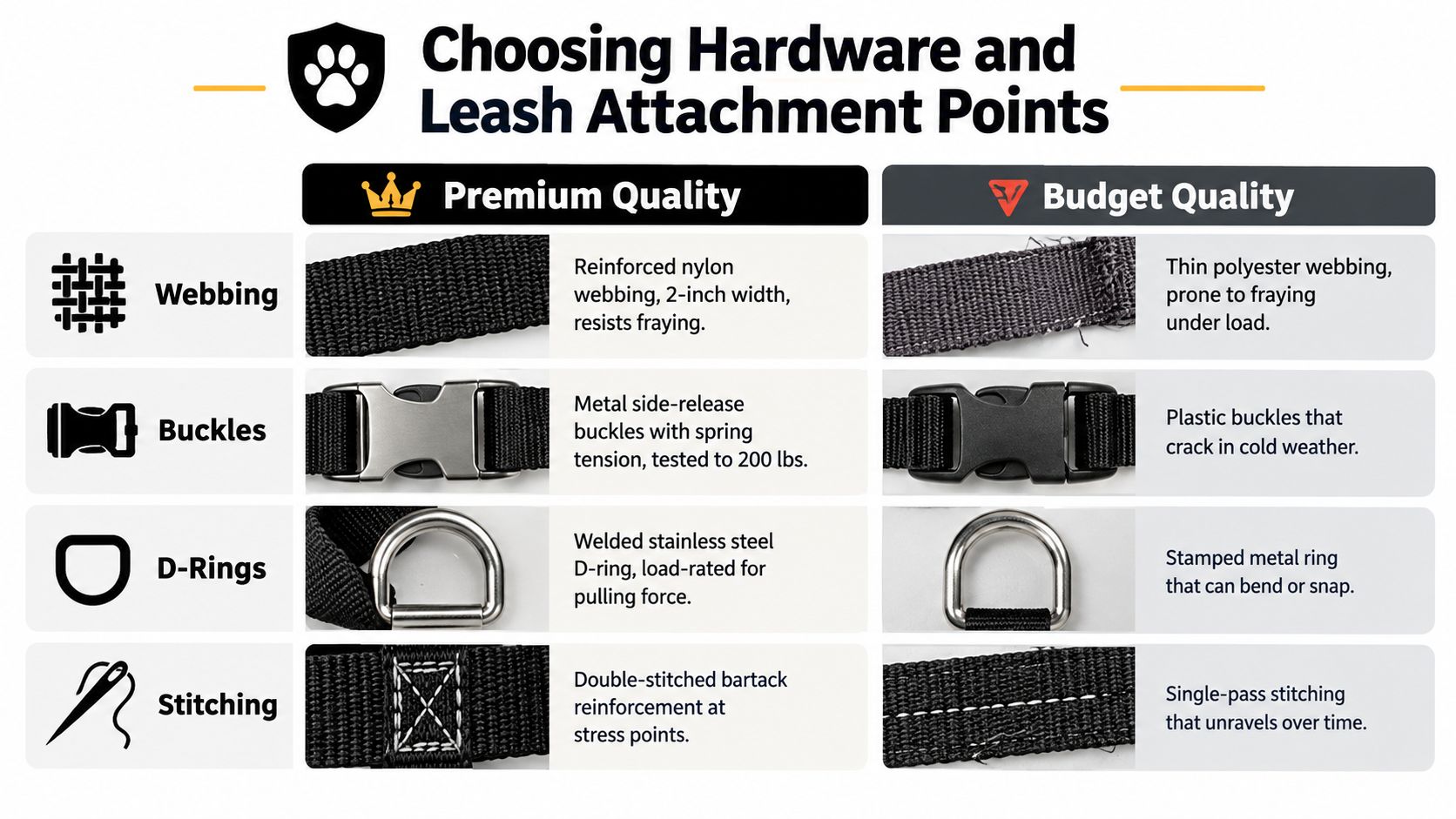
Hardware is the quiet part of the story, but it carries a lot of the risk. Webbing, buckles, D-rings, and stitching decide whether the harness stays dependable after rain, mud, and repeated loading. A shell can repel water and still fail as a piece of gear if the load-bearing parts are flimsy.
Pick the shape for the job
Y-front harnesses usually leave more shoulder room and distribute pressure better for active walking. H-style harnesses are straightforward and familiar, though their fit depends heavily on strap placement. Step-in designs can be easy to put on, which helps nervous dogs or owners who want a fast routine, but the fit still has to be checked carefully.
Front-clip and back-clip rings serve different purposes. A front clip can help with pull reduction because it changes the line of force. A back clip is often simpler for relaxed walking, senior dogs, and dogs who don't pull much. The right choice depends on behavior, not style preference alone.
Pay attention to wet-weather durability
Wet conditions can expose weak hardware quickly. Corrosion-resistant metal matters on rainy walks and coastal routes, and coated or plated parts tend to hold up better than bare, low-grade pieces. Stitching should be reinforced where the load collects, especially near rings and strap junctions.
If you're comparing leash control setups for neighborhood walking or training routines, FenceScape's dog fence guide is a surprisingly relevant companion read because it shows how containment and control decisions change depending on environment, not just gear.
| Design Choice | Best Fit For | Trade-Off |
|---|---|---|
| Y-front | Pullers, active walkers | Takes more careful adjustment |
| H-style | Everyday use, simple dressing | Can concentrate fit mistakes |
| Step-in | Quick on and off, some small dogs | Less forgiving if sizing is off |
For leash attachment context, Nandog's waterproof leash guide pairs well with this thinking because a wet harness and a wet leash should be evaluated as one walking setup, not as separate purchases.
Cleaning, Drying, and Easy-Care Habits
A harness only stays premium if you can keep it clean without dreading the process. Rain, mud, and saltwater all leave residue behind, and that residue is what turns a good product into something that smells off or feels tacky. The best routine is simple enough that you'll repeat it.
Build the routine around the kind of wetness
After rain, shake the harness off, towel it down, and let it air-dry away from direct heat. After mud, rinse the surface first so grit doesn't grind into the fabric or stitching. After saltwater, rinse more thoroughly, because salt can leave crystals and stiffness behind if it dries in place.
Machine-washability helps, but it isn't always neutral. Some coatings and seam components handle washing better than others, so the safe move is to follow the care instructions for the specific build. If a harness is designed to be machine washable, that's a real advantage, but only if the construction is meant to survive repeated washing.
Dry it like gear, not like laundry
Hang the harness in open air. Don't park it on a radiator or blast it with high heat, because heat can damage coatings and deform hardware parts. If the piece has foam, padding, or layered textile zones, give it enough time to dry all the way through before the next walk.
A clean harness also helps the coat. Dirt trapped under wet gear can irritate skin and leave the fur in poor shape after repeated wear. For related cleaning advice on pet-friendly surfaces, Modern Yard Landscapes' guide to clean dog turf in Austin heat is a useful example of how warmth, moisture, and residue management work together in everyday pet care.
If the harness comes off wet, the clock starts immediately. Drying habits are part of the product, not an afterthought.
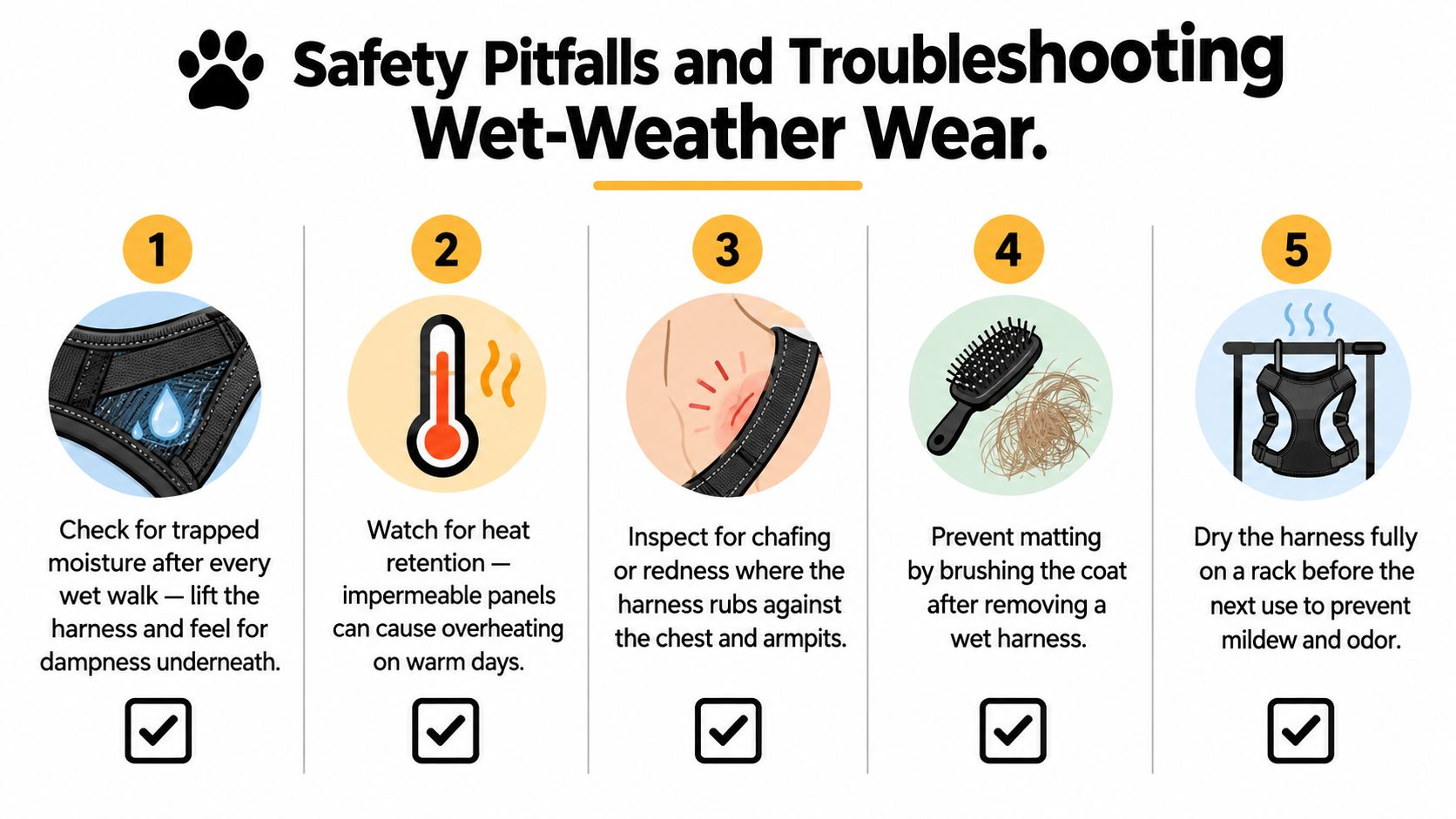
Safety Pitfalls and Troubleshooting Wet-Weather Wear
Waterproof doesn't mean carefree. A harness that keeps rain out can still trap moisture against the skin, and impermeable panels can hold heat longer than you'd expect on a warm or humid day. That's where chafing, matting, odor, and irritation show up.
Watch the body, not just the fabric
The warning signs are usually visible. Redness in the armpits, dampness under the panel, repeated scratching, odor that lingers after drying, and hair that looks flattened or rubbed are all clues that the fit or drying routine needs work. If the harness shifts sideways, that's often a sign the chest shape and strap geometry don't match well enough.
The easiest fix is also the least glamorous one. Take the harness off, inspect the chest and girth area, brush out debris, and let both dog and gear dry fully before the next outing. A wet harness stored in a bag is asking for odor and mildew.
Troubleshoot the common failure points
If the panel feels stiff after cold rain, flex it gently after drying and see whether the material returns to shape. If the smell lingers, check for trapped moisture in seams and padding. If you suspect a seam leak, look at the stitches and stress points first, not only the shell fabric.
A water-resistant harness can still be the right choice if your walks are short and your climate is mild. The mistake is assuming the word waterproof removes the need for inspection. It doesn't.
For broader outdoor planning and dog-friendly space decisions, R.E. and Sons Landscaping's expert pet landscape design help is a good reminder that surfaces, drainage, and movement space affect gear performance too.
A Buyer's Checklist for a Premium Waterproof Harness
A premium harness should resolve fewer conflicts, not create more of them. The best options balance weather protection, breathability, durability, and comfort without forcing you to choose between style and function. That's the meaning of premium here, a cleaner trade-off structure.
Use this checklist before you buy
- Defined waterproof claim: Look for a clear description of what's waterproof, what test method was used, and whether the claim applies to the finished harness or only to the fabric.
- Fit that works in motion: Confirm the chest panel sits well, the straps don't slide, and your dog can walk, turn, and sit without rubbing.
- Load-bearing hardware: Check for sturdy rings, secure buckles, and reinforced stitching at the stress points.
- Wet-weather practicality: Choose materials that dry predictably and don't turn stiff or tacky after use.
- Care you'll follow: If the routine is too fussy, the harness won't stay in good condition for long.
A good purchase decision is rarely about one feature. It's about whether the harness performs like a complete system on a rainy Tuesday, not just in a product photo. If you keep that standard in mind, the word waterproof becomes useful instead of vague.
Nandog Pet Gear designs with the same premium logic in mind, style, comfort, and easy care working together so everyday pet items feel refined and practical. If you're ready to look at gear through the lens of fit, function, and thoughtful design, visit Nandog Pet Gear and explore what a better-built daily routine can look like for your dog.