

Most advice about washing soft dog toys starts with “wash them more often.” That sounds sensible, but it misses the core maintenance problem. A plush toy can become less hygienic when aggressive laundering damages its seams, traps moisture inside its stuffing, or leaves a squeaker exposed. The right question is not just how often to wash. It's how to remove contamination without shortening the toy's useful life.
Routine detergent washing is cleaning, not sterilization. For everyday slobber and dirt, the safest approach is usually a manufacturer-approved gentle wash, thorough rinsing, and complete drying. Higher-risk contamination needs a stricter decision, and a toy that can't be cleaned and dried thoroughly may be safer in the bin than in the washing machine.
The Hidden Risks of Over-Washing Plush Toys
Clean toys matter, but extra wash cycles are not free. Each trip through water, detergent, agitation, and heat wears on the parts that make a plush toy safe and interesting to a dog. Fabric thins, stitching loosens, filling shifts, labels peel, and glued details or internal inserts can start to fail long before the toy looks worn out.
That trade-off is easy to miss with plush toys that still look fine on the surface.
What repeated laundering can damage
Hot water can warp synthetic fabric and weaken adhesives. Strong detergent can leave residue in absorbent stuffing, especially if the rinse is poor. High spin speeds pull hardest on stress points such as seams, corners, and bite zones, and a tiny split can open fast once a dog grabs the same spot again.
Squeakers and crinkle layers need even more caution. Water can get in through stitching, needle holes, or a punctured squeaker housing. Crinkle inserts can crease, stiffen, or lose the sound and texture that made the toy engaging in the first place. After enough rough washing, the hygiene problem may be gone while the safety problem has grown.
Practical rule: Match wash intensity to the toy's construction: use the gentlest effective cycle, rinse thoroughly, dry completely, and inspect before it goes back to play.
The CDC notes that soft pet supplies such as plush toys can generally be cleaned and disinfected in a washing machine and dryer, starting with cleaning using soap or detergent and warm water, then thorough rinsing and complete drying (CDC guidance on cleaning and disinfecting pet supplies). That sequence matters in real use. Cleaning off saliva, dirt, and debris is one job. Disinfection is a separate decision. Neither makes a damaged toy safe to keep.
The hidden moisture problem
Over-washing also raises the odds of trapped moisture. Stuffing can mat into dense clumps that dry slowly. Seams can curl inward and create damp pockets. A toy dropped into a pile after washing may feel dry outside while the center still holds moisture.
I treat that as a design failure, not a minor laundry issue. Plush toys break down from the inside as well as the outside, and internal dampness is hard to spot until odor returns or the toy starts to feel heavy, lumpy, or oddly cool in the middle.
Check the toy after every wash. If the fabric texture changes, the stuffing stays uneven, the squeaker shifts, or any internal part becomes reachable, retire it. At that point, more washing only pushes a weakened toy closer to failure.
Inspecting and Preparing Toys for the Wash
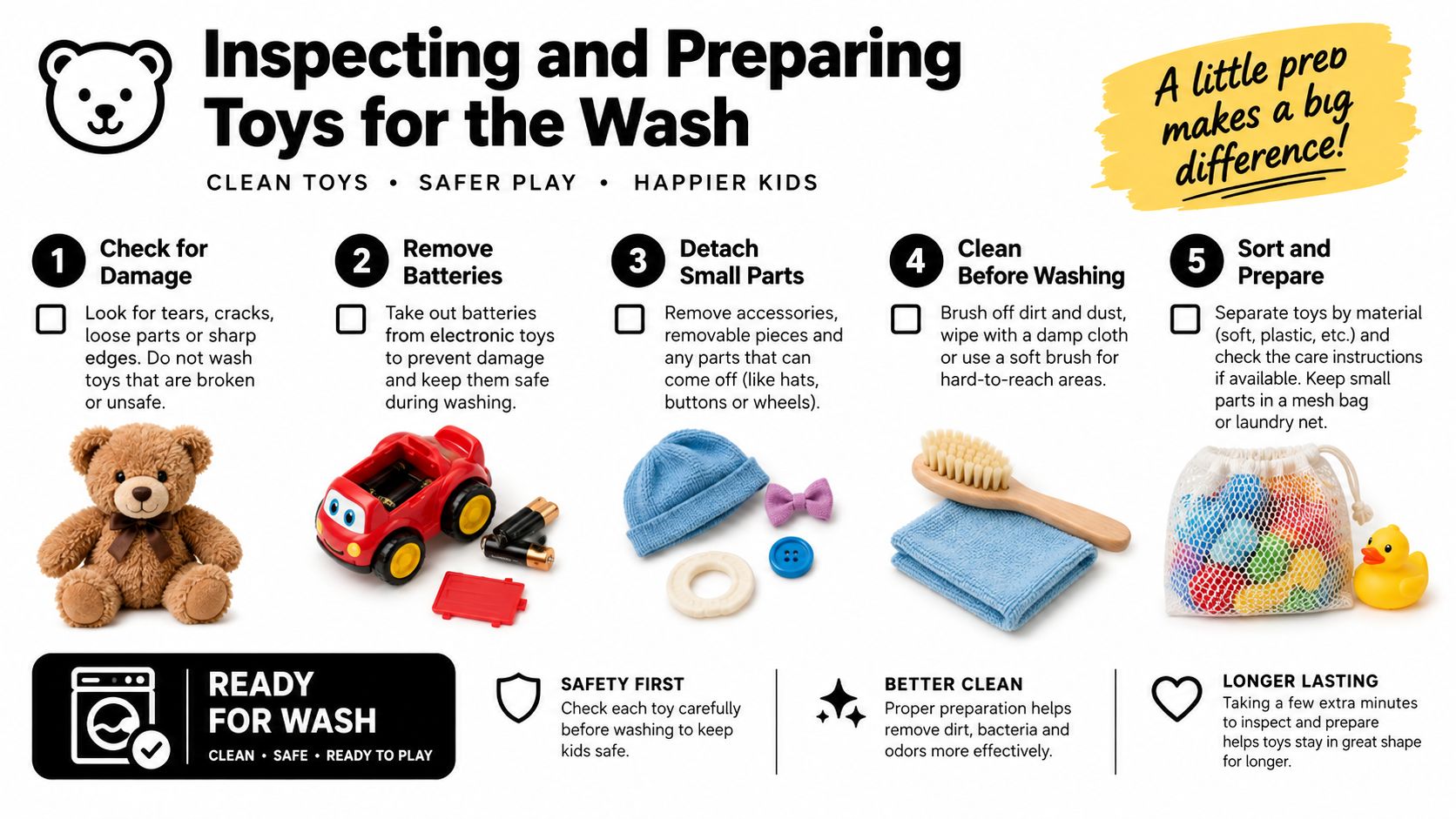
Preparation prevents most avoidable washing failures. Before adding water, read the care label, examine the toy from every angle, and decide whether it should be washed at all. A soft toy with an already-open seam can release stuffing into the washer and expose a squeaker or crinkle insert to your dog afterward.
Use this quick pre-wash check:
- Read the care instructions. Follow the manufacturer's material, temperature, and drying guidance. If no instructions exist, treat the toy conservatively and choose warm water, mild detergent, thorough rinsing, and complete drying.
- Remove what shouldn't be submerged. Take out batteries, removable sound modules, detachable accessories, ribbons, and loose decorations. Toys with non-removable electronics should be spot-cleaned unless the manufacturer specifically approves immersion.
- Test the seams. Look for loose stitching, frayed fabric, holes, exposed filling, cracked plastic, or a squeaker that has shifted toward the surface.
- Contain the toy. Put a machine-washable plush toy inside a mesh laundry bag. The bag limits abrasion, reduces tangling, and helps contain detached pieces if the toy fails during the cycle.
- Separate by condition. Don't wash a fragile comfort toy with heavily soiled outdoor items or rough-textured products that can scrape its fabric.
Material construction affects the decision. Plush pile, woven fabric, foam, plastic trims, embroidered details, and internal sound elements respond differently to water and friction. Nandog's overview of what soft toys are made of is useful background when you're trying to identify which parts may hold moisture or need gentler handling.
Don't shake a visibly contaminated toy before washing it. Place it directly into a washable container or bag, keep it away from clean laundry, and wash your hands after handling it. If the toy is torn, saturated with contamination, or impossible to rinse and dry completely, preparation should lead to disposal rather than an experiment with stronger chemicals.
Machine Washing and Hand Washing Techniques
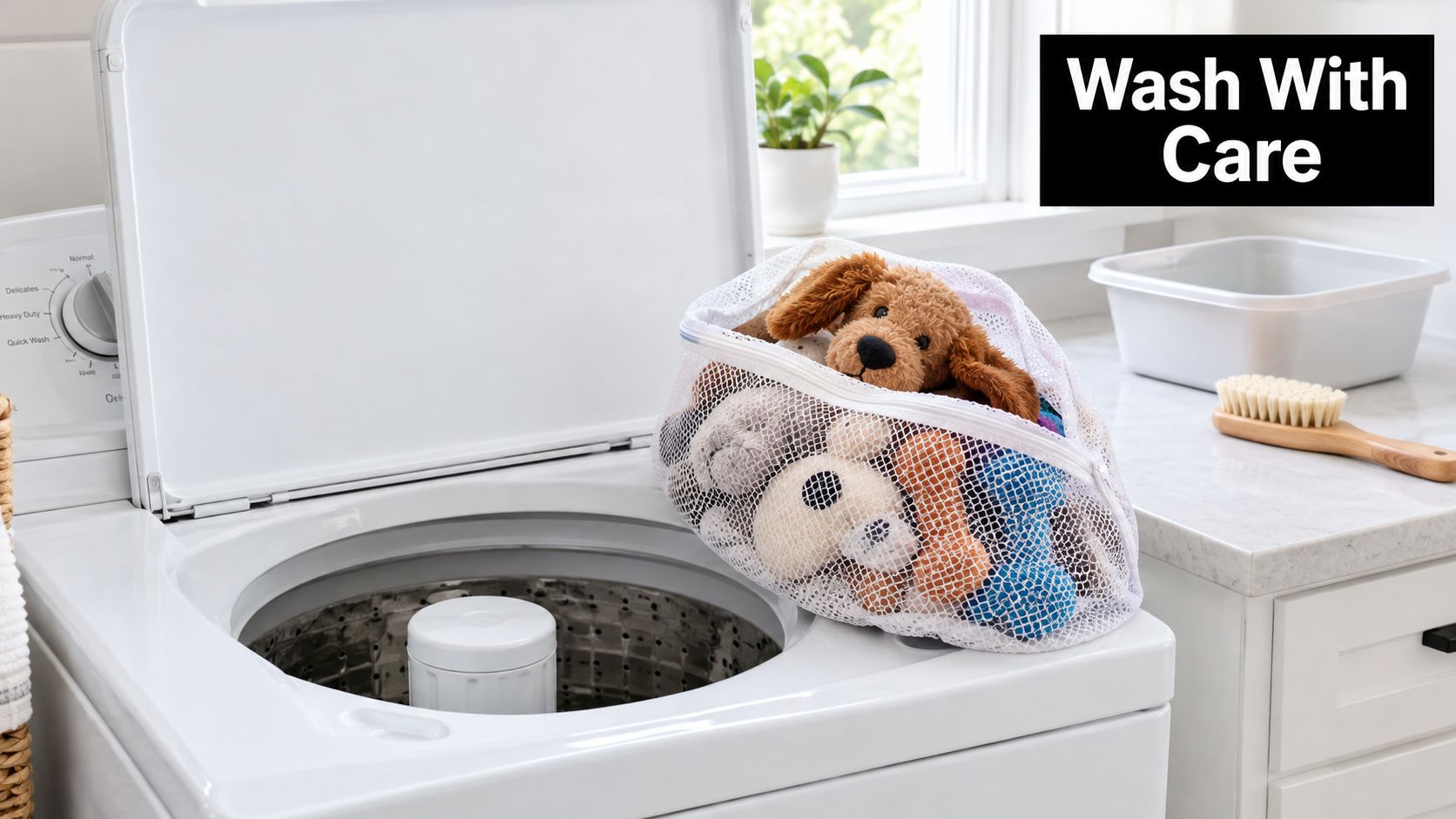
For a machine-washable soft dog toy, use a gentle or delicate cycle, the warmest water temperature permitted by the manufacturer, and a mild detergent. Put the prepared toy in a mesh laundry bag, avoid overloading the drum, and keep abrasive items away from delicate plush. The care label should always take priority over a generic setting.
Use enough detergent to clean the toy without creating a residue problem, then rinse thoroughly. Fabric softener and heavily fragranced products add unnecessary substances to an item your dog will chew, lick, and carry. Don't improvise with essential oils, bleach, or concentrated household cleaners unless the material and the specific process are explicitly approved.
When hand washing is the safer choice
Hand washing gives you control when the toy is delicate, lightly soiled, or fitted with components that shouldn't experience a full machine cycle.
- Fill a basin with warm water and a small amount of mild detergent.
- Press the toy beneath the water instead of twisting or scrubbing it aggressively.
- Work on soiled areas with your fingers or a soft cloth.
- Drain the basin and rinse repeatedly until the water runs clear and no slippery residue remains.
- Press the toy between clean towels to remove water. Don't wring it, because twisting can distort seams and internal parts.
For a toy that can't be submerged, spot-clean the outer fabric with a damp cloth and mild detergent. Keep moisture away from openings, batteries, and sound components, then wipe again with clean water to remove detergent. Information about plush dog toys with squeakers can help you think through how interactive parts affect care decisions.
Warm water helps loosen ordinary dirt, but temperature alone isn't a complete sanitation method. For broader context on warm water and facility sanitation, consider how cleaning depends on contact, detergent, rinsing, and drying rather than heat alone.
After washing, inspect the toy before drying. If the squeaker has become loose, the stuffing is escaping, or the fabric has torn, stop treating it as a washable toy and move to the replacement decision.
The Critical Importance of Complete Drying
Drying is where a careful wash either preserves the toy or shortens its life. A plush toy can feel dry on the outside while the stuffing, seam channels, and squeaker pocket still hold moisture. Put that toy back into play too soon, and you risk stale odor, fabric wear from repeated re-washing, and internal parts that stay damp longer than owners expect.
This is also the stage where the trade-off becomes clear. Wash too often and materials break down. Dry too fast or with too much heat and you can ruin the same toy you were trying to clean. Squeakers can warp, crinkle inserts can lose their texture, and plush fabric can stiffen or clump.
A safer drying routine
Start with towels. Press the toy firmly between clean, absorbent towels to pull out as much water as possible without twisting the seams. Wringing saves a few minutes, but it puts stress on stitching and can shift stuffing away from the areas that cushion the toy during play.
Then air-dry in a well-ventilated space. Rotate the toy so thicker sections do not stay compressed against one side, and give special attention to the head, belly, and any part that contains a squeaker or layered fabric. Those areas dry slowest.
A dryer can work if the care label allows it, but low heat is the limit. Check the toy during the cycle, not just at the end. If the fabric feels hot, the shape starts to distort, or the surface becomes oddly crisp, stop there. That kind of heat exposure often does not fail all at once. It weakens adhesives, hardens synthetic fibers, and makes the next wash harder on the toy.
The squeeze test: Press the thickest part of the toy and the seams. If it feels cool, dense, or slightly springy in a damp way, keep drying.
Do not use smell as your only check. Some toys hold moisture without much odor, especially after detergent. After drying, inspect the seams, stuffing, and sound parts again before giving the toy back.
For a useful comparison, this guide on cleaning a memory foam dog bed shows the same care principle. Thicker interiors need more drying time and a closer final check than flat fabric.
Building a Risk-Based Cleaning Schedule
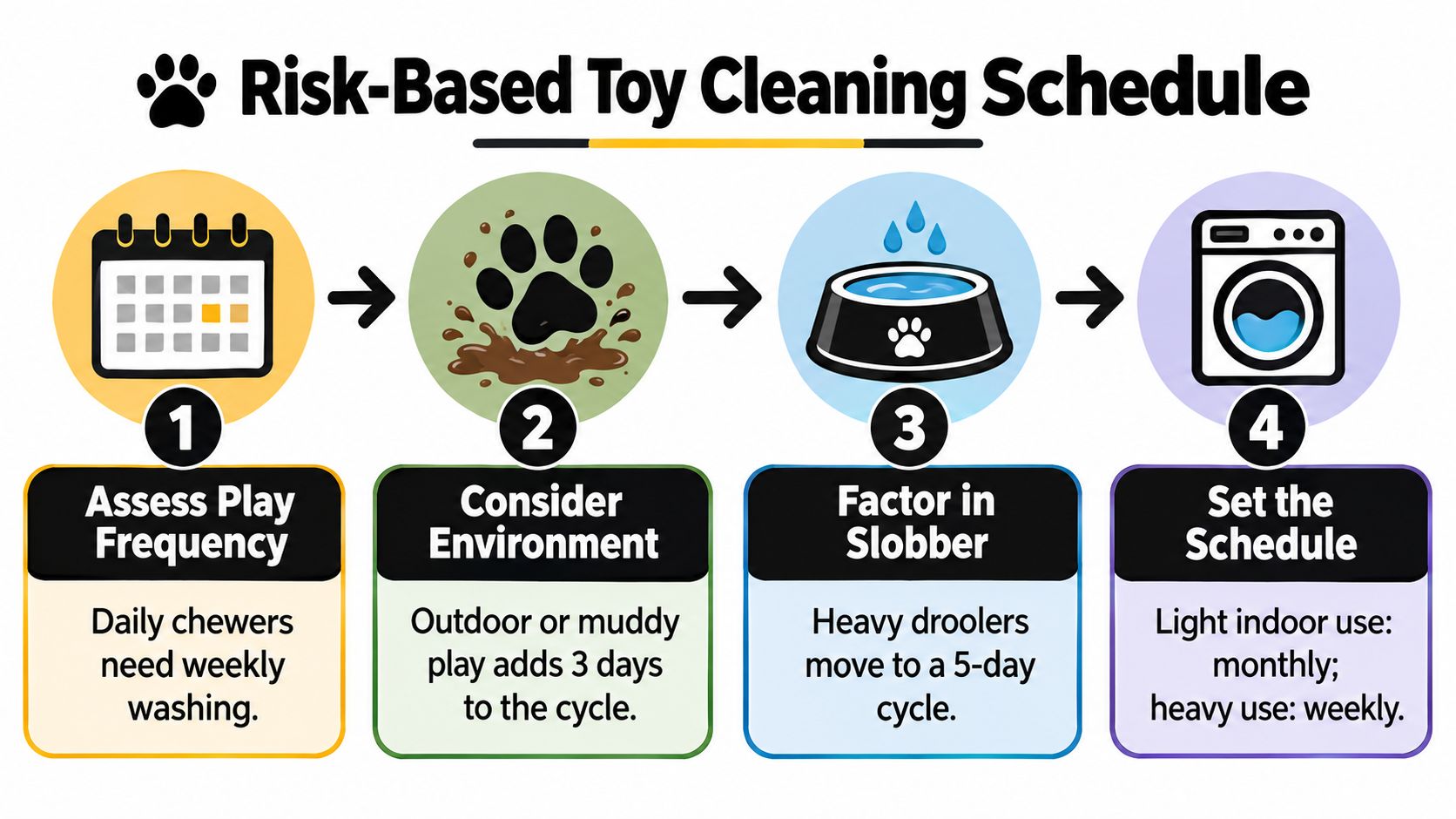
“Wash monthly” is easy to remember, but it's too broad to guide real households. A toy carried through muddy gardens, shared by several dogs, and mouthed throughout the day doesn't face the same exposure as a decorative comfort toy used briefly indoors.
The better system is to classify the toy by contact and then respond to inspection triggers.
Match the toy to its exposure
| Toy exposure | Practical response |
|---|---|
| Daily slobber, food contact, or constant chewing | Inspect frequently and wash when visibly soiled, damp, stained, or odorous. |
| Outdoor mud, wet grass, or soil | Clean after obvious contamination and keep the toy out of play until it's fully dry. |
| Shared between multiple dogs | Use a shorter interval and inspect for damage before each return to circulation. |
| Puppy use or heavy mouthing | Prioritize seam checks, loose-part checks, and complete drying over a rigid calendar. |
| Use around a sick animal | Remove immediately and follow the higher-risk cleaning or disposal decision described below. |
Published pet-care recommendations commonly suggest weekly cleaning for slobber-heavy plush toys and less frequent cleaning for harder toys that remain visibly clean, while another broad recommendation uses monthly cleaning and increases it when a toy smells or looks dirty (pet-care scheduling guidance). Those ranges are useful starting points, not guarantees. A dog's behavior and the toy's construction should decide what happens next.
The material trade-off is important. Washing a sturdy, machine-washable toy when it's dirty may protect hygiene. Washing a fragile plush toy on an unnecessarily harsh schedule may accelerate seam failure, stuffing clumps, and hidden dampness. A calendar should prompt inspection, not replace it.
For owners who already manage household maintenance by zones and tasks, a general cleaning schedule from Sweet Home Cleaning Service can provide organizational ideas. Apply the same principle selectively: assign care according to exposure, material, and the consequences of failure.
If a toy still looks sound, smells neutral, and dries fully, it may not need another aggressive wash just because a date has arrived. If it has changed texture, retained odor, developed stains, or started leaking stuffing, don't extend its life by laundering it harder. Replace it.
When to Disinfect and When to Replace
Disinfection is not the default next step after a normal wash. For everyday saliva, dust, and light grime, soap, rinsing, and full drying are usually the safer choice for both the toy and the dog. Save disinfection for higher-risk contamination, such as vomit, diarrhea, blood, feces, or secretions from a sick animal.
That distinction matters because soft toys are poor candidates for harsh chemistry. Plush fabrics, printed dyes, foam inserts, glued details, stuffing, squeakers, and crinkle layers can trap moisture and cleaning residue deep inside the toy. A disinfectant may reduce surface contamination while shortening the toy's life or leaving behind materials you do not want a dog mouthing. In practice, if a plush toy cannot be rinsed thoroughly and dried all the way through, chemical disinfection is a bad trade.
The contamination risk is real, though. A pediatric infection-control review found coliform contamination on 90% of sampled soft toys versus 13.5% of hard toys, and it also noted that machine washing alone left soft toys contaminated in the healthcare and childcare studies it reviewed (peer-reviewed review of soft-toy contamination). Those environments are not the same as a home with one dog, but the pattern is useful. Soft toys hold onto more than dirt, and washing harder is not always washing better.
Replace the toy if you find split seams, exposed stuffing, a loose squeaker, peeling layers, a smell that survives drying, or dampness that keeps returning. Once the structure starts failing, hygiene and safety problems overlap. No disinfectant fixes a toy that can shed parts or stay wet in the middle.
For households dealing with dander and dust in the room itself, separate environmental steps such as HEPA vacuuming for allergies can help. They do not make a compromised plush toy safe to keep.
Nandog Pet Gear offers machine-washable My BFF plush dog toys with interactive squeakers and crinkle textures, giving owners a design-focused option that can be maintained with the care-label method described here. Visit Nandog Pet Gear to choose plush toys and other pet essentials that fit your dog's play style, then inspect, wash gently, and replace them when their structure no longer protects your dog.